

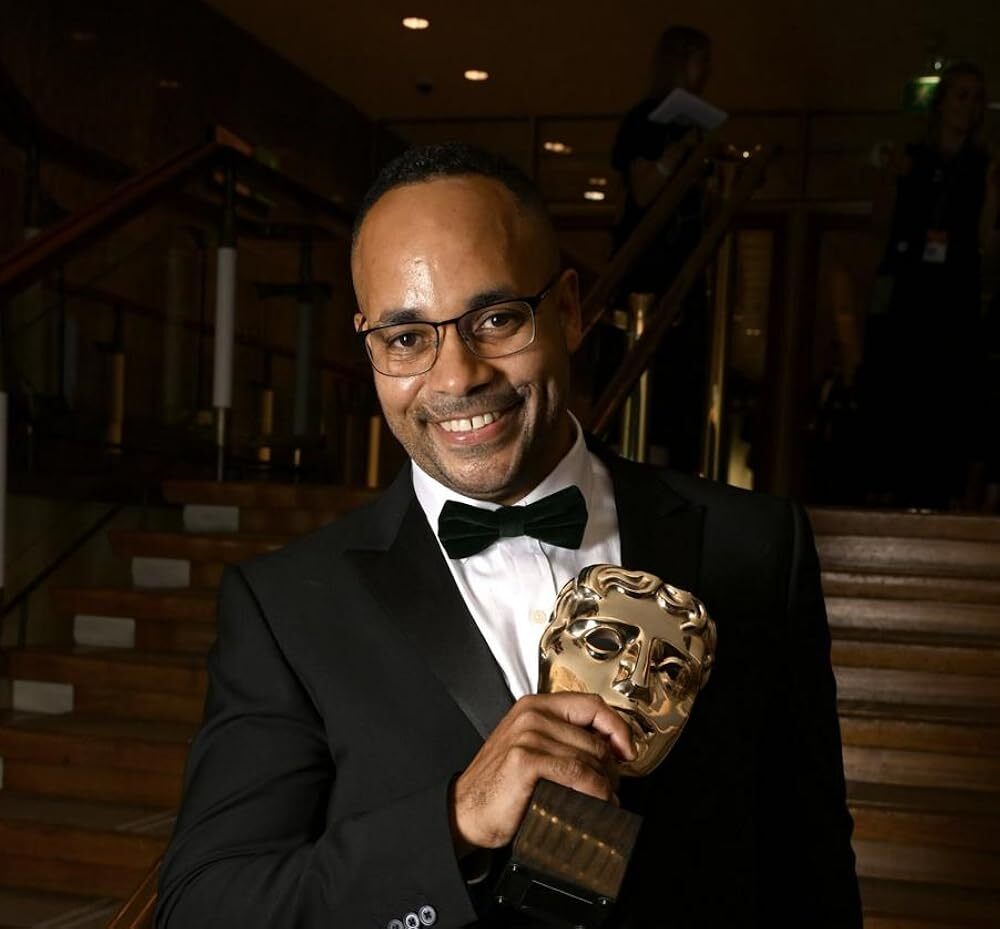
Andy Mundy-Castle has built a reputation for telling stories that sit at the intersection of culture, activism and humanity. His latest documentary, Shoot the People, follows acclaimed photographer and activist Misan Harriman as he documents one of the defining social justice movements of a generation. In conversation with ALT, Mundy-Castle reflects on the responsibility of telling real stories, collaborating with Harriman and why purpose remains at the heart of his filmmaking.
SHOOT THE PEOPLE is in cinemas from 6 July https://shootthepeoplefilm.com

ALT: Shoot the People follows activists fighting for equality, addressing issues including racism, human rights and LGBTQ+ rights. As the director, what responsibility did you feel in telling such a personal and difficult story?
Andy: With every film and every story I take on, when someone allows me to turn my lens on their life, I approach it with the utmost care, regardless of where they are on their journey. That could be someone who’s just beginning as an activist or someone who’s spent decades campaigning for change. In this film, we met people at every stage of that journey.
My responsibility is to meet people where they are and treat everyone with the same respect and dignity. At my core, I don’t believe people are born evil. I believe most people protest because they genuinely want a common good and a better future.
That was the heart of this film. I wanted to explore the idea that dialogue, even with your harshest critics, is essential to progress.
For me, that also meant protecting Misan’s story, his voice and his perspective. He invited me into an incredibly privileged and personal space, and that trust came with a huge responsibility.
There are moments in the film with his wife and family that reveal a side of him the public rarely sees. Whenever someone allows you that level of access, you have to honour it. That’s something I take incredibly seriously.
ALT: What first drew you to this project, and what was it like working with Misan?
Andy: Misan is one of those rare people who is incredibly generous, warm and deeply human. Despite the public scrutiny he’s faced throughout his career, his focus has always remained on people. Spending time with someone like that naturally has an impact on you.

Working with him was a genuinely collaborative experience.
What first drew me to the project was the summer of 2020. Whether you considered yourself an activist or not, the murder of George Floyd became a moment that people simply couldn’t ignore. During lockdown, we were all watching events unfold in real time, and the voices that had spent years calling for justice could no longer be pushed to the margins.
Whatever people’s previous opinions had been, the brutality of George Floyd’s murder forced many to confront uncomfortable truths.
At that same moment, Misan was documenting what so many of us were feeling. His photographs captured the emotion, the tension and the humanity of that period in a way that was impossible to ignore.
JOIN THE CULTRA e-DIARY FOR THE BEST ARTS AND CULTURE NEWS FREE
When he photographed the cover of Vogue, his work reached an even wider audience. Naturally, I became curious about the person behind those images.
The stories I’m drawn to always centre on compelling people pursuing something bigger than themselves. I knew Misan’s journey offered the perfect opportunity to explore what it really means to be an activist.
ALT: How did photography influence the film’s visual style?
Andy: Immensely.
We were very intentional about ensuring Misan received a photography credit because his images make up more than 25 per cent of the finished film.
For audiences unfamiliar with his work, the documentary becomes an opportunity to experience his photography within the context of his wider story.
When you’re crafting a documentary, you’re constantly looking for different ways to tell that story. Filmmakers tell stories across 24 frames per second. Photographers tell stories in a single frame.
It would have been impossible not to use the incredible archive Misan had built over the years.
Photography became one of the film’s central storytelling tools. Combined with the beautiful cinematography by Johan Perry, it helped create something I’m incredibly proud of and will remain proud of for many years.
ALT: The summer of 2020 felt like a moment of reckoning. Some would argue we’ve since taken steps backwards. What do you hope audiences take away from Shoot the People today?
Andy: I don’t think these conversations ever truly disappear.
Ilhan Omar says something powerful in the film: what kind of depravity exists when people are simply asking for the bare minimum?
We shouldn’t be living in a world where we’re celebrating the first trillionaire while simultaneously facing the highest levels of malnourishment in generations.
At some point, that balance has to be addressed.
I grew up in very difficult circumstances, so I understand what it feels like to live with very little. Because of that, I’ve never been able to reconcile the idea of endless wealth while others struggle to survive.
Of course, I understand capitalism. We all work within that system, even in the creative industries.
But the question remains: why are people still being denied the most basic dignity?
What I hope audiences leave with is a simple question: what can you do within your own capacity to help someone else?
As you progress in life, bring others with you. Keep doors open for people who might otherwise find them closed.
If the film sparks conversation, encourages reflection and helps people see those experiencing injustice with greater empathy, then we’ve achieved something worthwhile.
I also hope people simply enjoy watching a cinematic story that has purpose.
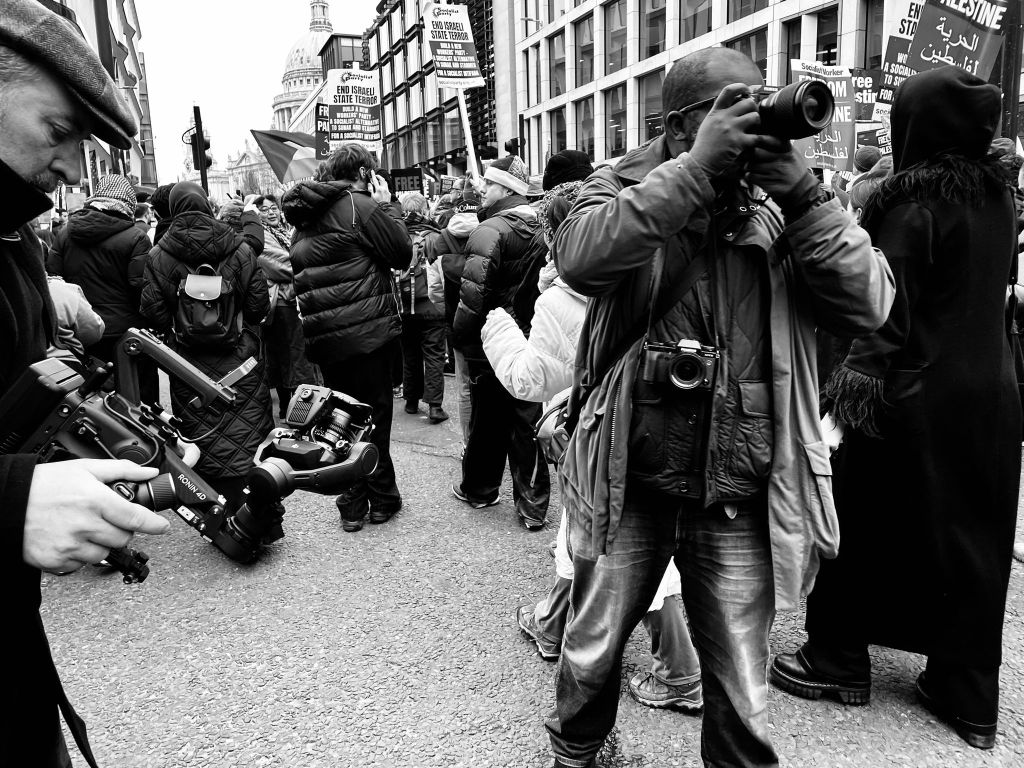
ALT: How has this project changed you as a filmmaker? Shoot the People has taken you to protests, screenings and conversations around the world. More recently, there was a screening in the US with Cynthia Nixon. How has that journey influenced you?
Andy: Every film changes me. I’m constantly trying to understand where I sit within the stories I tell and what each project teaches me.
Shoot the People has definitely made me bolder. It’s made me think more carefully about how I show up through my work and the art I create. It has challenged me to ask what the activism within my work really is and what I’m searching for as a filmmaker.
Working alongside Misan, it’s difficult not to feel fearless. He operates on a level that’s incredibly rare. He goes after what he believes in with determination, clarity and purpose. He pursues the things that matter to him with grit and resilience, always leading with the best of intentions.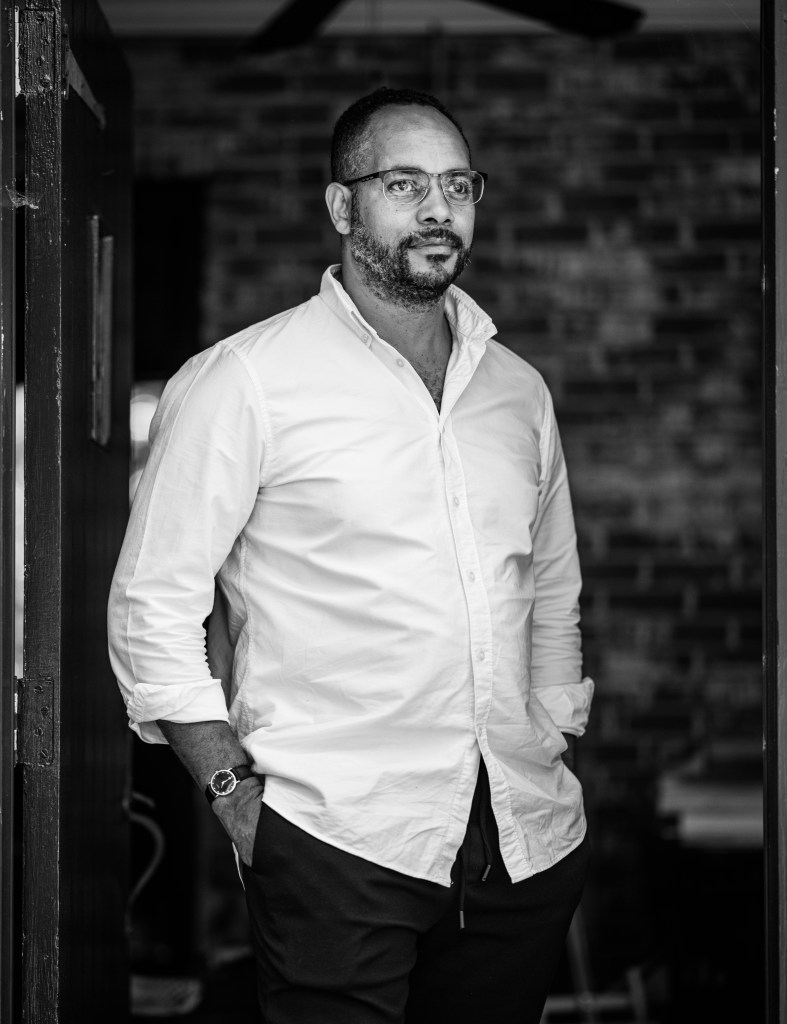
Watching that process up close has had a real impact on me.
Making this film has encouraged me to think more fearlessly about the stories I want to tell and how I tell them. It has reinforced my belief that purpose and storytelling belong together, and that’s something I want to continue exploring throughout my career.

ALT: Was there a particular moment during filming that stayed with you?
Andy: There were so many.
What stayed with me most wasn’t necessarily one specific protest or one particular image. It was seeing the consistency of people who continue to show up, despite the emotional and physical cost.
Activism isn’t something people switch on for one day. It’s something many people dedicate their lives to, often without recognition. Spending time with people like that changes your perspective. It makes you appreciate the courage it takes to keep standing up for what you believe in.
It also reminded me that behind every public figure is a private person.
That was something I wanted audiences to see with Misan. People know the photographer and the activist, but there is also the husband, the father and the friend. Showing those quieter moments was just as important to me as documenting the protests themselves because they reveal the humanity behind the headlines.
ALT: What’s next for you after Shoot the People? It’s been some time since the film was completed. What are you working on now that you can share?
Andy: Misan and I are currently developing a new series on a much bigger scale that builds on many of the themes explored in Shoot the People.
The series will follow Misan on a global journey, exploring injustice in places that are often overlooked and telling the stories of people whose voices aren’t always heard. He’ll be joined by a co-presenter, and it’s something we’re incredibly excited about.
Alongside that, I’m working on my next feature documentary, which explores the power and the cost of social influence.
Both projects feel like a natural continuation of the work I’ve been doing. They continue asking important questions about society, identity and the responsibility we all have to one another, and I’m excited to see where they lead.
ALT: Finally, what do you hope people remember after watching Shoot the People?
Andy: I hope they remember that change begins with people.
One person can make a difference, but communities create movements.
I also hope audiences leave recognising the importance of empathy. It’s easy to reduce people to headlines or social media posts, but when you spend time listening to someone’s story, you realise how much connects us rather than divides us.
If the film encourages people to have conversations they might not otherwise have had, or inspires someone to think differently about injustice and their role within it, then it has done exactly what I hoped it would do.
For me, cinema has always been about more than entertainment. The films that stay with us are the ones that make us feel something, challenge us and perhaps even encourage us to see the world through someone else’s eyes.
If Shoot the People can do that, then I’ll be incredibly proud.
ALT: Andy, thank you for speaking with ALT.
Andy: Thank you. It’s been a pleasure.