

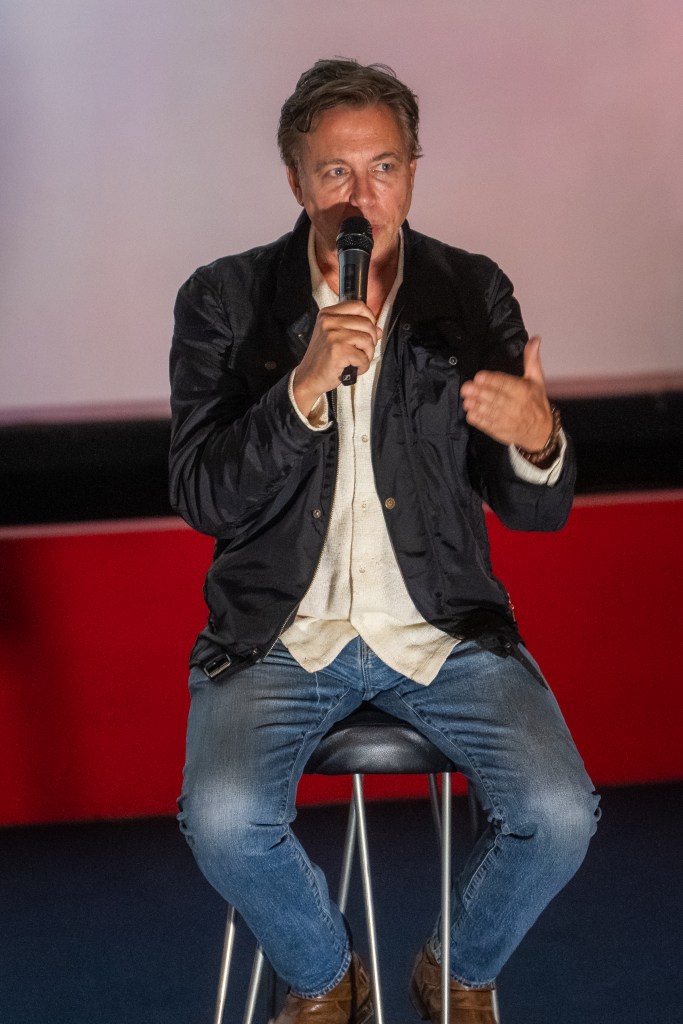
Matt Leutwyler is a filmmaker, writer, and producer whose work spans narrative features, documentaries, and humanitarian storytelling. Best known for the cult horror-comedy Dead & Breakfast, Lutweiler’s latest film, Fight Like a Girl, draws inspiration from the lives of female boxers in the Democratic Republic of the Congo. In this interview with ALT A REVIEW, he discusses his filmmaking journey, the challenges of shooting in a conflict zone, and the real-life stories that inspired the film.
ALT: Matt Leutwyler, thank you so much for talking to ART A Review in advance. I really appreciate it. What inspired you to study film at the San Francisco Art Institute?

MATT: Well, that’s a good question. I’d always been telling stories since I was a kid. It’s a typical background, really. I made short films and all that. My mind, even to this day, just can’t stop thinking, designing things, wondering. I’m very curious by nature, and I think storytellers generally are.
I’m from the Bay Area. I’d gone to school in Santa Barbara at UCSB, and then I realised I didn’t want to go to law school. So I decided to do what I’d always really been interested in, which was storytelling and filmmaking.
I ended up going to the Art Institute. I didn’t really know if it was the right school for me or not. It really was not a narrative film school. It was much more experimental, which, if I had really understood that, I probably wouldn’t have gone there. But it turned out to be a great thing for me.
It opened my mind up. Let’s just put it that way. Being around those kinds of artists and being pushed in a way that wasn’t super comfortable for me. So I was really glad that I went to that school in the end, just as a person more than as a filmmaker.
ALT: Wonderful. Did you expect Dead & Breakfast to become such a cult favourite?
MATT: No. My goodness. That’s a tricky film.
They’ve been talking about making sequels to that thing forever. I don’t know. Maybe someday we’ll all get back together when we’re all super old, which we’re getting there. So who knows?
I love all those actors. It was really born from a bunch of us being on a softball team. We used to go to a pub afterwards and drink beers. We had access to this house that was falling apart and they were going to tear it down in about a month. They said, “If you want to shoot a movie here, you can.”
It looked like a horror house. So I pitched the idea to all the actors on the softball team and they threw in their ideas. “I’ll do it, but I want to make sure I cut his head off,” stuff like that. It was absolutely absurd.
Our good friend Zach wrote all the music. So it’s an odd movie, being a musical horror comedy. A strange little movie.
ALT: Let’s talk about Fight Like a Girl, which I saw. Congratulations. What inspired you to tell that story?
MATT: I have an NGO in East Africa, in Congo and Rwanda. This summer will be fourteen years. We take mostly orphan kids or kids from disadvantaged families and help them, putting them in boarding schools and helping them with everything they’d need to have an opportunity for a successful life.
We built a small orphanage in Congo about seven years ago. I was thumbing through Instagram one day and saw these incredible, beautiful photos of young female boxers in Goma, which is the city I have to travel through to get to the orphanage every time.
I reached out and eventually found a friend of a friend who knew Kibomongo, the coach of the all-women’s boxing team. After about six months of going back and forth, he finally came to meet me in Rwanda. That’s where the relationship started.
My producing partner Anton and I decided to start putting cameras on them. We weren’t sure what we were going to do with it. Maybe a docuseries, which we’re still shooting six years later.
We got to know the young women, Kibo, and their stories. We were so moved by them that we followed them for about two years. I wrote the screenplay at the same time, and then we took a break to shoot the narrative version of this story.
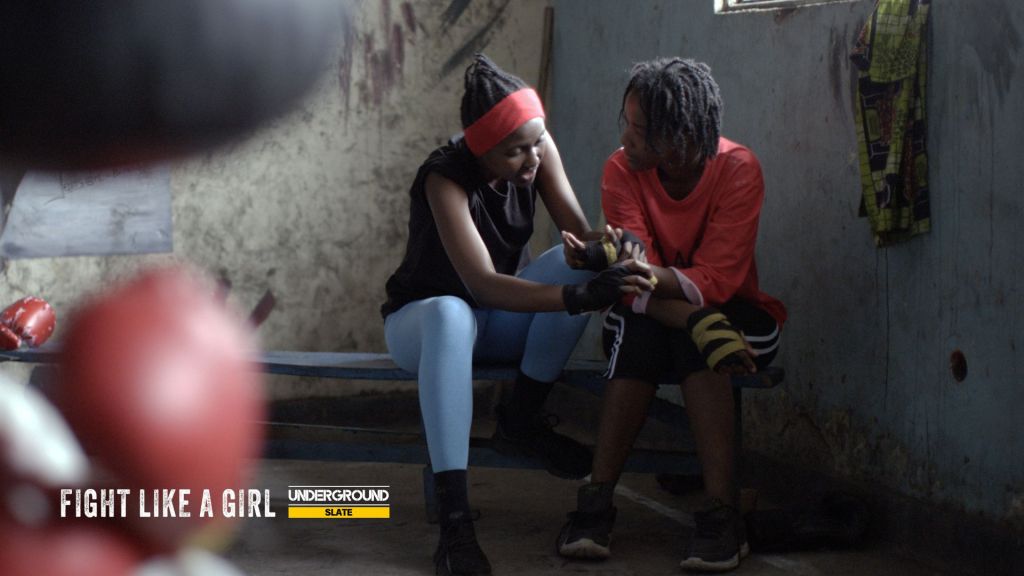
We put a lot of the women from the boxing team in supporting roles and brought in a few professional actors, but most of the film features the real people. The street kids are real street kids we’ve been working with for years. The boxers are all the real boxers.
That was an interesting challenge, but I thought incredibly effective. I really think it makes you feel what it’s like to be in East Congo because they’re just so authentic.
That’s how it came about. I love these women. I love their story. I’m so inspired by them that it was hard not to put my whole life on hold for the last few years to try and get their story out there so people would know who they are.
ALT: You used some real boxers. How did you gain the trust of the women whose experiences inspired the film?

MATT: I think that just took time. Had we not decided to start doing the docuseries on them, I don’t think the narrative film would have worked as well because I don’t think they would have trusted us.
They’d been around us for a couple of years at that point. We spent so much time together, even when cameras weren’t rolling. I know everything about their lives. They know everything about my life.
There was a time when we were thinking about bringing another director in to direct the film. Two of the women came to me and said, “What are you doing? Why?” I explained there were a few reasons. They were very dismissive of that idea.
That was when I realised how long it had taken to build that trust. They said, “You’re just going to take us and pass us off to somebody we don’t know? Not going to happen.”
That was a big moment for me where I realised we were the right people to tell the story. We’re all in this together. We’re a team. I felt like they had dragged me into that team, along with our other producers, Innocent and Clarice, who is my business partner in Rwanda and was a co-producer on the movie.


We’re very close with them. Not to the point that we don’t tell the honest truth of their story, but they don’t want it any other way. They want their story told honestly. There’s nothing hidden, at least that they’ve told me. We had access to tell everything about their lives, and I think they’re really proud of it. Sometimes it’s tough for them to watch that movie, but they’re really proud of that film. That’s all I can ask for.
ALT: Why was it important to shoot on location in the Democratic Republic of the Congo? And what were some of the challenges of making the movie in Goma?
MATT: Lots.
I always thought about shooting there. I assumed that’s where it should be shot. But then the UN was attacked there for the first time ever just weeks before we started shooting, and we started looking into shooting in Uganda, which was much safer and has similar topography.
It didn’t take long before I realised we couldn’t take it from there. Goma is such an integral part of the movie.
Congo is always faked in movies, especially in the West. It’s usually shot in South Africa, which looks nothing like it. The people don’t look the same, don’t sound the same, and the culture is totally different.
People often look at Africa as a monolith. It’s fifty-four countries. They are wildly different. Congo is unique.
We decided to increase the security budget because there was a lot of fighting at the time. We’d shoot in one area under government control and two weeks later it would be under rebel control. That was really difficult to navigate.
Clarice did a fantastic job managing that side of the film and not making us worry too much about it.
I’m really grateful we did it because if we’d shot in Uganda, the supporting cast wouldn’t have been part of the movie. All those young women from the boxing team wouldn’t have had those roles.
After thinking about it for a few days, we realised it was a non-starter. We either postponed the film or increased security because we were shooting in Goma. It’s a major character in the film.

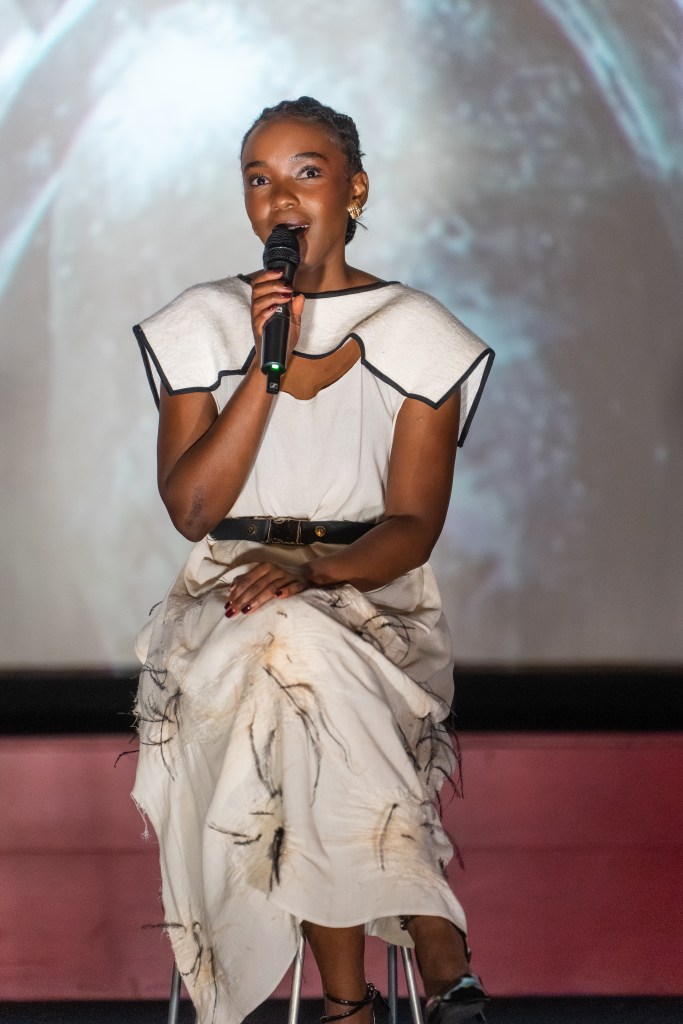
ALT: Amar Kromah delivers a really powerful performance. What made her right for the role of Safi?
MATT: We auditioned Congolese actors, though there aren’t many, especially in East Congo. Then we started looking in Rwanda, Uganda, Kenya, even further afield.
I could find people who could do one part of it or the other. Either the physicality or the emotional side. I couldn’t find somebody who could do both. I found a couple of women who could do both physically, but they were a little too imposing. I needed somebody who looked a little more fragile.
I really wanted to hire somebody local. Frankly, the idea of a South African actor was always, “No, I’m not going to do that.”
Then somebody showed me scenes from Blood & Water, which Amar was starring in at the time. I thought she was quite good.
I flew down to South Africa and met her and her managers at the time, Yvette and Colin, who came on as producers on the film as well. We all got along and saw the film in a very similar way. They understood what I was trying to do. She put herself on tape just to be sure, which I appreciated, and she was great. Anton and I knew she was the one.
With a movie like this, you’re not just looking for a great actress. You’re looking for a partner because she’s in every scene.
She’ll never shoot a film this demanding again. It’s crazy that she did it so early in her career. You’re not going to shoot in a war zone every day. You’re not going to swim in those lakes or sit on a rock by the side of the road all day because there are no trailers.
The days were brutally long. The environments were difficult and uncontrolled.
There are scenes where maybe thirty people are our extras and another 170 are just people going about their day. We’d hide cameras, shoot through windows and doors, and people didn’t even realise they were in a movie.
One time, during a scene where she chases a boy who steals her fish, a good Samaritan thought it was real and tried to tackle him. Our producer Innocent had to sprint over and stop him.
That’s what happens when you shoot in this hybrid style between documentary and scripted narrative. But it’s also what I love about the final cut. People ask, “Was that real?” And a lot of the time, yes, it was.
It’s incredibly difficult for actors. It’s loud and chaotic. Amar used to say, “I can’t hear myself think.” I’d tell her, “That’s the chaos this character is living in. Embrace it.”
She did, and it’s a brilliant performance.
ALT: The film highlights resilience in the face of adversity. What do you hope audiences take away from it?
MATT: I worry that some people think it sounds like a depressing film, but it’s not depressing to me at all. There are difficult moments, especially in the first act, but I’m so inspired by these women and by Clarck’s story, which was a foundation for Safi’s character.
I’m incredibly impressed by the woman she’s become and the adversity she’s overcome. She inspires you t o look at adversity in your own life and figure out how to overcome it. She’s found love. She’s married now. She’s living in America and seeking asylum there. By all accounts, she’s having a wonderful life.
The other thing about places like this, even in a war-torn area, is that people still fall in love. They still tell jokes. They still have best friends. They watch Netflix when they can.
They do a lot of the same things people do everywhere.

That’s what I hope the movie shows. There is far more commonality between us than difference. Most people want the same things. They want to fall in love, get married, have a home, see their children do better than they did, go to school.
The film is about boxing and how an incredible former child soldier used boxing to help women who were victims of sexual violence regain their confidence.
But underneath that, it’s a universal story about love, friendship, finding family, and what family means. Those are pretty universal themes.
ALT: Fight Like a Girl has received multiple award nominations. What is the plan for the film moving forward?
MATT: It’s a difficult road for this movie.
It’s a narrative drama shot in Congo. A quarter of it is in Swahili. It has an all-Black female cast. It’s all the things people in the West tell you not to do if you want to sell a movie.
We’re rolling out in more theatres here in the UK starting around July 1. The team at Underground Slate can provide the exact details.
We’re doing something similar in South Africa in August for Women’s Month, and then there’s a wider theatrical release planned for December.
In the West, we’ve had offers, but they’ve all been digital streaming offers. We’re waiting to see whether we can prove in the UK and South Africa that there’s a broader audience for the film and that it’s not as niche as some distributors think.
We’ll probably make a decision on that by the end of the summer.
ALT: Looking ahead, what else is in the pipeline?
MATT: The docuseries is still a ways away from being finished. We’re translating thousands of hours of footage and still need to do some sit-down interviews, but all the observational material from the years we’ve followed them is done. We’re also developing a thriller about Nigerian oil piracy. There’s a science fiction movie set in East Africa that we’re looking for a director for.
There’s a bunch of stuff happening.
ALT: Are you based in America or Africa?
MATT: I live in Rwanda most of the time and in Johannesburg. I no longer have a place in America.
I don’t know when I’ll go back, to be honest. Maybe never. I’ll never say never. I love America. I love the idea of America. But what it is now, I don’t really understand. It makes me sad because I care about it.That doesn’t mean it won’t change and evolve into something good, but right now I’m not inspired by anything creatively there either.
I’ve spent the last few years travelling and meeting incredible people with incredible stories. They’re piling up faster than I can tell them.
There is one American project we’re considering. It’s based on my life as a kid. My brother was a very successful drug dealer, and it’s about his relationship with his partner, whom he met in high school. It’s a true story set in the 1980s and has become somewhat legendary.
Other than that, most of what I’m interested in is elsewhere. I’m working a lot in India right now and that’s probably where I’ll next have a full-time project.
The projects we’re developing at KG28 with Anton are Africa-centric. Everything is really outside America at the moment.
ALT: Excellent. Matt, thank you so much for talking to ART A Review. I really appreciate it.
MATT: Thank you so much, and enjoy the rest of your day.
ALT: Thank you so much.
MATT: You’re welcome.
Fans who have not seen the movie can catch a screening here on 1st July 2026 8pm: https://www.phoenixcinema.co.uk/PhoenixCinemaLondon.dll/WhatsOn?f=557562