

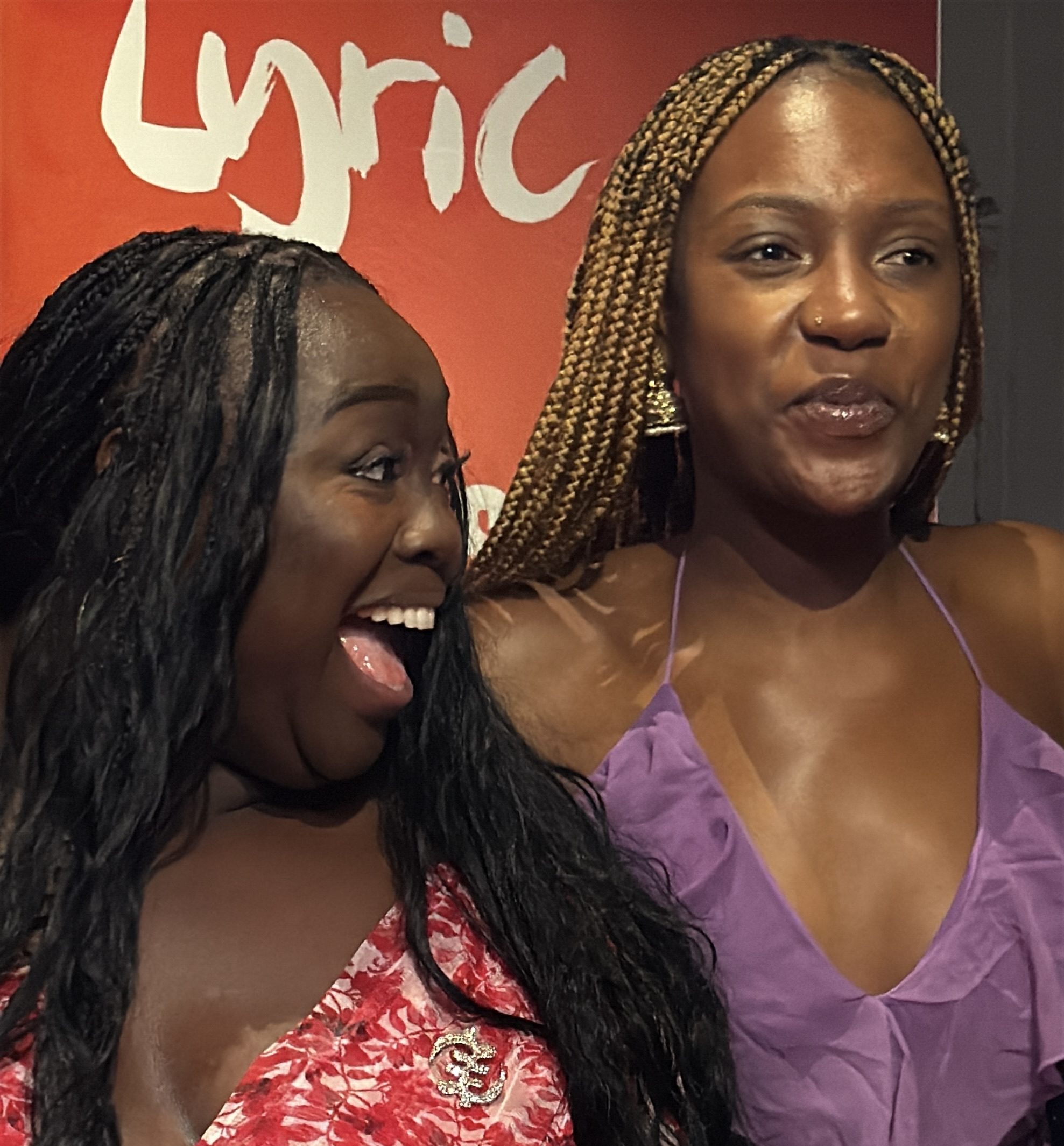
As Jaja’s African Hair Braiding arrives at the Lyric Hammersmith Theatre, writer Jocelyn Bioh and director Monique Touko bring a story rooted in community, migration and everyday life inside African hair braiding salons to UK audiences. It runs 18 Mar – 25 Apr 2026.
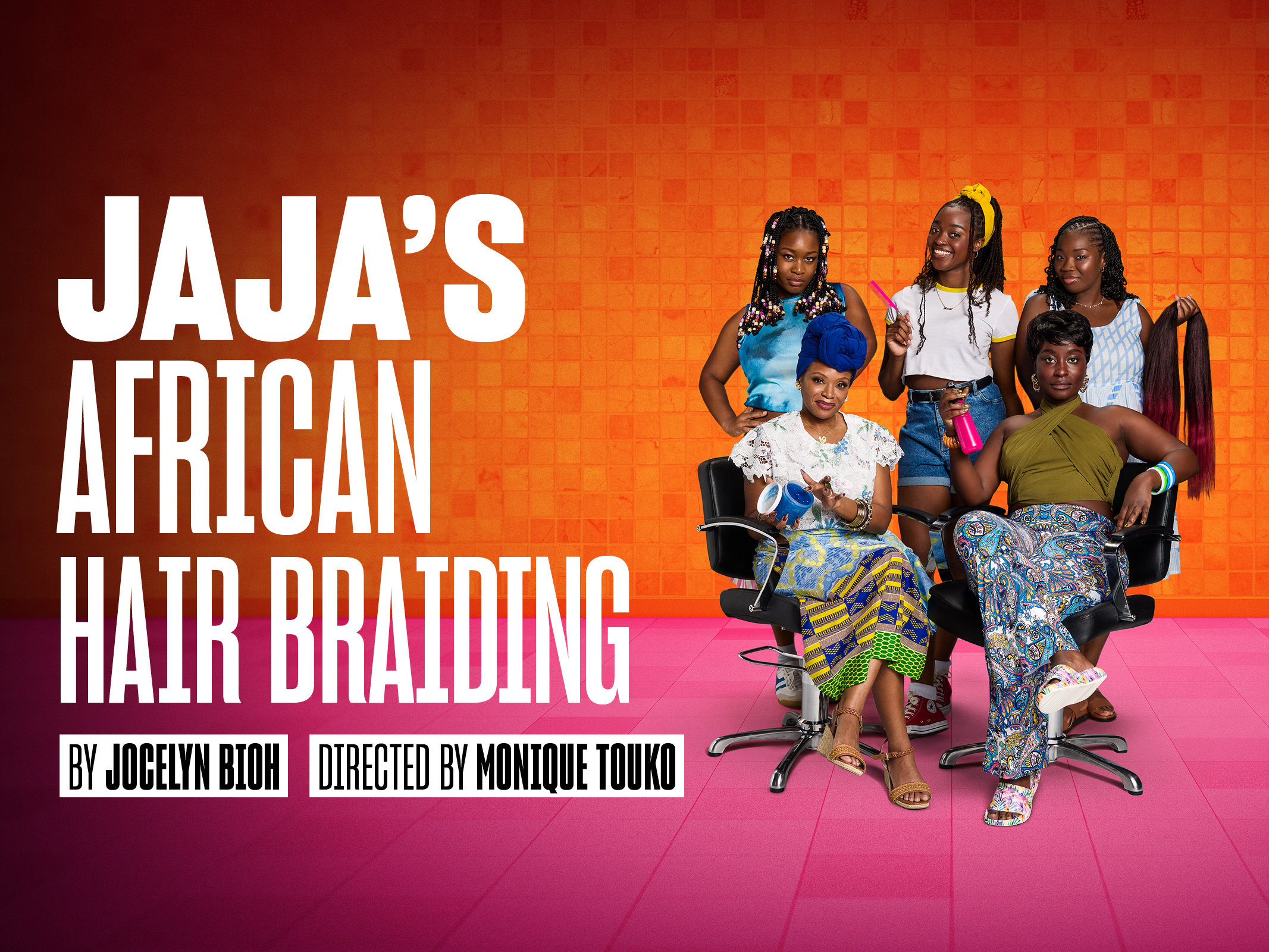
Set in Harlem, the play explores the lives of women navigating business, identity and belonging, while capturing the humour, rhythm and reality of the salon space. With Monique directing and Jocelyn drawing from her own experiences growing up around braiding shops in New York, the production offers both a personal and cultural lens on a familiar setting for many across London.

Currently showing at the Lyric Hammersmith, the production brings an ensemble cast and a vibrant portrayal of salon life to the stage, inviting audiences into a space that feels both specific and widely recognisable. The UK premiere of this Tony Award-winning comedy reunites the team behind smash-hit School Girls; Or, The African Mean Girls Play in writer Jocelyn Bioh and director Monique Touko.
ALT A:
So, I’m going to ask you first. How does it feel to have a multitude of things on stage, and shows which are moving into the West End as well? Marie and Renetta?
Monique, Director:
Yes, I feel very blessed.
I feel like, you know, all the buses have come at once in such a beautiful way. I feel like I’m ready as an artist to take it on as well. But I’m also really happy about the collaborations that I’ve made, people that, you know, trust me with their work.
I feel very honoured. It’s a real, it’s a big deal, and I don’t take it lightly, and I really appreciate it. Wonderful.
ALT A:
Can we talk about the story behind the Harlem setting? The title almost sounds like it’s self explanatory, but I’d love to know the background and how it landed in Harlem for someone who potentially doesn’t know.

Jocelyn, Writer:
Well, I’m a born and bred New Yorker, if you can’t tell from my voice. So, I grew up in Manhattan, the neighbourhood just above Harlem. I live in Harlem now, but I’ve been going to hair braiding shops since I was like four or five years old.
So, these shops really are like a second home to me. I’ve experienced and seen so many things and met so many people, and I knew that the shop would make a really ripe place for storytelling and characters, and to really infuse a lot of comedy. Because I’m sure if you’ve gotten your hair braided, you’ve experienced some of that as well. I think the title comes from that.

A lot of these shops, these are the first entrepreneurs I’ve ever met in my life, these African women who were running these shops, which meant a lot to me, especially being first generation. Both my parents are from Ghana and they are not entrepreneurs. So, I think it was good for me to understand that you can be a young African Black person running a business.
And a lot of times these shops are named, after the people who started them or run them. And I wanted people to know exactly what they were walking into when they came to see the show.
ALT A:
And Monique, we talked about the numerous productions that you are directing. What made you want to take on this story?
Monique, Director:
Well, when Jocelyn calls, you say yes. We did a collaboration before, we did School Girls, and it was career defining for me. So, the opportunity to do the next production was yes, 100%.
And I think there’s also something about her work, it always provides a mirror for me. So, it was about colourism in School Girls, now it’s about hair and our relationship to our hair. And it just makes you interrogate and really look inwards, and that’s what I was interested in.

And then I think I was also aware of the fact that so many UK people will know that context. They know Peckham and they know Brixton. It’s not an unfamiliar setting. So, the responsibility of depicting the setting, I was like, oh, I really want to take this on.
And it’s fun and it’s funny and it’s vibrant. And the opportunity to work with characters and artists to multi role was really exciting as well. So, yeah, it’s such a full piece and it deserves a full production, and I was ready to take it on.
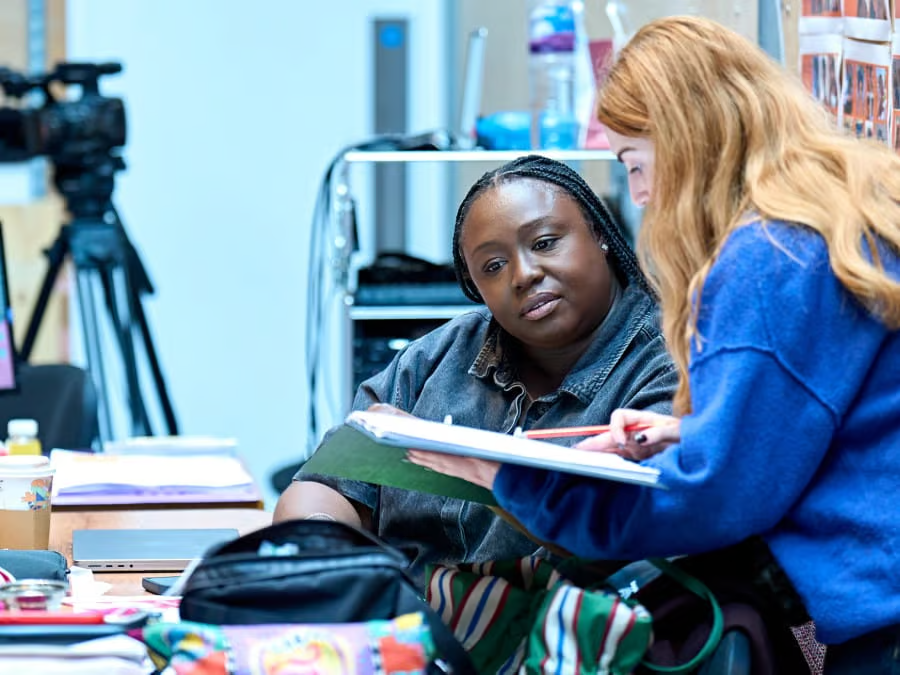
ALT A:
So, Jocelyn, it’s set in a salon. Tell us a bit about the main protagonist. What is the journey behind the story?
Jocelyn, Writer:
Well, I mean, the irony is that the play is called Jaja’s African Hair Braiding. And so, I think one will probably come in expecting to meet Jaja right away, and you don’t.
What’s wonderful about this play is that it’s a real ensemble piece in its truest form. You meet 17 different characters over the course of 100 minutes. You meet the feisty hair braider who always has something to say. You meet the one who’s in a pretty tempestuous relationship with her husband. You meet someone who’s really had a bad day, a customer, and she wants everybody to feel that.
You meet different vendors who come in selling socks, jewellery, DVDs. You meet a lot of people. You really get to feel like you’re in the shop for the day. And yes, you do eventually meet Jaja, which is really exciting.
ALT A:
And if there were a moral to the story, or a theme, what would that be?


Jocelyn, Writer:
I think a huge part of this play is about community. This is a group of different African immigrant women who’ve come to America, settled in New York City and Harlem, and have found community and family within each other.
I think I’d also be lying if I said that a huge part of that is not about immigration and the family you form when you are an immigrant in a foreign land. I hope that people, when they leave the play, feel like they have been in community with these women. We would all do better to look at each other as community members and not strangers.
ALT A:
Why do you write?
Jocelyn, Writer:
I write because I feel I have an incredible responsibility as a storyteller to tell as many stories about marginalised people in the most human and humorous ways possible.
I also love writing. It doesn’t feel like work. It’s a real privilege to be able to do the thing you love and that you were put on earth to do.
ALT A:
And Monique, what do you want the audience to take away?
Monique, Director: I think it’s about the strength of these women. They’re entrepreneurs, they’re hustlers, they know what they want.
We want audiences to feel like customers in the space, not just observers. We want Black audiences to see themselves and feel represented, and others to feel immersed in a world that may be unfamiliar but still feels like home.
We want it to feel vibrant, real, and full of life.
ALT A:
Final advice for those trying to get into directing or writing?
Monique, Director:
Assist and learn. Be in the passenger seat and understand the process before stepping into directing.
Jocelyn, Writer:
Write the play. And don’t judge it. Writing is rewriting. Trust the process.