

Maya Persaud is a former model, entrepreneur and social impact advocate based in Paris. She is the founder of Lotty Dotty and co-founder and director of Espero, a work support programme helping unemployed people, particularly refugees and migrants, use their existing skills to build new opportunities and pathways to employment. She is also a co-founder of Open Homes Open Hearts US

Through Espero, Maya has helped create opportunities for refugees to rebuild their lives through craftsmanship, particularly in fashion and tailoring, while placing sustainability and social inclusion at the heart of the organisation’s work.
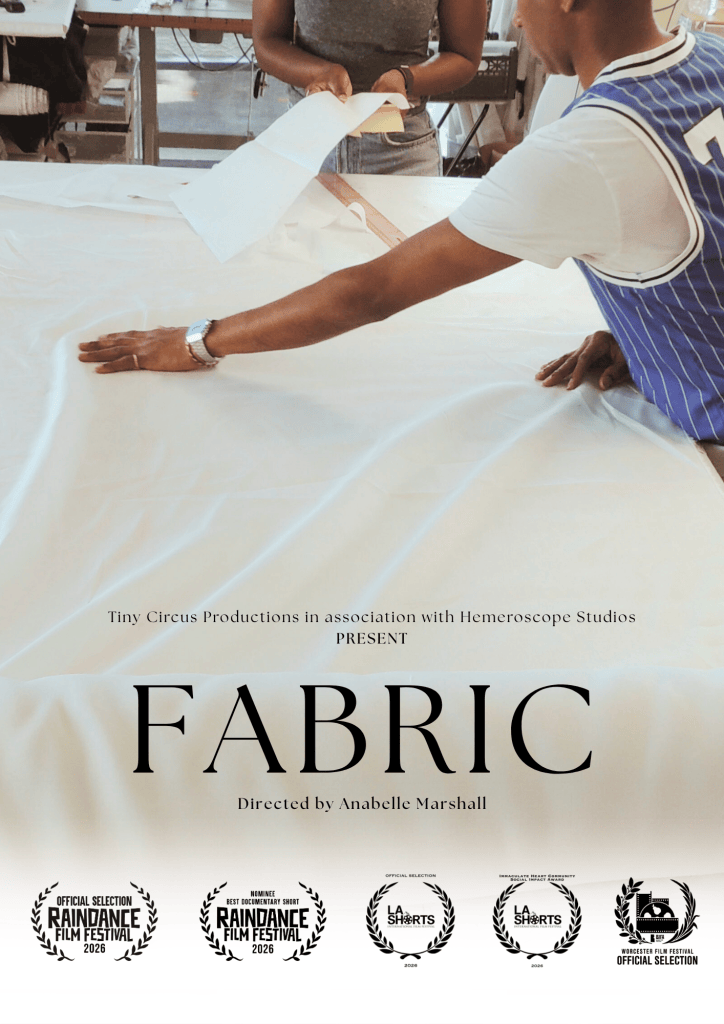
Her journey is explored in FABRIC, a film directed by Anabelle Marshall which premiered at the Raindance Film Festival and recently won the Social Impact Award at the LA Shorts International Film Festival. The film shines a light on the people behind the craftsmanship, exploring displacement, creativity, identity, resilience and the transformative power of opportunity.
ALT
What made you want to use fashion as a pathway to opportunity for refugees and immigrants rebuilding their lives?
Maya Persaud
The stars really seemed to align for this project.
In 2016, I co-founded an NGO with the aim of helping refugees find employment in France, particularly in fields connected to sustainability, such as permaculture farming and beekeeping. Then, during COVID, in October 2020, a friend who worked in fashion called me and asked if I knew any sewers. A designer was looking to hire two people. I didn’t know anyone at the time, but I said, “I’ll look and see if I can find someone.”
I began reaching out to housing centres and our local NGO partners, and quickly discovered more than 30 refugees who had extensive experience as tailors and seamstresses in their home countries. That was the moment I thought, this is an opportunity to build something around this incredible savoir-faire.
By December 2020, I had found a space, and a friend generously donated four industrial sewing machines. The local governing body of the Hauts-de-Seine region then helped us get started, supporting us in recruiting our first eight sewers and launching a project centred around upcycling.

ALT
What drew you to tell their stories through FABRIC?
Maya Persaud
I trusted Sanam completely. We have known each other since 2003, and her commitment to storytelling and to making the voices of people who are often invisible, visible, resonates deeply with me. She came to Paris to meet my team, and after seeing the work we were doing, she decided to make the film. I was truly honoured that she chose to tell our story.
ALT
What are some of the barriers the refugees faced when trying to enter the fashion industry and build a career in a completely new country?
Maya Persaud
The obstacles are tremendous on both sides.
On the one hand, luxury houses are constantly searching for skilled talent, and many of our employees have the expertise they are looking for. Several have gone on to be hired by some of the major luxury houses.
But as a refugee, you are not starting from zero. You are starting from minus zero. You have left behind everything you know, your home, your community, your professional network, often your family, and you are suddenly expected to build a new life in an unfamiliar environment, often without speaking the language.
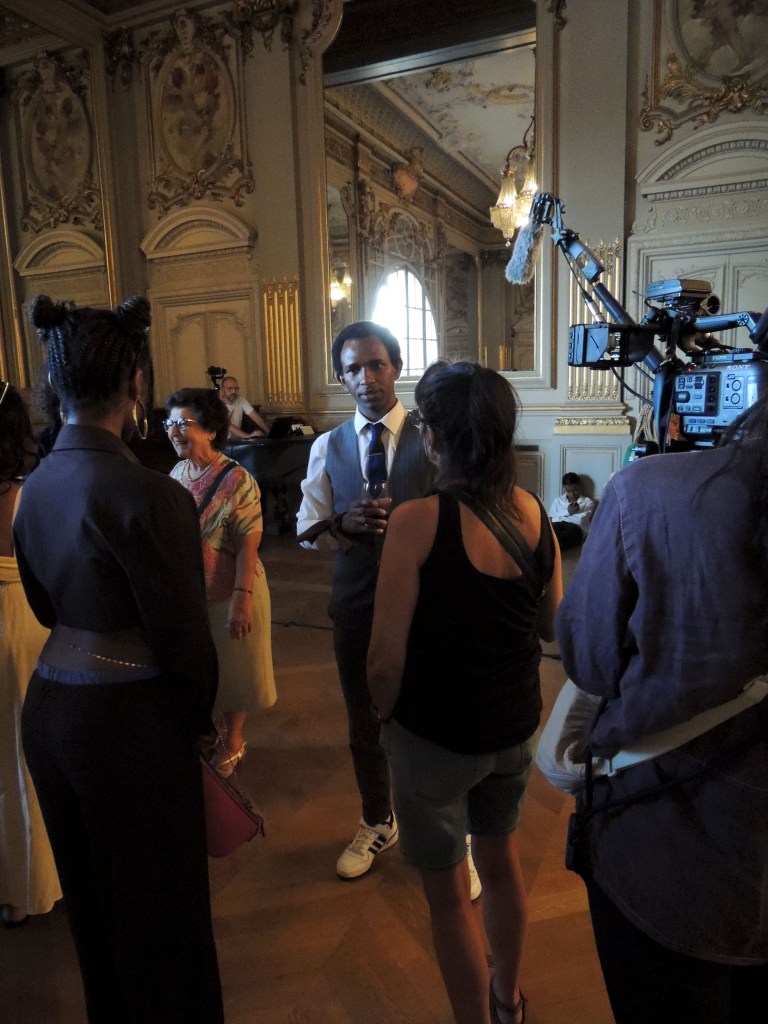
The French government has helped us enormously, particularly by facilitating access to French-language classes. At Espero, our social workers support our employees, the majority of whom are refugees, in navigating long-term housing, administrative procedures and the many practical challenges of establishing a life in France. We provide technical sewing training, and through our partnership with the Musée d’Orsay, we also give them access to cultural events.
All of these elements are important. Employment is not only about earning an income; it is also about finding a sense of belonging, independence and dignity, and ultimately finding your place in French society.
ALT
The refugees in the film go on a journey to create their own collection. What was it like watching that process move from the design stage to the finished collection?
Maya Persaud
There is something incredibly fulfilling about watching a collection move from a sketch on paper into something tangible and alive.
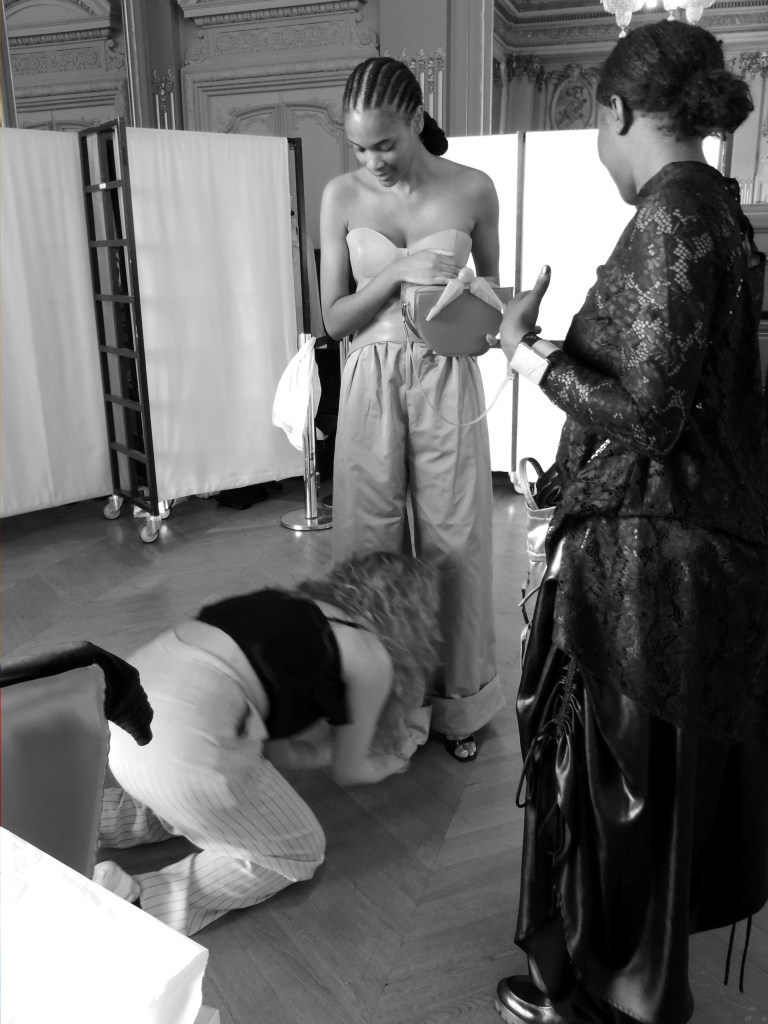
Joy Acevedo worked closely with our team and introduced them to new techniques. Taking a project from beginning to end is enormously empowering. It allows people to see what they are capable of creating, and that process builds confidence, pride and, ultimately, dignity.
The Musée d’Orsay was extraordinarily supportive throughout the entire process. What made the experience particularly magical was seeing so many different people come together to make the show happen. More than 15 nationalities were represented in the project.
To me, that is a beautiful reminder that there is so much more that connects us than separates us. And there is perhaps no better medium than art to make that truth visible.
ALT
The refugee story, as we sit here in 2026, is highly politicised, with conversations about who belongs where heavily discussed. How does it feel to be in a position to create a different narrative through your work?
Maya Persaud
One of the greatest tragedies, to me, is seeing someone unable to reach their potential because of discrimination.
I strongly believe that everyone should have a “seat at the table.” Empowerment is at the heart of what we do. Refugees have extraordinary talent, knowledge and experience, resources that can enrich our societies enormously if we give people the opportunity to contribute.
I feel incredibly blessed and fortunate to be able to play even a small part in creating those opportunities, enabling voices to be heard and, hopefully, helping others recognise just how much we need one another.
ALT
The film features Catherine Brickhill, who has worked with major fashion houses including Alexander McQueen and Givenchy. What did her mentorship bring to the designers and the project?
Maya Persaud
Our entire team was honoured to work with such an extraordinary talent. Catherine is very humble and compassionate, so no one ever felt intimidated by her.
She led the artistic direction for a European collaboration called Textales, through which a collection of clothing was created to reflect the stories of the people who made the garments, primarily refugees.
The collection culminated in a fashion show at the Maison des Réfugiés, where our entire team had the opportunity to see their work brought to life on models. It was a very powerful moment for them, to stand back and see something they had created become part of a larger artistic story.
ALT
How did you balance telling the difficult realities of displacement and starting again with the hope, creativity and ambition at the heart of these stories?

Maya Persaud
Our focus is usually on the craftsmanship and skills of our employees, and on what they bring to French society through their work. If our employees wish to share their personal stories, they are absolutely welcome to do so, but we never want their identity as refugees to overshadow their talent, professionalism or individuality.
Their stories are important, but they are not the only thing that defines them.
ALT
Do you think the fashion industry has become more inclusive to underrepresented communities in the last 10 years?
Maya Persaud
Hmm, that is a good question.
What I can say is that, from the beginning of Espero, some of the biggest names in fashion and art have supported us, such as KCD Worldwide and the Musée d’Orsay. Many of them have chosen not to communicate publicly about their involvement. I believe that is precisely what makes their support so meaningful: their engagement with our project is sincere and does not come from a desire for recognition.
ALT
How does Espero put “people and the planet at the heart of every decision”?
Maya Persaud
All of our collections are made from deadstock fabric, and we work within a circular-economy model. Whenever possible, we even make our deliveries by metro.
Sustainability is important to us, but so is social sustainability.
It has always been particularly important to me to empower refugee women. More than 90% of our employees are women, and I am very proud of that. Some had never worked before; others had never had the opportunity to learn tailoring professionally.
They are incredibly proud to learn a new trade and to develop a skill that they love. My number-one goal is to help them earn a living sustainably from that trade, to transform something they are passionate about into a source of independence and a future they can build for themselves.
ALT
What do you hope audiences feel when they see FABRIC?
Maya Persaud
Ultimately, I want people to see how much more we have in common than we realise.
My employees have changed my life in the most beautiful way. They have taught me to be more stoic, more patient, more compassionate and, I hope, wiser.
I hope the audience sees that too, that beyond our different backgrounds, nationalities, languages and circumstances, we are all human beings trying to build a life, find our place and contribute something meaningful.
And perhaps that is the most important story of all.
ALT