

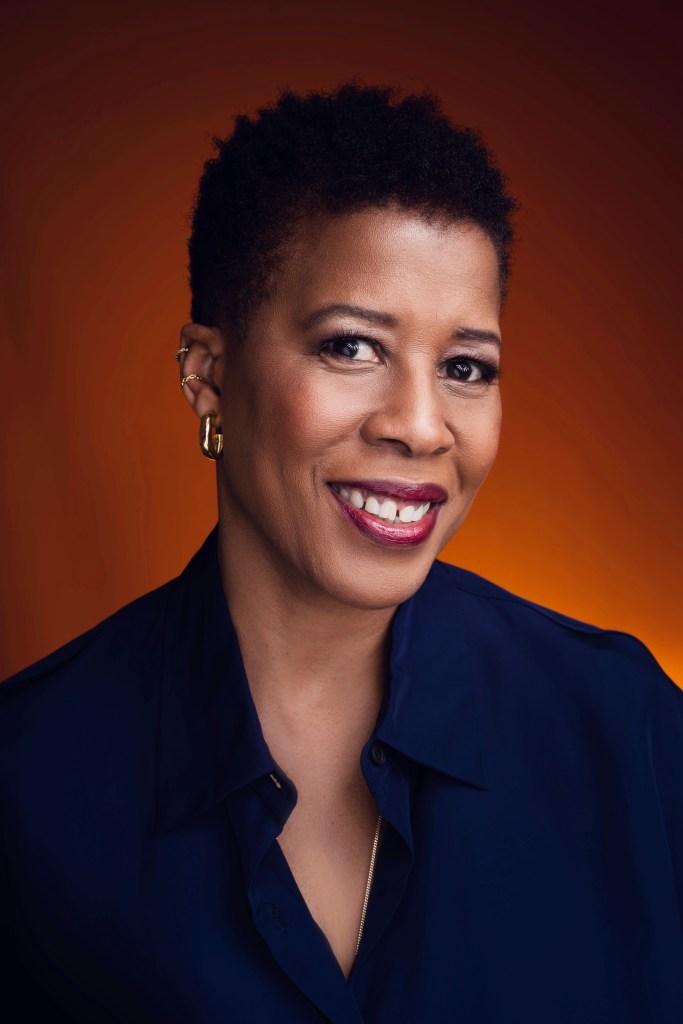
Award-winning Pamela Jikiemi discusses her career from actor training to senior leadership in film education, including her work at #RADA and internationally.
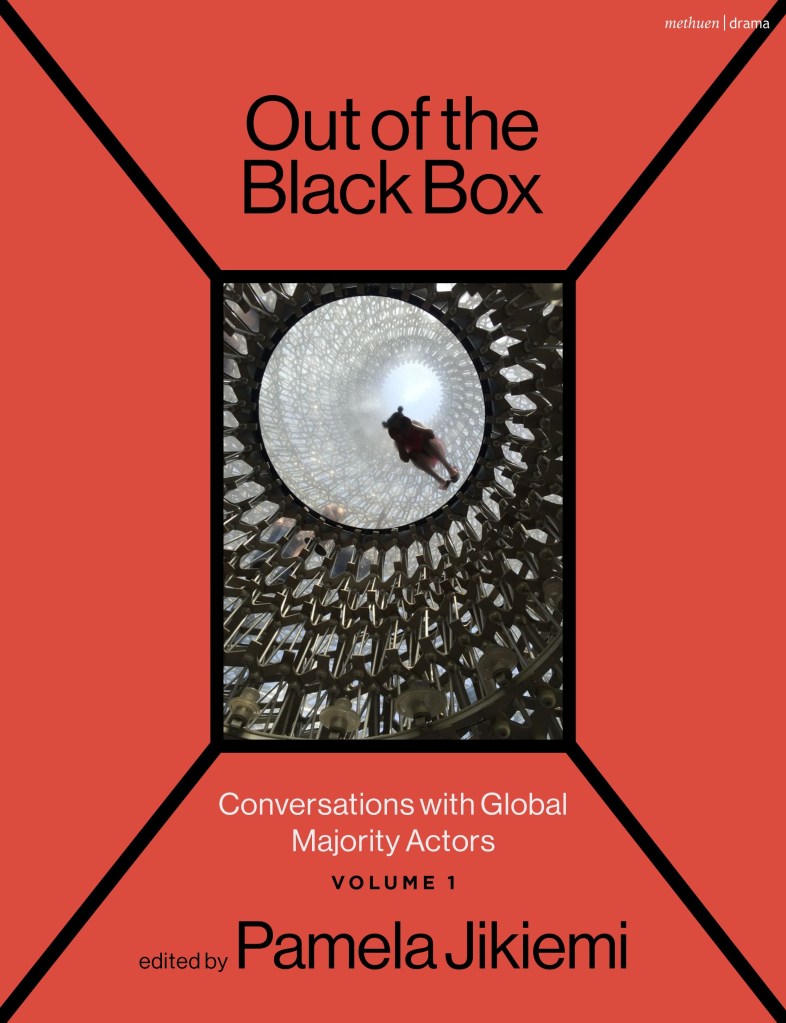
Her #book Out of the Black Box Conversations with Global Majority Actors Volume 1, documents actor experiences using a framework based on actor training, focusing on identity, career development and industry realities. The book outlines structural barriers affecting Black and global majority actors, particularly within training, casting and career progression. Key themes include the gap between training and industry practice, limited representation, and a lack of preparation for the business aspects of #acting.
In our first BOOKCLUB interview she also highlights shifts in contemporary practice, particularly around voice, where newer generations of actors are more rooted in their natural identities.
ALT A: So thank you so much for talking to ALT A Review in advance.
PJ: It is a pleasure. I am very flattered, thank you.
ALT A: I am going to go back a little bit so I can understand a bit about you. You are Head of Film at RADA, a book author, and also an actor yourself. So take us a little bit back into your creative journey and how you found yourself here.
PJ: Oh, well, I trained as an actor many years ago, but much to my parents’ distress. My dad was Nigerian and my mum was Jamaican, and the plan they had set out for me was not that, a creative profession. A lot of money had been expended on my education. That was the same for my siblings.
I wanted to do it, but they said no at 16. So I decided to still think about it. Basically, I said to my dad I had found a course whereby you could do a secretarial course at the same time as training. That just compounded the infraction. My dad almost exploded and basically said we must never speak of this again. And I did not.
Not until my 20s when I decided to apply. I would not say anything until I got in. If I got in, I would tell them. If I did not get in, I would just keep trying until I did. And if I did not, then again it would not ever really be mentioned.
I got into drama school, and it was very tough. It was really hard. I did not have a strong idea of what the training entailed, and I was the only Black and global majority student at the school for a three-year course.
My parents eventually came around when they saw me in my third-year shows, which I nearly did not make. I later realised I was at the tail end of a practice whereby they would take on Black students but not let them finish. They would let you go in your second year because the attitude was, well, there is no work for you. So you could not graduate and get your Equity card.
It was not a degree at the time, and you needed the card to get work. The union operated then as a sort of closed shop. I later understood the impact of that on a lot of Black British actors from the Commonwealth.
At the end of my training, I was told I had a good face for radio. Being quite naive, I thought that meant I was good at something. I loved acting and I really liked radio, so I thought it was a natural segue.
BOOKCLUB: CONTACT INFO @ ALT – AFRICA .COM IF YOU HAVE A BOOK FOR US TO FEATURE
I started doing a lot of voice work. I overheard someone at drama school say, I would not do voiceovers, I would not prostitute myself, and I thought that means you can make money. So I pursued it.
I did not understand then that representation works both ways. You are paying them; they are not paying you. But I learned. I worked with a cooperative agency, which taught me a lot. I worked in casting and then moved into broadcast media.
I worked at Channel 4, went to Rome as a producer for the digital satellite network Orbit, then returned to Channel 4 as a promo director, which I loved. I continued voice work, Def II, Rapido, Dance Energy, commercials, BBC World Service and radio drama. It allowed me to play roles I would not normally be cast in visually.
I then moved to Australia for over 10 years. It was an adventure, but Australia has its own issues around race and gender. I became Head of On Air at SBS Television.
Midway through, I returned to acting, working with the Sydney Theatre Company and the Ensemble Theatre in North Sydney. Sandra Bates gave me great opportunities and I am very grateful.
I came back to London with three children after my father passed away. I felt it was time. I did an MA in Actor Training and Coaching at Central, and that is when I realised the industry had not changed as much as I had believed.
That led me into teaching, particularly screen acting. I introduced short films so students could gain full professional experience, not just fragments of screen work.
I later became Head of Film at ArtsEd, then at RADA, where I built the department over nearly seven years. I recently left for a new opportunity.
There comes a point where you decide to prioritise work that sustains you, rather than constantly proving your right to be in the space.
ALT A: Just quickly, how did film come into this, your short filmmaking?
PJ: Short film came into it because during training students get a lot of theatre, but only one real opportunity to work on screen. I wanted them to have a full experience.
So I created short films for third year students. We opened them up to writing, and instead of just doing scenes, they worked on a complete short film. I brought in professional crews because I wanted the process to be real, shot in three days, with people who understood the pace and expectations.
It gave students a 360 understanding of their craft and the differences between theatre and film.

ALT A: So let us talk about the book, Out of the Black Box. What sparked the idea? Was there a moment or conversation that made you think this needs to be a book?
PJ: It came from multiple things coming together, my own career, my MA research, and reflecting on the lack of visibility and continuity for Black actors.
I began thinking about actors I had worked with, where they were and what had happened to them. Then hearing James Earl Jones speak brought it all together.
I realised these stories were not being documented. There was this narrative that they are hard to find, and I knew that was not true.

ALT A: And how did you decide which Black or global majority actor or artist to include in volume one?
PJ: Those who said yes. That is a good start. I never told anyone who I was talking to.
So those who said yes and were available, I went with that. I jumped on that.
ALT A: So the book is structured around given circumstances. How did the actor training concept shape the interviews and the kind of stories that people told?
PJ: Well, the first question is, who am I? When you look at it in terms of an actor and the circumstances, that stems from the rock-solid facts of the script. So it is a bit like today when you are saying to me, tell me about yourself and your background and your story, and how you got to this point.
Then it goes to where am I? I looked at that in terms of training and learning in the conservatoire, because some actors trained and some did not. I did not always know who had trained and who had not, or where and when. A couple I did, but mostly you make assumptions.
I was interested in how they got there. If they trained, why they trained. If they did not train, was that a decision, or was it because a train of events led them to where they are?
So within the given circumstances, it is about immediate surroundings and larger geographical placement. Is there a sense of movement in the narrative, being somewhere but aiming to be somewhere else?
Then it goes to when is it? That is drawn from the facts in the narrative, the century, the year, the season, the political climate, and how time passes.
As I spoke to each actor, it was about asking these questions, based on a Stanislavski classical training approach, to develop a character. But here I was looking at how they developed their work and their journey.
Then there is the how. How will I get it? In the book, I framed that as what motivates them to keep going. In acting, you respond truthfully and spontaneously to the choices you are offered.
So looking at the interviews, it was about their own work, their collaborative creations, and what the work is now. It used to be mainly theatre, but now there is a wider range of opportunities. That binary has gone.
It also encompassed their perspective as Black or global majority actors. How do they see themselves? How do they view their achievements, the images they project, who they want to work with, and why?
When I trained, you did not really have that notion of choosing who you wanted to work with. You just wanted to work.
I remember reading about Black and global majority actors at the Royal Shakespeare Company. When I was at drama school, there was a great actress we all loved. I later realised we all loved her. As a Black female actor, we all wanted to be her, along with Fiona Shaw.
I followed her career, and then she seemed to disappear. Life moves on, but later I wondered what had happened to her. She started appearing in television dramas, but with very few lines, if any, and I thought that cannot be right.
Then I read an interview with her in a book about Black actors in Shakespeare. She said she had never spoken about it before, but people often asked what happened. She had done a lot of work with the Royal Shakespeare Company and had even won an award playing Marilyn Monroe in an Arthur Miller play.
I thought she was going to blaze a trail. But she said quite simply, I stopped working for the Royal Shakespeare Company because they just never asked me back.
I remember reading that and thinking, they just never asked you back? She said she had never said it before, but she was saying it now.
It made me think of Cathy Tyson and others, and how there seemed to be a gap.
So then it becomes, what do I want? That is how they clarify their aims. What drives them, what their future is, and how they see themselves.
Then what must I overcome? I call that the aims, aspirations and ambitions, the creative voyage of an actor. It is about imagination.
Yes, you may have trained or not trained, but what do you do now? You interpret and personalise what you have been given, both as an actor and as a person. Life informs that, and so do the choices you make.
How do you achieve your objective, and why do you want it? I frame that as the industry and their place within it.
So that is how I used the acting framework and turned it into a way of exploring the person.
ALT A: When you look across all the conversations, what were some of the common themes about what people wish they had known at the start of their careers?

PJ: Yes, there were common themes. I was going to call it prescience and pitfalls, things you wish you had known, and things you thought you understood but had to learn the hard way.
A lot of it was about the challenge of being seen and not being trained to be yourself. Training often leaned towards a white standard, especially for women, where you were positioned within a certain type.
You might be trained vocally in RP or standard English, but when you leave, you are not offered those roles. African actors were often asked to play Caribbean roles, and Caribbean actors were asked to play African roles.
Many said they did not have the tools to access those voices because the training had distanced them from it. They were no longer at home, they had their own lives, and they did not know how to reconnect with that vocal range. So there was a need for a less colonial approach to the canon, and also a better understanding of the business side of acting.
Many said they wished they had understood that they are a business, including the financial side.
A lot also said they wished they had been more able to speak up about discriminatory practices, but fear and isolation often made them feel they had to ignore it and move on.
Now, with more experience, they feel able to say no, that is not for me.
ALT A: What did it mean to you personally to have James Earl Jones contribute to the project?
PJ: It meant a lot, hugely. I saw him give a talk and approached his son afterwards. At the time, I was thinking of using the idea as part of my MA research, and I asked if he might be interested in an interview.
I thought, you have to try. My dad used to say, if you are going to eat a frog, eat a fat one. A few days later, I was driving home with my children when the phone rang. I answered it, and I heard, Hello, is that Miss Pamela Jikiemi?
I immediately recognised the voice. I pulled the car over and said yes. He said, this is James Earl Jones. I understand you would like to have a chat. We had a great conversation and later a full interview. My children were in complete silence, amazed. It was the best car journey home.
What stayed with me was something from his talk. At the end, a young woman asked a question about race. It was not very clearly phrased. He paused, asked her to repeat it, and handled it with openness and care.
It made me reflect on how quickly race is brought into conversations, even when someone is speaking about their work and achievements. It made me want to explore more with him, because there was so much depth there.
ALT A: Wonderful. And across all the interviews, are there any quotes which stuck with you the most or that you resonate with more deeply than others? And could you quickly read that quote for me, please?
PJ: . There were a couple, for example Lucian Msamati said, I came here for the throne. And he was from Zimbabwe. I loved that because he stated very clearly, I came here for the throne. I did not come to be third spear carrier on the left, which is a sort of acting expression when you are at drama school. Some people say take it, some people say do not. But he said, I came here for the throne.
And then Karen Tomlin was talking about voice and how she had met an actor friend in Brixton. The actor’s friend spoke incredibly well, and she realised, oh my God, I cannot believe how you sound, you sound posh. Then she realised she did not recognise the person.
She understood that was how much she had changed her sound. There was a generation of us there, and she said we all sounded the same. She said, I decided to lose my RP accent. I made an active decision to remember how to sound like a South Londoner, to undo that, and to be able to do it if required, because that was not my voice.
I had to reconnect with what my voice was. As an actor, I found it really difficult finding what Karen’s voice was.
And that is what is so interesting watching the actors I am working with now. It is the other way. All these voices are very much rooted in their own voice.
That struck at the heart of me, because how we sound, to a degree, is who we are.
Pamela was talking to Joy Coker Editor and Publisher of ALT A REVIEW.
Out of the Black Box Conversations with Global Majority Actors Volume 1 by Pamela Jikiemi
This ground-breaking collection of curated interviews provides an opportunity to hear from Black and Global Majority actors and artists working internationally. They discuss their careers to date, from what th ey wish they had known to the pitfalls they are still learning to navigate. Interviewees include Noma Dumezweni, James Earl Jones, Indhu Rubasingham MBE, David Oyelowo OBE, Fisayo Akinade, Sheila Atim MBE, Francesca Amewudah-Rivers and many more.
What people are saying about the book….
“Pamela Jikiemi’s book is invaluable because it presents the testimony of those who have gone before, who have despaired, persevered and finally triumphed. Don’t give up, and don’t let anyone define you.”
EDDIE MARSAN, Actor – Laughing Water Productions
“I recommend this fantastic work to all students wanting to train, and all emerging artists in the field. The book is a necessary must read for all Creatives. It is funny, heartfelt and honest – fills the gap for all Black students looking for an access point to the industry.” DARCY DIXON, RADA Graduate, Luke Westlake Just Add Milk Scholarship Award Winner and Trustee of Go Live Theatre
Out of the Black Box Conversations with Global Majority Actors Volume 1 Pub date: 11th December 2025 PB: 9781350264359 £21.99 HB: 9781350264366 £65.00 eBook: 9781350264373 £19.79 Pages: 292 BUY HERE