

Featuring nearly 100 masterpieces across 800 years of history
20 March 2026 — 17 March 2027
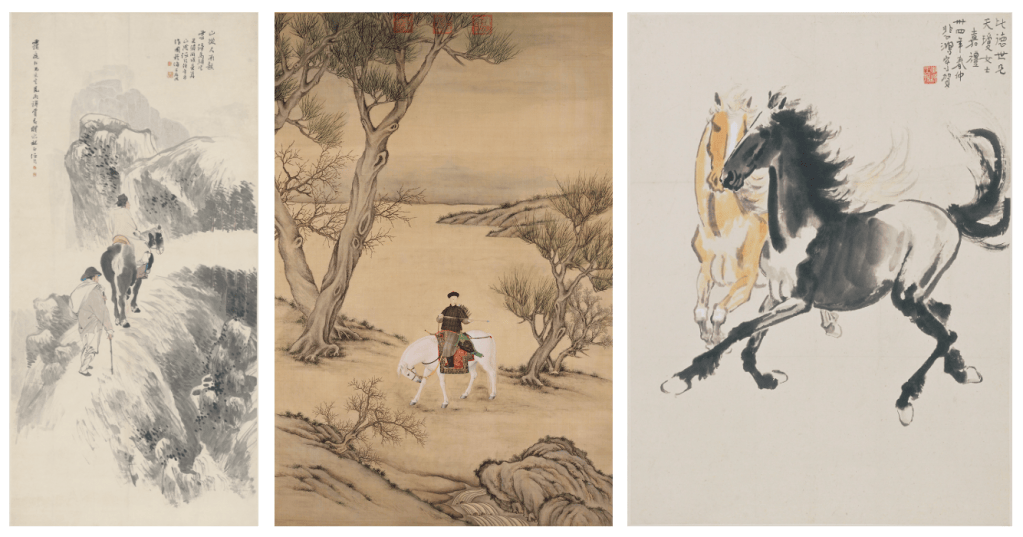
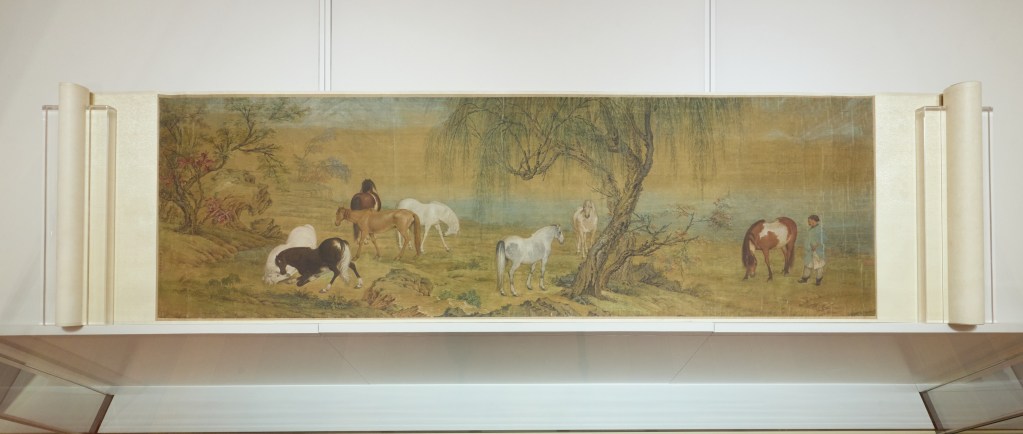
The Hong Kong Palace Museum presents Heavenly Horses: Masterpieces from the Palace Museum (20 March 2026 – 17 March 2027), the first large-scale exhibition in Hong Kong celebrating the equine in Chinese visual culture. Jointly organised by the Hong Kong Palace Museum and the Palace Museum in Beijing to mark the Year of the Horse 2026, the exhibition traces the cultural resonance of the horse through nearly 100 masterpieces by over 60 renowned artists, spanning the Yuan dynasty (1271–1368) to the 20th century.
Associated with resilience, vigour, loyalty and nobility, the horse has long been a favourite subject of Chinese painters since the Tang dynasty (618–907). Following the introduction of European techniques to the late Ming and early Qing courts (17th–18th century), the genre underwent a revival in the late Qing and modern era, fusing traditional Chinese brushwork with modern expression.
Drawing together 76 exquisite paintings from the Palace Museum, including 15 grade-one national treasures, the exhibition is enriched by select works loaned from the Hong Kong Museum of Art and the Art Museum, The Chinese University of Hong Kong. Due to their rarity, and in conservation of the paper and silk-based works, Heavenly Horseswill display around 20 masterpieces at any given time, with works rotating four times during the exhibition’s yearlong run.
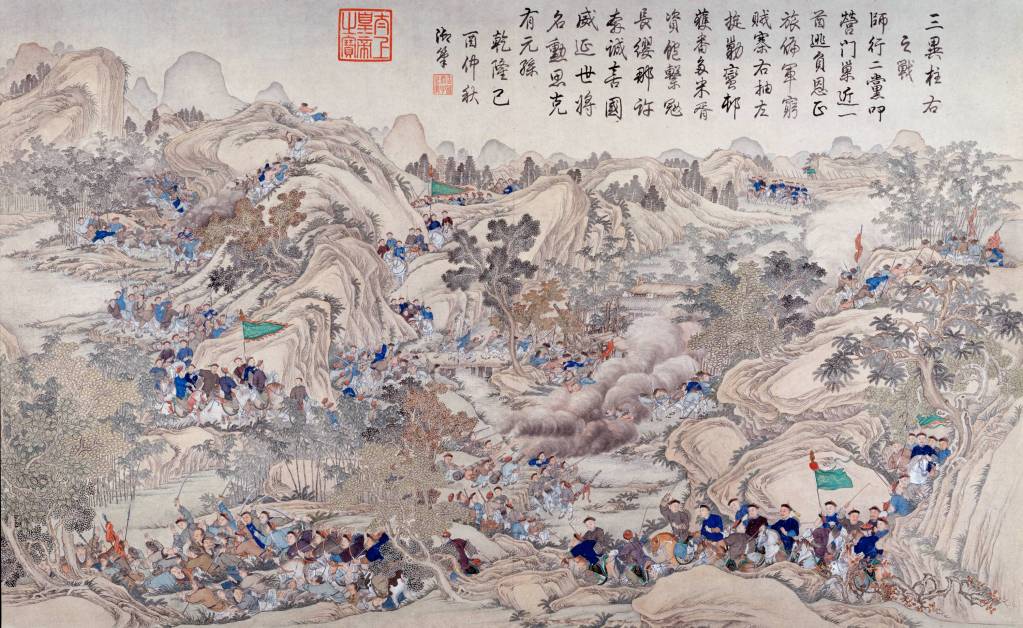
Through four thematic sections – “The Court: Horseback Travels and Mounted Archery”, “The Frontier: Hooves in the Dust”, “Landscapes of Mind and Steed”, and “East and West: Steeds Across Time” – the exhibition surveys the evolution of Chinese horse painting from court commissions and literati interpretations to battle paintings and landscape traditions, and the meeting of Chinese and European artistic practices.
Exhibition highlights include:
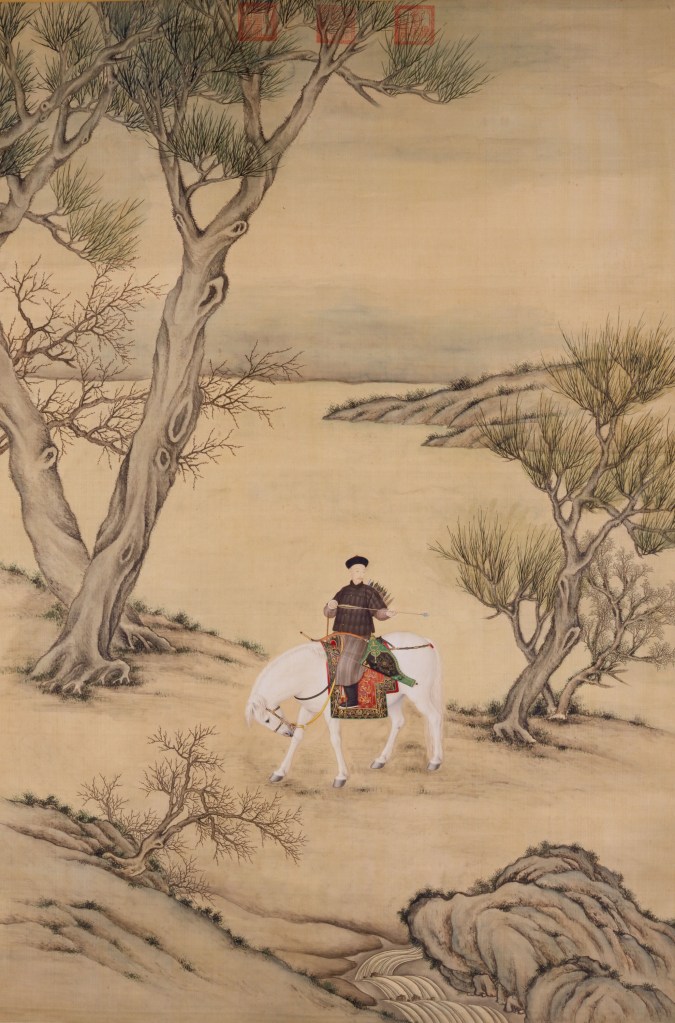
- The Qianlong Emperor Holding an Arrow (1742)by the Italian Jesuit missionary Giuseppe Castiglione (1688-1766) and completed in collaboration with Chinese court artists, a 2.59-metre-tall painting which exemplifies the fusion of Chinese and European artistic traditions at the Qing court
- Horse (early 20th century) by Prince Aisin-Gioro Zaiying (1859-1930), a work rendered in traditional Chinese ink brushwork and chiaroscuro technique, shown for the first time outside of the Palace Museum in Beijing
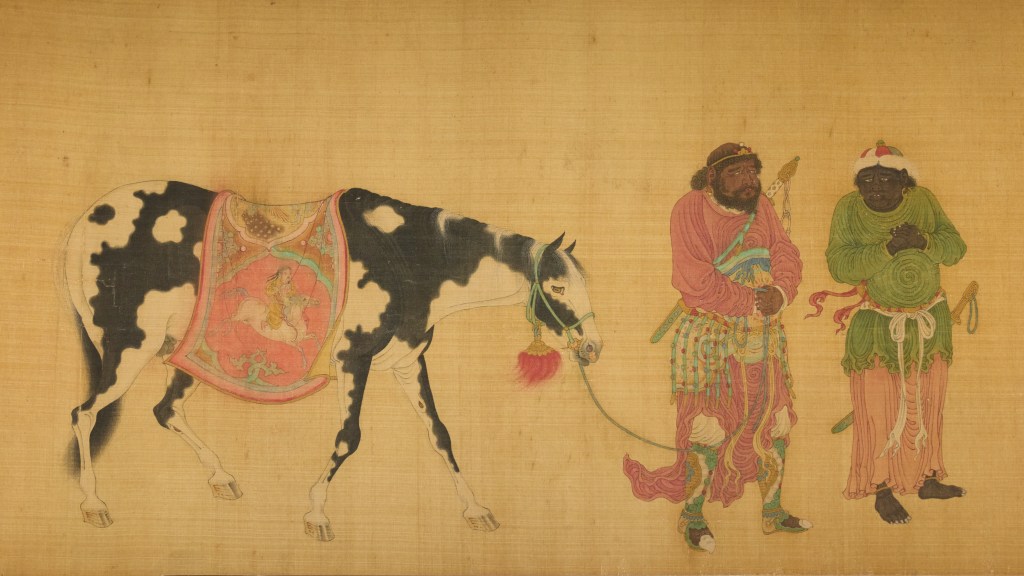
- Three Horses (1342) by Jiufeng Daoren (active 14th century), a handscroll for the imperial court in the Yuan dynasty, depicting foreign envoys presenting tribute horses
- Landscape (mid- to late 16th century) by the Ming Dynasty literati Wen Jia (1501-1583), a traditional landscape painting reflecting on scholarly resonances of the horse in Chinese poetry
- Two Horses (1945) by the pioneering Chinese modernist painter Xu Beihong (1895-1953), a hanging scroll which capture the dynamism and vitality of two galloping racehorses
Leo Kung, Chairman of the HKPM Board, said, “Coinciding with the Year of the Horse, the Hong Kong Palace Museum presents Heavenly Horses, bringing together equine masterpieces by celebrated artists across dynasties, offering a most fitting celebration of the occasion. Through the curatorial process, the team has made new discoveries and developed fresh insights. We eagerly look forward to sharing these treasures and the stories they hold with visitors from near and far, allowing a conversation that bridges past and present to unfold at the Hong Kong Palace Museum.”
Lou Wei, Executive Deputy Director of the Palace Museum, said, “The Palace Museum has long maintained a close partnership with the Hong Kong Palace Museum, collaborating to showcase the finest of Chinese art and culture to both local and international audiences, and to promote cultural exchange and mutual understanding. This exhibition forms an integral part of a five-year collaboration between the Palace Museum and the Institute of Philanthropy, which aims to promote Chinese culture and nurture arts-technology talent. Horses were not only a vital means of travel in ancient times and representations of ceremonial standards; they also served as the foundation of national defence. They stand as a vivid symbol of the Chinese nation’s resilience and unwavering spirit. With a focus on equine motifs, Heavenly Horsesguides visitors to explore the artistic vision of renowned masters and uncovers the social landscapes, spiritual aspiration, and cultural exchanges of different eras, offering a deeper understanding of the profound richness and refined subtleties of Chinese civilisation.”
Heavenly Horses: Masterpieces from the Palace Museum will open to the public from 20 March 2026. The exhibition is jointly organised by the Hong Kong Palace Museum and the Palace Museum, and is exclusively sponsored by the Institute of Philanthropy.
Through innovative curatorial approaches, the Hong Kong Palace Museum presents priceless treasures from the Palace Museum along with the finest collections from other world-renowned institutions. The Museum is also in the process of building its own world-class collection. Opened in 2022, the Museum is a leading institution for the study and appreciation of Chinese art and culture and the promotion of dialogue among world civilisations. The Museum is a collaborative project between the West Kowloon Cultural District Authority and the Palace Museum. The Hong Kong Jockey Club Charities Trust made a donation of HK$3.5 billion for its establishment, as well as some of the annual exhibitions and education programmes in 2023–2032.
Through research, exhibitions, publications, and educational and professional exchange programmes, the Museum builds international partnerships and positions Hong Kong as a global hub for art and culture. A resource that belongs to the local community, the Museum inspires community engagement, fosters dialogue, and promotes creativity and interdisciplinary collaboration. www.hkpm.org.hk
About the Palace Museum
Established in 1925, the Palace Museum is a is a comprehensive museum built on the foundations of the Ming and Qing imperial palaces, the Forbidden City, integrating architecture, cultural relics, and the rich historical and cultural heritage of the imperial courts. In 1961, the State Council recognised it as a Nationally Protected Key Cultural Heritage Site, and in 1987, it was designated a World Heritage Site by UNESCO. The Palace Museum became a national 5A tourist attraction in 2007. The following year, it was among the first Chinese museums recognized by the National Cultural Heritage Administration as a first-grade museum. The Palace Museum spans a total area of 106 hectares and has a total construction area of 233,300 square metres, making it the world’s largest and best-preserved historical palatial complex.
Today, the Palace Museum is an unparalleled art treasure house with a vast collection of over 1.95 million pieces in twenty-five major categories. It showcases the time-honoured and splendid Chinese civilisation to the public through its imperial palace architecture; the display of original interior settings to illustrate the history of the imperial court; galleries dedicated to decorative arts, timepieces, paintings, calligraphic works, ceramics, and sculptures; and thematic exhibitions.
About the West Kowloon Cultural District (WestK)
WestK is one of the largest and most ambitious cultural hubs in the world and Hong Kong’s new cultural tourism landmark, spanning 40 hectares alongside Victoria Harbour. WestK comprises a mix of landmark arts and cultural facilities, including world-class museums M+ and the Hong Kong Palace Museum, intricately designed performing arts venues the Xiqu Centre and Freespace, the 11-hectare Art Park with a waterfront promenade, and the upcoming WestK Performing Arts Centre.
Hosting over 1,000 exhibitions, performances, programmes, and events each year, WestK provides a vital platform for both emerging and established artists. WestK welcomes more than 10 million visitors each year, evolving as the international cultural brand of Hong Kong and strengthening the city’s strategic role as an East-meets-West centre for international cultural exchange. https://www.westk.hk