

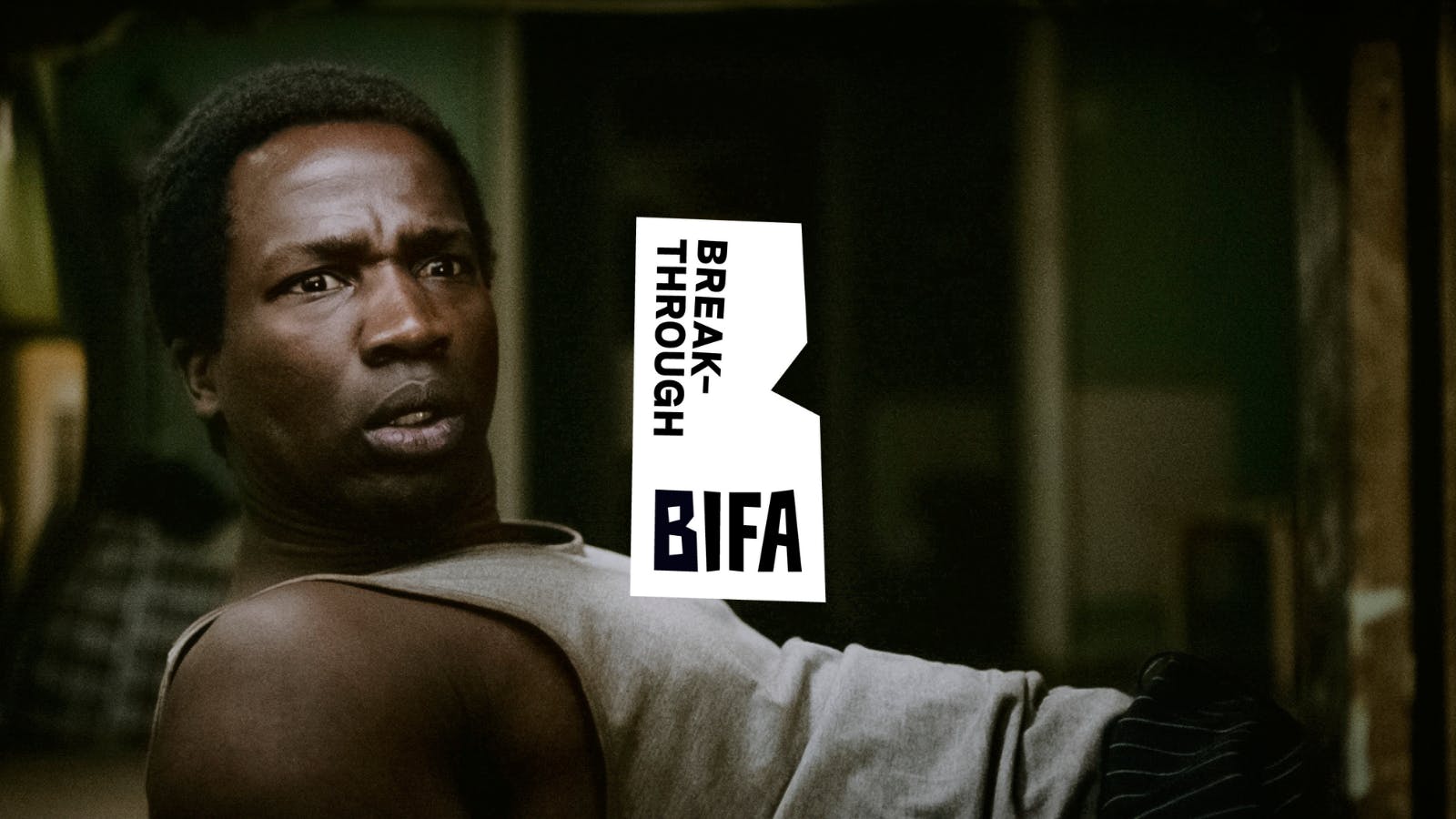


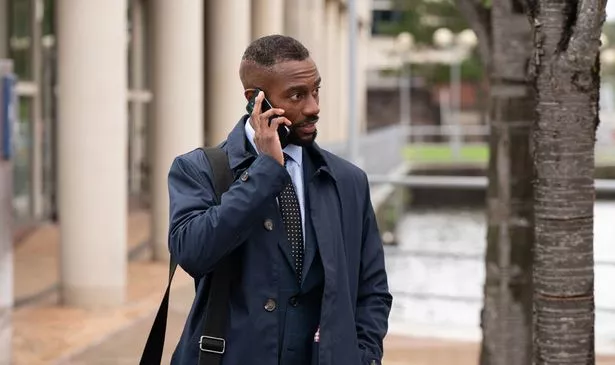
Actor, Director, Author Michael Obiora talks to ALT A about his recent role on the Martin Clunes led ITV show “Out There” now on ITVX, his brand-new children’s book “Zee Zee The Humble Bee”, which was released March 28th and his new short film “Joe Kerr: Laughter is Therapy”.
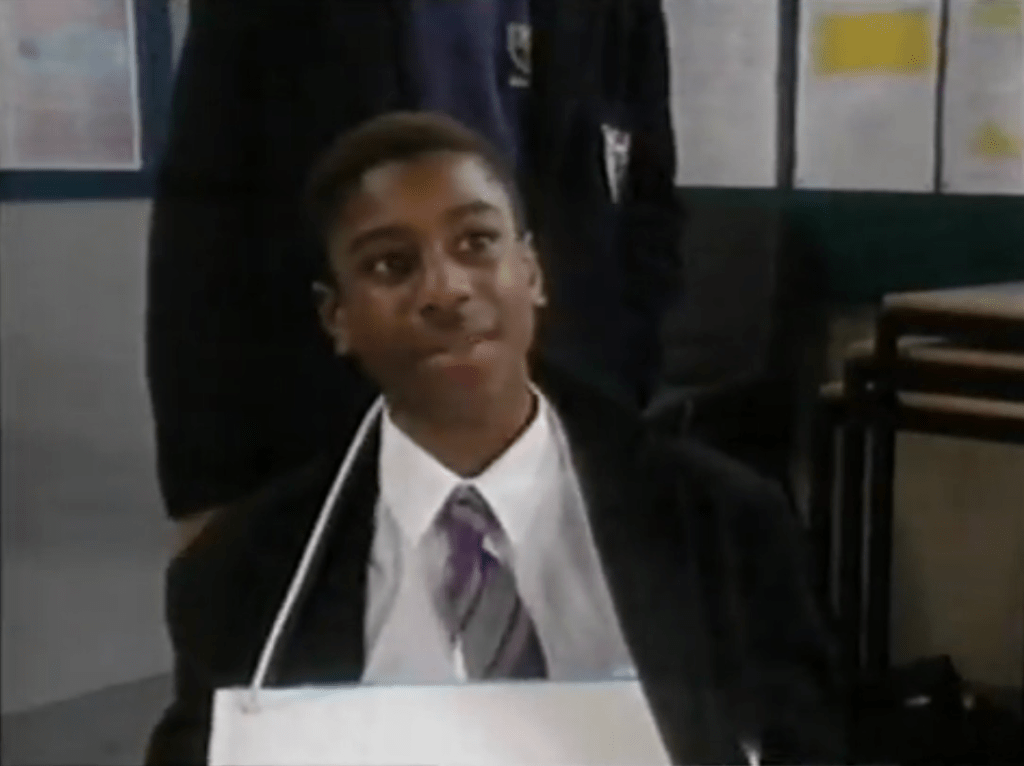
Obiora shares his childhood desire to be an entertainer, from seeing Michael Jackson perform on TV somewhere, and a spontaneous dance in his Nigerian village concert to starring on television, writing children’s books, and creating thought-provoking films, Michael has continuously shaped and reshaped his identity as an artist. In this candid and insightful interview, he reflects on the motivations that have guided him over a thirty-year career, discusses the importance of representation, explores the emotional weight of performance, and shares the inspirations behind his writing. This multifaceted creator is determined to craft a meaningful legacy—on stage, on screen, and on the page.
ALT A: You were in Grange Hill How did it all start?
MO: I definitely, definitely wanted to be famous as a child. I definitely wanted to be a performer. The first piece of excitement I ever remember is seeing this image of the 1988 Michael Jackson Bad Tour. Then seeing him perform somewhere. So I would have been about five or six years old. So this was probably early 90s. And I didn’t know if who I saw was male or female. This is genuine. I didn’t know. I just knew that this being with long hair that I didn’t fully make sense of that individual.. But just the way he elicited this response from everybody, truly to this day remains one of the most amazing things I’ve ever seen.
So amazing that I actually genuinely, I’m so glad I got to feel like that. It’s just a nice thing to be that excited with no agenda as a child, where you have that beautiful naivety, where what you like is what you like. And what do you know, I mean, you just kids can be so honest.
And I just remember thinking, wow. So just from then on, I wanted to know why people were responding to this person in that way. And I wanted to do that for people. My relationship has completely changed with it now. I don’t have those desires. But that definitely was the thing that drove me at the beginning.
But then every opportunity I would get, I would show up and try to get attention. And we went to Nigeria, where my family is from. I’m Nigerian.
And there was a village concert going on. And anybody who’s Igbo will know that part of the tradition is, when you’re dancing and, performing, if people like what they’re seeing, they stick money to your sweat. So people are coming up. when you’re dancing , performing, if people like what they’re seeing, they stick money to your sweat. So people are coming up, I was only, I was six or something, and I was a really chubby kid, so I think that kind of helped, I just looked cute. And there was a village concert going on, my uncle dared my sister to go on stage, she said no way, before he could even ask me, I ran on, and I just started dancing with the woman that was performing.
And 10 minutes later, there was all this money around my feet, because people were sticking the money to my sweat. And then I remember I, when we got back home, I gave, I bought Ribena for all the kids in the village. Because it was like a big deal then, like Ribena.
And I remember there was no fridge, we didn’t have a fridge. So the Ribena was really, really warm and really disgusting. But I remember everybody was so happy.
So it was this amazing thing where I felt euphoric, but also this amazing transaction where, because of something I did, I was able to provide something, and that stayed with me, and has driven me. Actually, that aspect of the providing element is probably the thing that still remains, as opposed to the performing and wanting attention. But yeah, that’s how it started for me.
So, and then within a year of that, I was in drama lessons, so by seven. And within a couple of years, I was on Grain Chill, you know. So it did happen really, really quickly.
Wonderful. And at what point, because obviously we can all, we all want to be actors, we all want to be famous, but at what point did you realise that you were actually good at it, and it can actually be a job? At nine years old, because, you know, Grain Chill. And then by the time I was 12, I was the breadwinner for my family.
So, which is bizarre and strange, and I look back on it, and it’s now, or certainly over the last sort of 10, 15 years, as a fully fledged adult, where you go, okay, that was, you know, that was, that was too much. But I realised almost immediately that you can earn money doing it, to the point where I actually didn’t know you couldn’t earn money doing it. I didn’t know it was hard to be an actor.
I didn’t know that people struggled. I didn’t know anything about drama school. I wasn’t interested in anything about drama school.
I wanted to do it, do this. I was so lucky that it happened. Really lucky I had parents who were fine with it, but then by the same token, there was no time to fail, because I succeeded so quickly, that there wasn’t even an opportunity for anybody to say, hey, you better make sure that you focus on school, or everybody was benefiting from what I was doing.
ALT A: Wonderful, and, you know, fast forward to now, you’ve done so much, you’ve done like Hotel Babylon, Snatch, Looper, most recently out there on ITV. So, what kind of roles do you like playing?
MO: It’s an interesting question. I was talking to my manager the other day, and he said to me, “You know, what kind of things do you like to do? And it’s the first time in my life that I don’t really have specifics at the forefront of my mind. I think I’ve been doing this for 30 years, you know, so however I felt about it before, it’s understandable, it can change. I’m a father now, so my relationship with it is different.
It’s a job. It was the most important thing to me, it no longer is, and it’s my aim for it to be nowhere near the most important thing to me, because it became a pathology, almost demonic-like. You know, I’m a dramatic person, so I do use dramatic language, but it was, I was a fiend for it.
Bitten early and absolute fiend, nothing else mattered. So now, in terms of what type of role I look for, totally honest, I need to be able to provide for my family. That’s really all I’m interested in.
What I will say is, you do find those gaps when you’re working, and you go, oh my god, I’m really enjoying this. And I would say, out there is the first thing in years that I’ve enjoyed doing as an actor.
I mean, I mean that, you want to feel like you’re obviously being stretched, you want to come home exhausted from a day of work, and go to different places as an actor, as a performer. It is a transcendental experience, but I do think that the way it shaped my identity became so all-consuming. I genuinely wouldn’t always differentiate between reality and not, in terms of, yes, of course, you don’t go into a state of madness, you know what’s real and what’s not, but the sky becomes the limit in a way where it’s very, very hard to concentrate on a conversation, you know, it got to that level.
So, first and foremost, whatever job, I just got offered something this morning, I’m probably going to turn it down because I don’t think the money’s enough. Of course, you have to be able to afford to do that, and there is a limit. I can’t afford to do that the way I used to be able to, now being a father, and of course, as well, you do have to weigh it up.
But first and foremost, the money has to be correct, and it’ll be an absolute bonus if it’s something that I feel like I can get my teeth into. You know, if you see me playing somebody’s best friend that doesn’t have many lines, I did it for the money. If you see me. I like really interesting parts, and I really don’t care if the person’s good or bad, because I think that that’s not black and white.
And I think also, as well, having started as a child actor, there’s an element of being a people pleaser that I now realise I had, and I didn’t know that because I’m not a wallflower, I’m not shy, I’m not, you know, I’ll be honest, I’m quite a tough guy, and I say that with comfort just because I’m able also to be incredibly emotional because of what I do, and I’ve always had a place to put it since I was young, and I’m lucky, and I compare myself to friends and family members who haven’t been able to do that, and they’ve really struggled, so I’m lucky because of that. But I like roles that call for that, you know, if I’m honest, I’m a writer, as well, so I’m always trying to create and make things, but there’s a certain level you have to get to for what you put on the page to make it to the screen. Almost nobody is able to do that, so you have to fight for that, and that’s only if you’ve got the energy, because it can be tiring, but just really, really interesting roles.
I’ve gone away from the actory thing of saying, I want to do this, that stretches me, and I want to do stage. No, I want to provide for my family and do really interesting roles, and if I can combine the two, then I’m lucky, but if I only get to provide for my family, I’m fine. It’s been a 30-year amazing run.
ALT A: I appreciate the honesty. So, let’s just quickly talk about your role in Out There starring Martin Clunes, that’s now an ITV player for people to watch. So tell us a little bit about that role?
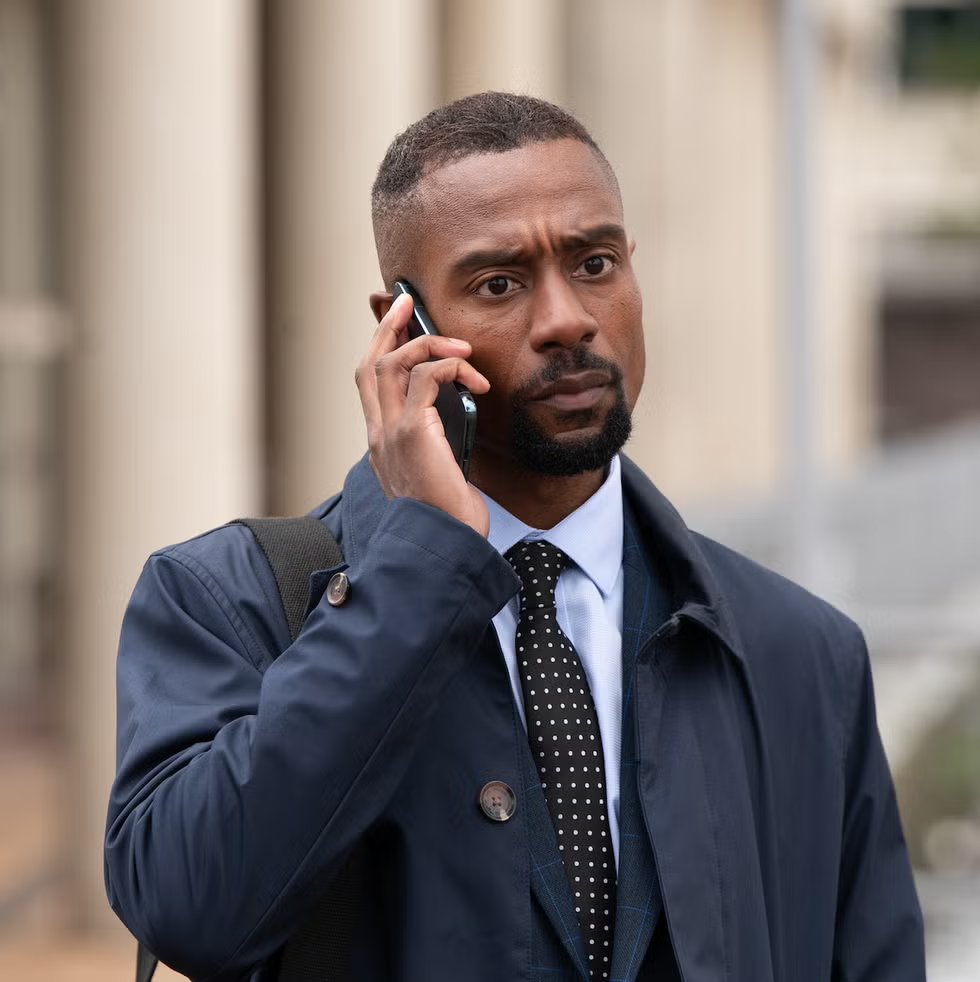
MO:. I play a guy called Scott Foley, he’s ex-army, and as soon as we meet him, I feel like we’re not quite sure what to make of him. He seems quite random because it’s in Wales, there’s not many people that look like him or look like us there.
A shout out to Wales, by the way, I love it, I lived there for a couple of years. So he shows up and he’s always got his pearly white smile, he’s all looking a bit slick, and who is this guy? He claims to be a land and property acquisitions manager. What the hell is that? Does that job title even exist? And if it does, is it really what he does? So he’s very sort of enigmatic, quite mysterious, and very evasive when Nathan, Martin Clunes’ character, questions him.
And what I love about Out There is, first and foremost, I feel like it’s the UK answer to Ozark, which I think is one of the best TV series ever made, certainly I’ve ever seen. It’s got Breaking Bad elements too. So it’s also got that kind of, the jeopardy is there, anyone can get it.
And I think those type of shows are really important, just because life is fragile anyway, and I think when there are shows that remind you of that, gosh, you know, keeps you on the edge of your seat. So Scott is very enigmatic, and if I reveal too much more about him, it becomes spoiler, but you’re wondering if he’s a red herring, or if he’s involved in the more sinister aspects of the show.
ALT A: Wonderful, and just for those who haven’t watched the show, can you just maybe just talk a bit on the theme, because it’s quite an important subject matter?
MO: It explores family, love and loss, so things that everybody can relate to, which is great. I would say the strapline would be how far would you go to protect those you love, because Nathan Martin’s character finds himself in an unbelievable situation where I think it’s not possible to know how you would act unless you were faced in that situation.
Like, I just don’t think you could even begin to know. And every episode sort of ends with that kind of thing of, how are you going to get out of that? And that’s what I found with Ozark and with Breaking Bad, and the way they got out of it, I found myself buying in, you know, which is amazing because it’s quite unbelievable, but it’s such an unbelievable situation that you can’t really quantify or prove otherwise sort of thing. It also deals with county lines, which is something that hasn’t ever really been on my radar, but it’s something that you kind of hear about in the background, how it can affect people who you think stereotypically it wouldn’t affect.
I think the good thing about stories like that is it puts the spotlight on it, we’re in a country where we’re the minority, so if there’s something that seems to disproportionately affect our community, the representation of it is not likely to be highlighted the way it would outside of our community, the way it would be inside our community. So the good thing about out there is these themes are universal, but maybe living in the United Kingdom, where there is a certain demographic, it’s going to put a spotlight on it that I hope will widen it out and sort of make people realise it’s something that does need to be addressed, something that does happen. It’s not something that happens over there to that class of people, you and actually I think you’d be surprised with, although it’s set in the Brecons and Wales, Out There isn’t as whitewashed as you would think it would be, which I think makes for more interesting television.
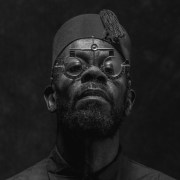
So I really do think there are themes there for everyone, and, people tell me they enjoy it, and I’m really confident that anybody who watches it will. It’s really, really sophisticated storytelling, and to be honest, the performances are really, really good. You can tell the actors are enjoying themselves, they’re taking their time with their performances. We did get to rehearse a little bit as well, which is incredibly rare for TV, and I feel like that shines through in the performances.
ALT A: I mentioned the word versatility, you’re also a writer your first book was Black Shoes, and more recently ZZ and the Humblebee, so when did you start writing, why?
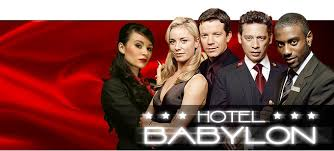
MO: When I started Hotel Babylon, when I got cast in it, I was 18 years old, and I really, really was one of the few Black people, certainly my age, on TV. I can see a huge difference now to then. I can’t believe I’m saying this, because I do feel, I’m an old soul, so I feel like I’ve been around forever, but I feel young, I’m so physically strong and I don’t feel that physically different to how I felt, but I’ve been around for a long time, and I can really say I can see how things have changed, but then, and still now, I feel that way. I do always feel like I’m swimming against the tide, I do feel like an underdog, but it’s necessity is the mother of invention, you know, and basically I was just writing because I said to myself, this position I’m in, you know, Hoaxer of Babylon,
I can’t tell you the actors that would come up to me, white actors too, Black actors, white actors, all sorts, or get me a part or, oh my God, this is amazing, actors that we all admire, actors that would say to me, can you put a word in for me? I was an 18, 19, I did that show, I finished that show when I was 22 or something, I was a child, but I already had a career behind me, having been a child actor, so the old soul thing had already started to gestate, but also I realised that I was in a rarefied space, I had a profile, the show was huge, I wanted to capitalise on it, I never sat down and said I really want to be a writer, but I started writing because I thought, let me write things I want to play, if I’m being totally honest, I wrote for myself, I wrote through that lens, and then as I was writing, it came somewhat easily to me, I realised I was very good at it, and it sort of expanded, and my mind is always busy, so I had yet another place to put these things, which is great, but honestly it started just as some sort of safety blanket, which is bizarre, because it’s still the arts and still precarious, but I literally started writing because I was waiting for the opportunities to run out for me, because I was looking around, my peers, this is at the time, struggling, and I just know that I was Hotel Babylon getting cancelled away from potentially being back in that position, and I knew I wanted to do this forever, by the time I started Hotel Babylon, I’d already been working as an actor for almost 10 years, so it was really I was trying to be some sort of mogul, I really was.
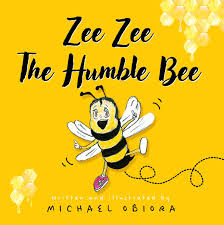
ALT A: Let’s talk about your new children’s book then, tell us about Zee Zee The Humble Bee?
MO: Zee Zee The Humble Bee is a love letter to my younger self, but more importantly a love letter to my daughter. It’s about a bumblebee and she will fly the fastest and furthest than her peers, and it’s all about her celebrating her talents, but being humble, not giving her light to let others shine, but also about learning and the joys of that freedom a child has when they want to express themselves, and when they feel that they’re good at something, and it’s very close to my heart, because I think it’s important, I want my daughter to fly, and I want all kids to fly, but I grew up being constantly told, don’t think you’re better than everyone, who do you think you are, people constantly trying to slap me down for being confident, like I said I’m a tough guy, these resulted in fights, not arguments, physical fights, I didn’t accept it, you said that to me, I would hit you, I would immediately, I wouldn’t even ask you why I would hit you, we can talk about it later, and obviously you know that comes at a cost, I was expelled from school, I remember my teenage years, my hands always used to hurt, because I was always fighting, and this is all while being on TV, being a child actor, being a child star, and that was a lot to deal with, and I remember thinking that I wish I had an adult to talk to about this, because the adults were useless, if I spoke to them about it, they were bitter, and I get it, being an adult now myself, people don’t mean these things personally, life gets tough, and we get baggage, but I think there was something about seeing a smiling young black boy, really enjoying himself, providing for his family, and there was a lot of people who didn’t like it, I was walking down the corridor when I was 11 years old, so just started secondary school, and by then I’d already been in Grangeville for a couple of years, because I was playing a few years older, which had its own bizarre kind of parallel universe, but I remember my head of year, a silly woman, she said to me when I was walking down the corridor, Michael why are you smiling, the cameras aren’t rolling now, I was 11 years old, I mean I can’t tell you the fury that it caused me, I was so angry, to be honest with you, I wanted to cry, and I’m very emotional, but also I didn’t understand what the problem was, I didn’t understand, and then it was clear to me she was talking about the fact that you’re in Grange Hill and you think you’re this, and you think you’re that, and that stayed with me since I was 11, it’s a long time ago now, so I always knew I wanted to write some sort of story about that, and I just remember when, you know, my daughter, she was born in 2020, so she was a Covid baby, and you know, I remember I got to spend almost every second with her, and I would just think, God, I can’t believe she has all this life in front of her, and what about if she goes through a modicum of what I’ve gone through, because I don’t think it’s for everybody, and what would I tell her, and what guide would I like to give her, and next thing I knew I’d written a story, and drawn some pictures.
ALT A: I’ve seen the book, it’s quite illustrative, and bright and yellow, so what age group is the book aimed at?
MO: I think it’s aimed at, I would say the core is three to seven, I would say that’s the main, I think comfortably go up to 11, but I also, so that’s it, it’s a kid’s book, but I do think it’s a book for adults too, in terms of, we should be very mindful of the things we say to kids, you know, I really do try to be positive, but I do think that without necessarily meaning to, there’s a baggage and a bitterness people have, and you need to be able to park that as much as possible, I don’t think people park it as well as they think, I’m talking about myself too, trust me, like I don’t blame people for things I’m not willing to blame myself for, but that’s an area that I don’t think is acceptable, you have to, you have to let kids fly, you know, you look at a lot of the problems people suffer from in early adulthood, and almost everything can be linked back to the things we say, down to the things we say, you know.
ALT A: let’s quickly talk about Joe Kerr, so tell us a bit about that character, a bit information about the background to the project, and where can we watch this, it was very funny by the way?
MO: I’m really, really glad you like it, honestly, I was saying I remember you from somewhere, and then you came on with the American accent, I was like, that’s not the guy, maybe that’s a guy, this guy, okay yes, he’s English, or maybe he’s lived in America for the last time I saw him, but yeah it was very good. Oh I really appreciate that, well I’ll be honest with you, I never really know how I’m going to sound when I open my mouth, I’m not just saying that, like I have to always think where am I’m in England, who am I talking to, who am I being, am I being myself, what is my accent again, you know, so I am always, I’m always flitting, because I’m always narrating books, and doing different, I do different language ones, so I do have to, so I’m lucky I can tap into the way different people speak, but basically he’s an American stand-up, and he goes on stage despite the most recent bereavement, like literally he finds out his dad has died, and he still goes on stage, and so yeah it’s called Joker Laughter is Therapy, it’s available on Vimeo and YouTube, and again it was something that was gestating within me, because it happened to me when I was 16.
I was doing a play at the Royal Court Theatre, again it was very groundbreaking at the time, it was a play loosely based on the murder of Damilola Taylor, I was playing the gang leader, you know one of the perpetrators of the crime, I was only about 16 years old, and I remember during that run my dad died, and so he died, and you know the morning he died I called Ian Rickson, the director of the play, he was also the artistic director of the Royal Court, so very high up, and and I called him up, and I just told him my dad died, and before I could carry on he goes, oh my god we’re cancelling the show, and I completely, completely flipped out, like I just completely flipped out, because I was stunned, that’s not why I was calling him, I was calling him just to let him know I might be a bit off tonight, and maybe I would rather not really engage with anybody, I just want to do the play and keep it moving, you know that’s why I was calling him, just to let him know, so nobody says why is he, you know, not going on stage wasn’t even an option for me, him saying we’re going to cancel the show, I took it as an insult, because for me I thought don’t take this away from me, it’s the safest place for me to be tonight.
I felt lucky I had somewhere to be, in hindsight I don’t know if I would do things the same, or do differently, I’m a parent now, like I say it’s a long way off, but if my daughter was 16 and she suffered some sort of, I don’t know, all I do know is that he told me on the phone we’re cancelling the show, if he had told me in person I would have broken the room, it’s not happening, and I went on stage, and it was the best thing ever, I dedicated the play to my father at the end, and I burst into tears, but it’s something that stayed with me for a long time.
I think I had something like regret for a few years about that, in terms of I’m mad, why is it that it wasn’t even an option to not go on stage, and like I said it’s because it was an addiction, there was one point when there was nothing that would make me feel better than performing, there was one stage, so yeah, looking back on it I’ve forgiven myself for it, I think I probably would do the same thing again, and also as well, that’s the thing, laughter is therapy, it doesn’t have to be funny, but what I mean is the performance is therapy, because actually I wanted to write a comedy when I wrote that stand-up short film, and it ended up being dark, I don’t think in terms of light, my art tends to be quite dark, I’m not into smiling and stuff like, you know, in camera, away from, no I’m not, I’m just not, I just accept it now, I think I felt pressure to be like that 24-7 before, because you got famous or known for that type of thing, now I’m just not, and I think it kind of shows through in my writing a little bit, so I try to force myself to write a comedy, I have written a comedy, you think it’s funny, a lot of people think it’s funny and I’m very grateful, but you know, it’s in the, he’s suffering a bereavement. It’s available on Vimeo.
ALT A: Okay, so final question, what is next for you that you could talk about?
MO: I have no idea, I genuinely have no idea what’s next. I’ve got another children’s book probably coming out towards the end of the year. I’ve written another Joker stand-up special, so I’m gonna shoot that probably by the summer, so that’s coming out soon.
Joker also as well was a part of a trilogy of short films I’d already shot and wrote and directed and starred in, so I’m gonna put them all out this year. I want to bring out a book of poetry, I’ve been planning to bring that out for some time, and I think, again, the sort of last quarter of this year, that’s gonna come out. So it’s funny, I say I don’t know what’s next, I actually do have a lot of things going on, loads of audiobooks coming out.
I think maybe when you asked me what was next, I thought maybe as an actor and something I haven’t created myself, something that’s coming my way. You might see me on screens more because of things like Out There, and people know I have the appetite to do work like that, so that’s really, really good, because sometimes people think, you know, I’ve been told, oh you didn’t seem interested, you weren’t interested, and they don’t even approach you in the first place.
Out There is available on ITV and ITVX now. Joe Kerr: Laughter Is Therapy is available on Vimeo VHX TV, and Zee Zee The Humble Bee is available now in most bookshops and you can buy online.