

Acclaimed actor Wale Ojo discusses his beginnings in the entertainment industry, starting as a child actor on Nigeria’s first television station WNTV (NTA) at the age of 8, and later finding success on the stage and screen. He shares he drew inspiration from “many” legendary Nigerian performers, from Sam Loco Efe, to Jimi Solanke, who was also a great musician and of course the great Wole Soyinka, who Ojo described him as being almost “god like” in status when he was growing up, and how moving back to Nigeria from London has impacted his career, “Nigeria brought me fame” he states.
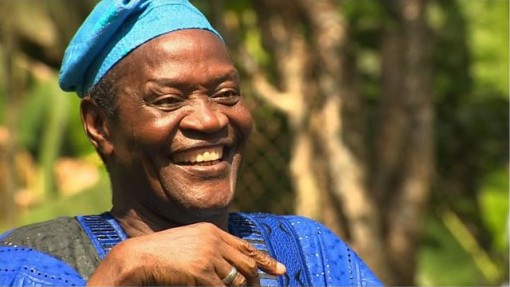
Ojo also reflects on the legacy of the late filmmaker Biyi Bandele, with whom he collaborated extensively and called his friend. Ojo talks on his role as Elesin Oba, in the upcoming Utopia Theatre production of Wole Soyinka’s classic play “Death and the King’s Horseman” at the Crucible Theatre in Sheffield, exploring the themes and significance of the work. Ojo emphasizes his passion for the art of acting and his commitment to using his platform to promote African culture and when he is not working how he uses his charity to support underserved communities, especially in the North of Nigeria.

.
Dubbed the “Samuel L. Jackson of Nollywood”, Ojo bodes an impressive resume of work, and when he is not acting, he takes his popular 12-piece Afrobeat band on the road. Credits include & he is best known for: Heartburn Hotel (BBC) 1998, Behaving Badly TV Mini Series 1989 with Judy Dench, Johnny English Reborn (2011) Black Earth Rising (Dr. Emmanuel Musoni )TV Series ,2018 New Money as Chuka, 2016, The CEO as Kola, 2013 (dir.: Biyi Bandele) Half of a Yellow Sun (Chief Okonji), 2012 Meet The Adebanjo’s (50 episodes) as Bayo Adebanjo, 2012 Phone Swap, to name a few. Ojo spoke to ALT’s Editor/Publisher Joy Coker while he was promoting a film project in Tunisia, Ojo has taken on the character of Wole Soyinka in an adaptation of ‘The Man Died’.
Joy:
Firstly, I would like to say thank you so much for talking to ALT A REVIEW.
Wale Ojo:
Thank you
Joy:
Let’s start at the beginning. Who was the 9-year-old who made you the actor you are today, where did this creativity start?
Wale Ojo:
Well, I think the creativity started in my mother’s womb, actually (smiling).
Joy:
Yeah?
Wale Ojo:
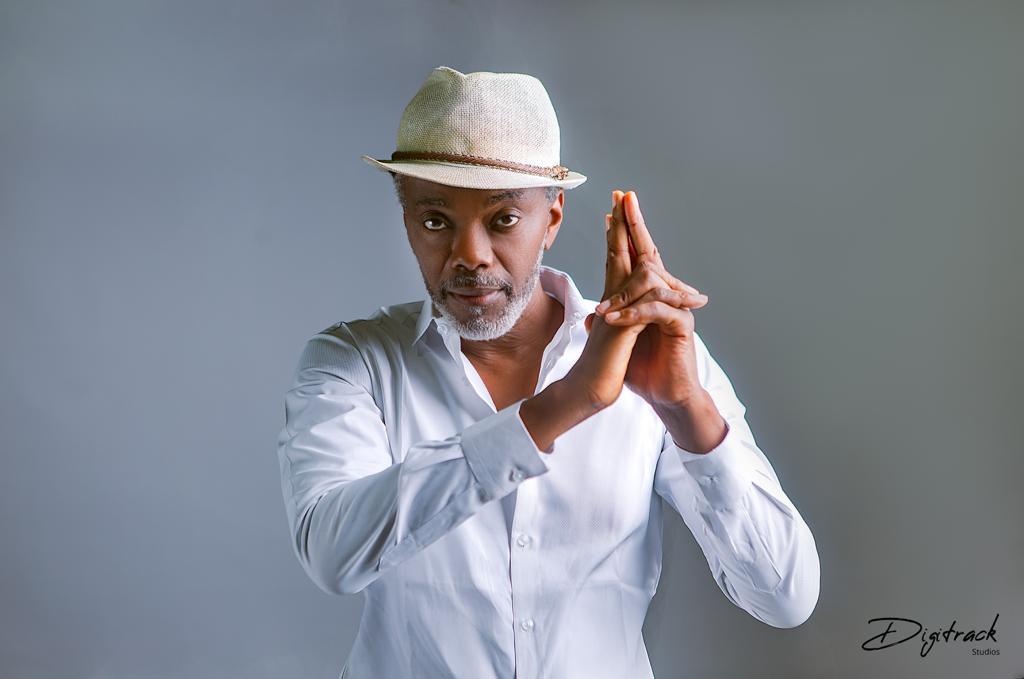
I’ve always had a fervent imagination, creative imagination, and I think I’ve always been surrounded by a lot of nurturing women. My mother, her best friend who was Africa’s foremost female playwright. And really, I grew up at the University of Ibadan theatre where I saw many plays. And that was where, if you like, where the English statement that they say, where I caught the bug and not a flu bug, but the theatre bug, the acting bug.
Joy:
Okay. So do you remember your first professional job and what did you take from that experience?
Wale Ojo:
My first professional job was in the UK. Well, actually to point I was here, my first professional job was in Nigeria with Africa’s first television station, WNTV, because I got paid as a child actor with them. And that was where they kind of put me through my paces. A lot of the bigger Nigerian actors, that was when Nigerian television was at an all-time high. And for me, it was like a dream come true. And I think I must’ve been about 8 also when I first go in there. And I played different roles. And then I came into the UK and then every time I come home for holidays, I’ll go there and perform at WNTV Ibadan.
That was the very first television station in all of Africa. And you call it the BBC, if you like, of Nigeria, Africa at that time. So they had a drama department, and that was where I performed a lot. And then fast forward to the UK when I was 21, then played my first professional role. There was a stage production of William Shakespeare’s Othello, in which I played a very young Othello to a very young Desdemona, all dressed in army fatigues. It was a frightening but extremely rewarding experience. I have been meaning to do Othello ever since sense.
Joy:
Growing up, who were some of the creatives who stood before you that inspired you?
Wale Ojo:
Oh, there’s been many. I’m truly inspired by the films of Ade Love, great theatrical luminaries and legends. Herbert Ogunde, Jimi Solanke who was a fantastic musician and actor. who really brought me up at the theatre, the University theatre in Ibadan. The great actors like Akin Lewis (Don’t Worry) , like Sam Loco Efe. The names are endless. And then of course Wole Soyinka is a fantastic inspiration.
When we were growing up, it was a bit very distant when I was growing up, he was almost like a godlike figure that you could not touch. And there’s so many, I mean, great comedians who followed in the style of, if you like, the style artists like Baba Sala. these were names that in your part of the world would be like, or the guys who did the Oxford University comedy plays. I’m thinking of alternative names that realize, an analogy. The Charlie Chaplin’s if you like, of Nigeria. These were great, great legends, and they were truly inspiring.
Joy:
You moved back to Nigeria in 2012. So, what has that meant to you personally, and what has it meant for your career for better or worse?
Wale Ojo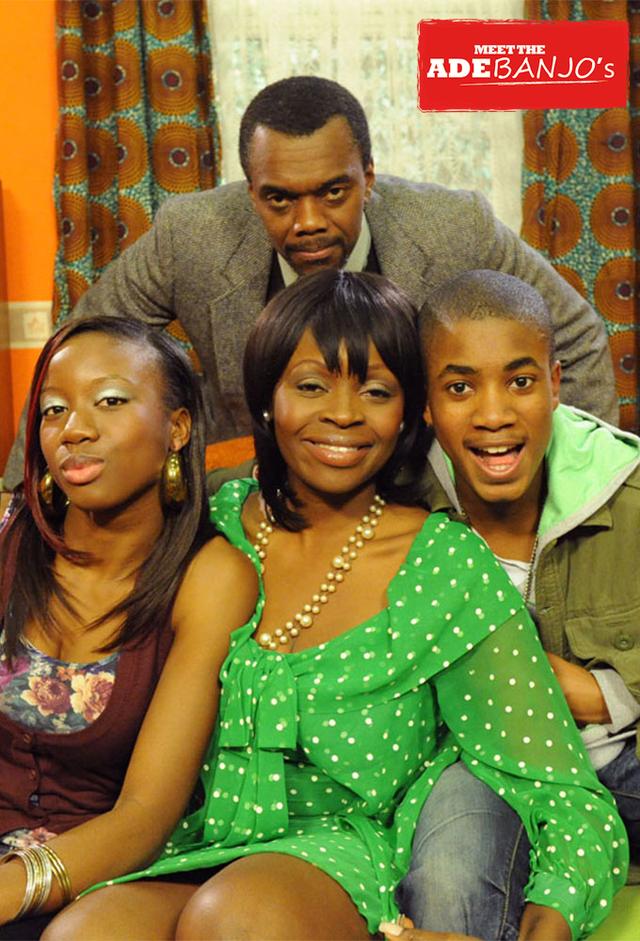
Yeah. Well, Nigeria brought me fame. London brought me a lot of experience, but Nigeria brought fame and more ability to do more of what I wanted to do. I mean, I didn’t actually mean to leave London, I just went to Nigeria to do a show. And then I think we had taken off with a show, a popular comedy series called Meet The Adebanjo’s (OHTV) which we filmed in England. And when I got to Nigeria, the show was enormously popular and I just kept getting offer after offer. And then so I just decided that, well, let’s just move back home.
Joy:
I’m also going to ask you, and I have to ask about Biyi Bandele, who we lost in the last couple of years. I know you’ve worked with him several times.
Wale Ojo:
Yes,
Joy:
Absolutely. Yeah. What do you think his legacy is?
Wale Ojo:
Oh, huge. Enormous. I mean, look, I knew Biyi very, very well. He was a great friend. We worked together. I’ve worked together with Biyi for over 20 years. I did one of his first plays called Thieves Like Us. I can’t even remember the name of the fringe theatre now, somewhere near Regents Park, I think, it was a long time ago. We got involved in so many projects. We talked a lot about doing stuff. And just before he passed away, we were working on doing Death and the King’s Horseman, he actually offered me the role of Oba in the film. That didn’t work out, but we had so many plans to do so much. And of course, he directed me in several films in Nigeria like Fifty and Blood Sisters. I worked with him. Biyi was a great colleague, a fantastic creative, a wonderful writer, and he’s such a huge loss. I really still can’t believe that he’s gone. But yeah, that is where we are now. And I’d love very much to dedicate one of the shows at The Crucible Theatre to the memory of Biyi Bandele.
Joy: Can you tell us what about your character and also what it means to you to be part of this production?
Wale Ojo: Well, my association with Death and the King’s Horseman goes back to the year 2007, I think, if I’m right to celebrate Wole Soyinka at 70. So fast forward now 20 years later or so, it’s a thanks to Mojisola Kareem and the Utopia and the Crucible Theatres in Sheffield. So it’s a part that I haven’t looked at from a distance. It’s not the easiest of rows in the world. It’s one of those great classical pieces that has enormous, enormous draw. And it’s a very difficult character to play. It’s a very challenging character to play. And I hope that I am up for that challenge. Wole is our modern WS. He is our modern Shakespeare, and his language is just as dense and just as contained, with many metaphors and similes and allegories, as you can imagine. And a performer has to be able to relish that, understand it and communicate it. And I really, really look forward to working with the cast and with Moji in bringing that to life. The play means an enormous amount to a lot of people. And I’m not sure if it means the same in the United Kingdom. Death and the King’s Horseman is a national treasure of a play.
It was what won Wole Soyinka in 1986, Nobel Prize for literature. It holds enormous cultural value and significance and just such a huge play. I remember when Biyi and I were going to do the film, I was getting emails from places as far away as Harvard and people who have studied this play on the PhD level. It’s a very complex piece of literal work, and I really pray that I do it justice and that we do it justice.
Joy:
No doubt you will. But I have to ask, and for those who don’t know, as you said, some people might not appreciate death of a horseman. So those who don’t know the stories, what are the themes, a tragedy, a row? What is the themes and who is your character and what is the motivation for that character?
Wale Ojo:
I play the character of Elba Shoba. Elba is the king’s horseman. And really what it means, it’s not, not literally the king’s horseman. Well, I mean he takes care of the King’s horses, but it’s actually more like the King’s best friend. So he does everything that the king does. If he wants the same royal bed as the King, he can get it. If he demands it, he can have as many concubines as many wives as he wants. He eats the same food that the king will eat. But on the day that the king will die, he too must go with the king to accompany his friend to the beyond, to the land of the ancestors. And that really is what the play is about. Elba symbolizes a part of Yoruba tradition,
Which says that you have to accompany the king on his way to the land of the beyond, basically to create the way you have been his best friend in life. You’ll be his best friend in the afterlife. That is his role. And what happens is that as the king’s horseman begins to approach this role, human fear comes in, the human fear comes in and we are left with all kinds of doubts, if you like, but it’s also a lot more complex than that. The entire play really deals with the character that is Ela Shiba

And I need to be very clear, this is an actual event that happened in Oyo in 1946. So it’s an adaptation of a true, it’s not an accurate retelling of the events. It’s an adaptation of the actual story that happened. There actually was a King’s horseman that was going to perform a ritual suicide, well, I won’t call it ritual suicide, actually, it’s from ritual tradition. It is the English that call it suicide, by the way, that’s the wrong word to use. I do apologize. It’s a ritual tradition which he was meant to undertake to accompany his king to the afterlife. He didn’t perform it and his son came and performed it instead. See if you like. It’s akin to saying that the son of man or the son of the gods came back to do what the father could not do.
Joy:
Cool Let’s talk about you again. What would you say the kind of roles that you like? people call you the Samuel Jackson, or you’ve been dubbed the Sammy Jackson of Nigeria or Nollywood. You’ve played a multiple of different roles. So what kind of roles will make you see a script and say, yes, that’s me. That’s what I want do

Wale Ojo:
Well, I always say I am more, I am a character actor, so I like to play as many differing roles as possible. I have played terrorists, I have played preachers, I have played men who rejected God. I’ve played people with dementia. I’ve played people with psychiatry wards. I have played as diverse roles as the 18th century English gentleman who go on tours of Germany. I’ve done plays from George Bernard Shaw to Soyinka , to Ola, to Russian plays,
Joy:
With your breadth of experience in the industry, what would you say some of your takeaways are in terms of what it has taught you as a person or as an actor? You talked about fame.

Wale Ojo:
Yeah. I think what it’s taught me is that it’s very easy to give up in this business.
Acting can be such a struggle. And what has inspired me and kept me going is acting is the art of acting, the craft of acting, the work of acting. Sometimes I’d only do one play in a year, but that one place will be enough to carry me and just keep pushing me when I think, oh, I’m about to give this up and go and work at Tesco’s and do you know what I mean? And start doing the prices. And then something will happen again. I’ll watch a movie, I’ll get inspired, I’ll see Herbert Ogunde in something and I’ll go, wow, no, really, I have to keep doing this. So you have to find a way. My advice always to young and starting actors, always find a way to keep firing your passion. Do you know what I mean? Find a fringe theatre or a group of friends. Get together, keep doing the plays, just keep doing it. And then the universe awards the work.
Joy:
Wonderful. And just some two really short questions. Why should anyone come out and see this play?
Wale Ojo:
Well, because a theatre is a good way to wilt away the time. Crucible Theatre Sheffield is a fantastic theatre, the Utopia Theatre. They been doing a lot of great work in the north of England for a while, and in the country as a whole. And I think anyone who wants to really enjoy African theatre at its most vibrant should really come out and see this, I don’t think you’re going to get a play like this often at The Crucible. So, I don’t actually know how many Nigerians there are at Sheffield. But I think whatever audience watches this, be it an African audience or European, I think they’re going to take something away from it. It’s going to be something different, put it that way. And I think if you enjoy seeing something different, something that challenges your daily perceptions, then I think Death and the King’s Horseman is the one to see.
I know that a lot of audiences, especially around the country, they’re very much aware of the work of Utopia Theatre, and I’m sure they’ll be looking forward to seeing this. I know I’ve spoken to colleagues in London who really want to come out and see this piece of work.
Joy: Final question: So stage or screen. Do you have a preference?
Wale Ojo: Stage
Joy:
Wonderful.
Wale Ojo:
You didn’t ask me why.
Joy:
Oh, do you want to elaborate?
Wale Ojo:
Little bit? A little bit. Not much. I know we haven’t got much time.
Joy:
That’s Ok
Wale Ojo: Stage is really where the actor begins to discover and learn more about his craft. Don’t get me wrong, I love cinema. I love cinema to death; the craft of acting can be done at cinema, but it’s best learned on the stage. That’s where if you can’t stand the heat, you have to leave the kitchen. If you can’t stand the pounding of the yam, then you must go and find your own coco. Yum. Or find your own mortar to pound the yam.
Joy: So outside of acting, what can you tell us about yourself that you love? I know you like Fela and you perform musically.
Wale Ojo:
Yeah, I do. I do a lot of stuff. I have a great passion for history. So I have a charity that promotes the Return of African artifacts, promotes African tradition, culture, and heritage. And we do a lot for people who are sort of less privileged in the society, especially people who have disabilities. And we like to reach out to areas, especially in the north of Nigeria, where some people will slaughter me for saying this, where the female sex somewhat in my mind, is subjugated or unequal, you know what I mean? So we try and provide shelter. We try and provide understanding. We have a project now called the Open Air Cinema Project where we take film to rural societies and we show films there. So I do a lot of my charity work is actually my other passion. And of course I have a 12 piece Afrobeat band, which we go on tour across Africa now and again when I can take time off acting.
Joy: Thank you very much.
‘Life is honour. It ends when honour ends’
Set in Nigeria in the late 1940’s and based on a true story, Elesin, the king’s horseman, is tasked with carrying out a sacred ritual upon the death of the king, however Elesin is overtaken by the allure of earthly desires.
A thought-provoking resonant theatrical experience showcasing music and dance, deeply rooted in the culture and spirituality of the Yoruba people.
Directed by Mojisola Kareem(Here’s What She Said to Me, Far Gone).
- Writer WOLE SOYINKA
- Director and Executive Producer MOJISOLA KAREEM
- Designer KEVIN JENKINS
- Choreographer JOSEPH TOONGA
- Lighting Designer CASSIE MITCHELL
- Composer and Music Designer JUWON OGUNGBE
- Sound Designer LEE AFFEN
- Casting Director ELLIE COLLYER-BRISTOW
- Production Manager LISA HOOD
- Producer (Utopia Theatre) TOM DIXON
Death and the King’s Horseman is at the Crucible, Sheffield, 3-8 February