


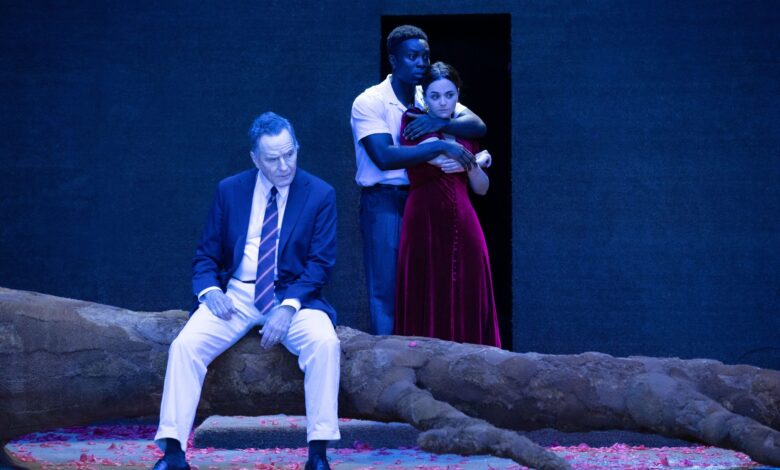
Arthur Miller’s All My Sons returns to the West End in a stripped-back, tightly focused revival directed by Ivo van Hove, whose minimalist approach intensifies the moral pressure at the heart of the play. Rather than competing with the text through elaborate staging, van Hove places the full weight of the drama on the actors and their emotional stamina. It results in a production that feels both intimate and raw, even as it tackles themes of responsibility, grief and the long shadow of the past.

Respected, self-made businessman Joe Keller prides himself on providing for his wife and their two sons. While wartime delivers profits for the family, it comes at a price when his partner is charged with criminal manufacturing deals, and his eldest son goes missing in action. Peacetime brings little peace of mind as Joe’s true involvement in the activity begins to surface, and he is suddenly confronted by the consequences of his actions.
Marianne Jean-Baptiste delivers a quietly devastating performance as Kate Keller. Her portrayal of a woman suspended between hope and denial is unwaveringly believable; every flicker of her doubt and every forced smile reveals a character inhabiting the edge of collapse. Bryan Cranston, as Joe Keller, gives a performance that is tightly coiled and deeply human. He plays Joe not as a villain but as a man who has rehearsed his justifications for so long that he now lives inside them, and watching those layers peel away is one of the production’s most gripping elements. Paapa Essiedu brings intensity to Chris Keller, his idealism gradually faltering as the truth presses in, while Hayley Squires offers a thoughtful, grounded performance as Ann, whose presence quietly unravels the Keller family’s fragile equilibrium.
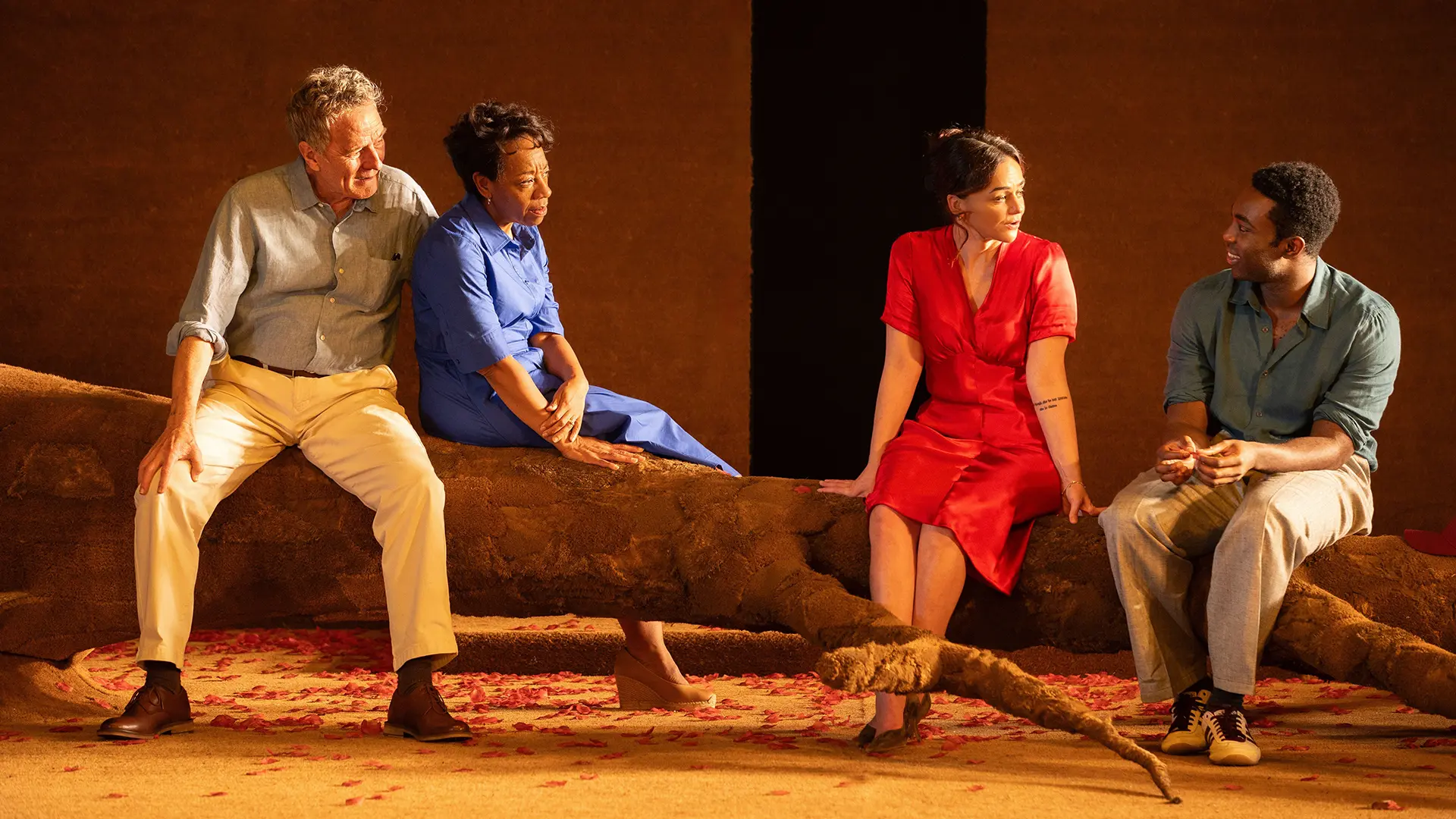
The staging, designed by Jan Versweyveld, is beautifully stark. The entire play unfolds in the family’s backyard, rendered as a minimalist space dominated by a single large fallen tree. Its presence shapes the play from the opening moment — a dramatic image that sets the tone — and remains throughout, almost functioning as a silent witness to the family’s buried history. Versweyveld visual restraint forces attention onto the actors, and van Hove uses that simplicity to amplify the rhythmic shifts of the drama. With no interval, the two-hour-fifteen-minute running time maintains a tight grip, the tension tightening scene by scene as there is no release for the audience or the characters.


This version’s approach contrasts notably with the 2019 production, which adopted a more naturalistic framing and allowed scenic detail to carry some of the emotional weight. Where the earlier staging leaned into traditional realism and a broader sense of neighbourhood life, van Hove’s interpretation narrows the world and heightens the psychological pressure. Even minor characters feel unexpectedly vivid here; van Hove gives them space and intention, ensuring they illuminate the social ecosystem that allowed the Keller family’s tragedy to unfold. Their scenes are not incidental but essential, enriching the moral landscape of the story.
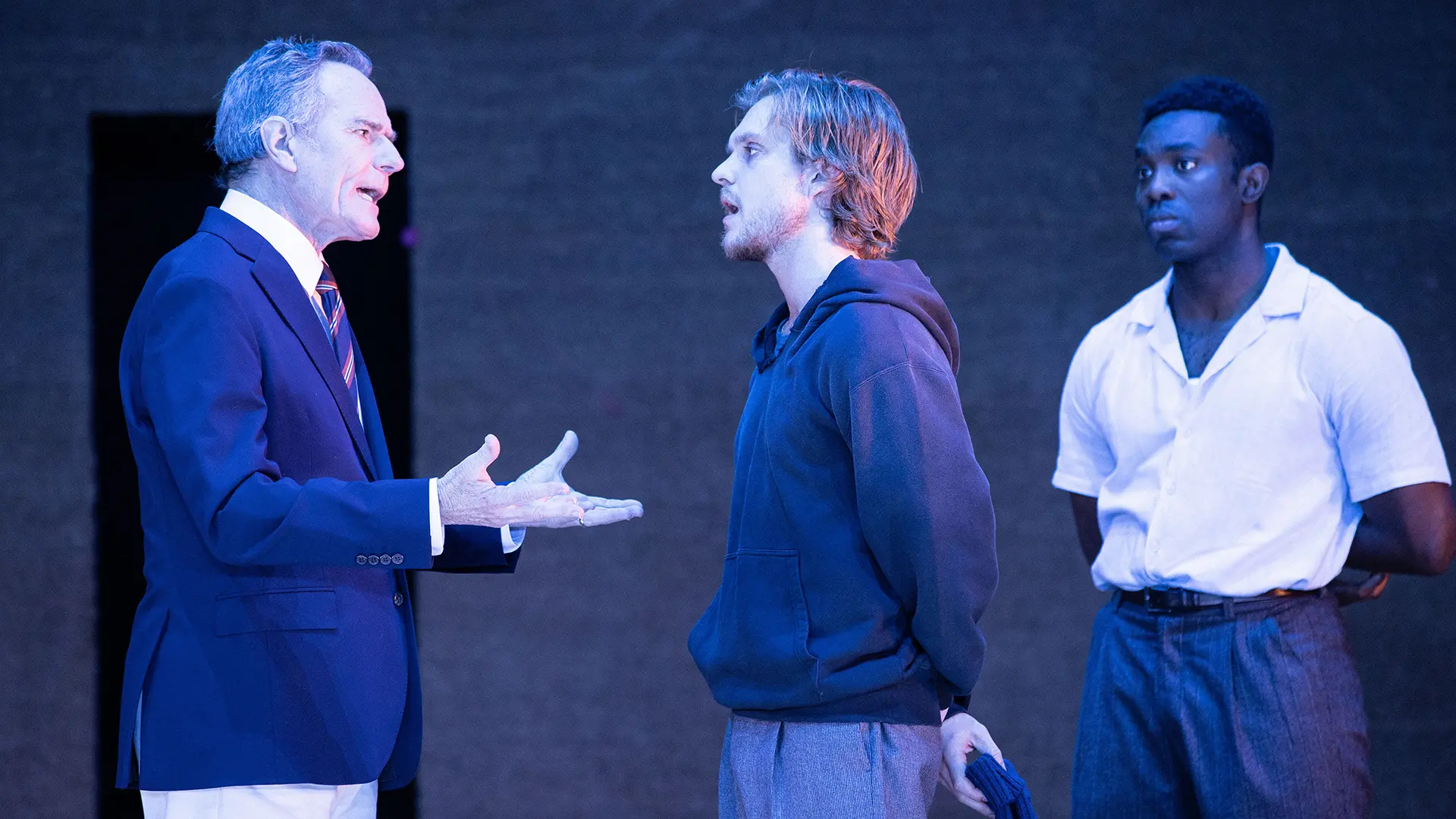
The result is a gripping piece of theatre that never loosens its hold. Van Hove’s pared-back direction, combined with outstanding performances from Jean-Baptiste, Cranston, Essiedu and Squires, exposes the emotional fissures of All My Sons with clarity and force. This revival may be minimal on the surface, but its impact is a tense, a haunting reminder of how the smallest decisions can reverberate through generations. The play that was written in 1946 is very much at home with the world we live in today. A tearful end, is followed by a standing ovation, a very much deserved applause. All My Sons plays at Wyndham’s Theatre until Saturday 7 March.