Ndidi Dike: Reclaiming the Collective Memory of Nigerian Modernism
“For me, it’s always been about the collective and not the individual,” says artist and cultural activist Ndidi Dike, her voice calm but resolute. “We need to really celebrate and acknowledge those women artists who came before us.”
Standing before her carved Iroko wood sculptures, The Sages and The Elegance of Uli, Dike speaks to a layered history — one of memory, independence, and reclamation. She is among the 11 women artists featured in Nigerian Modernism, the historic exhibition now showing at Tate Modern, which celebrates over 250 works from Nigeria’s most pioneering modernists.
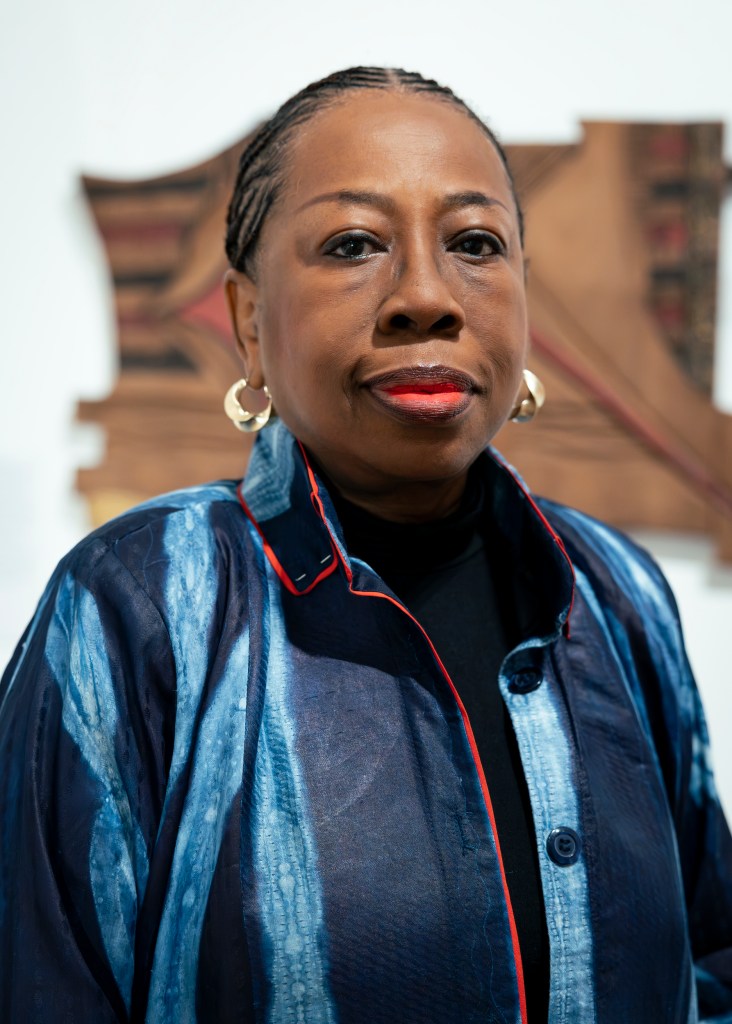
Portrait of Ndidi Dike at Nigerian Modernism Press View, Tate Modern, 2025
“It’s significant that we have a show of this magnitude, depth, breadth and diversity of artists coming from Nigeria,” Dike reflects. “And it’s beautiful that for once we’re having something extremely positive coming out of Nigeria.”
Ndidi Dike, The Sages 1995 (c) Ndidi Dike
Ndidi Dike- The Sages and The Elegance of Uli,
Revisiting the Visionaries
The exhibition revisits a generation that defined artistic self-determination at the moment of Nigeria’s independence. Figures like Ben Enwonwu, Uche Okeke, Bruce Onobrakpeya, and Ladi Kwali forged a visual language that balanced Western education with indigenous roots — what Okeke once called “natural synthesis.”
But while many of these names are now celebrated, Dike reminds us that the story of Nigerian Modernism is incomplete without acknowledging the women who shaped it. “ I want to mention those who came before us, the women in this show like Clara Etso Ugbodaga-Ngu,Ladi. It’s important that women are featured — there are just eleven, but at least they’re being acknowledged,” she says. For her, this recognition is not merely symbolic; it’s part of a wider effort to correct the silences that have long overshadowed women’s contributions to art history.
Women, Wood, and the Weight of History
Born in London and raised between Britain and Nigeria, Dike’s practice bridges continents and centuries.
“These works are about exploring and coming to terms with my identity as an Igbo woman,” she says. “They speak to our traditions, our culture, and where I come from.”
Her sculptures in this Tate show — carved from Iroko wood, a material deeply rooted in southeastern Nigeria — embody that dialogue between self and ancestry. “I’m always interested in different kinds of materials,” she explains. “Trying to create a 3D surface on a 2D plane — my experimentations with materiality are very broad.”
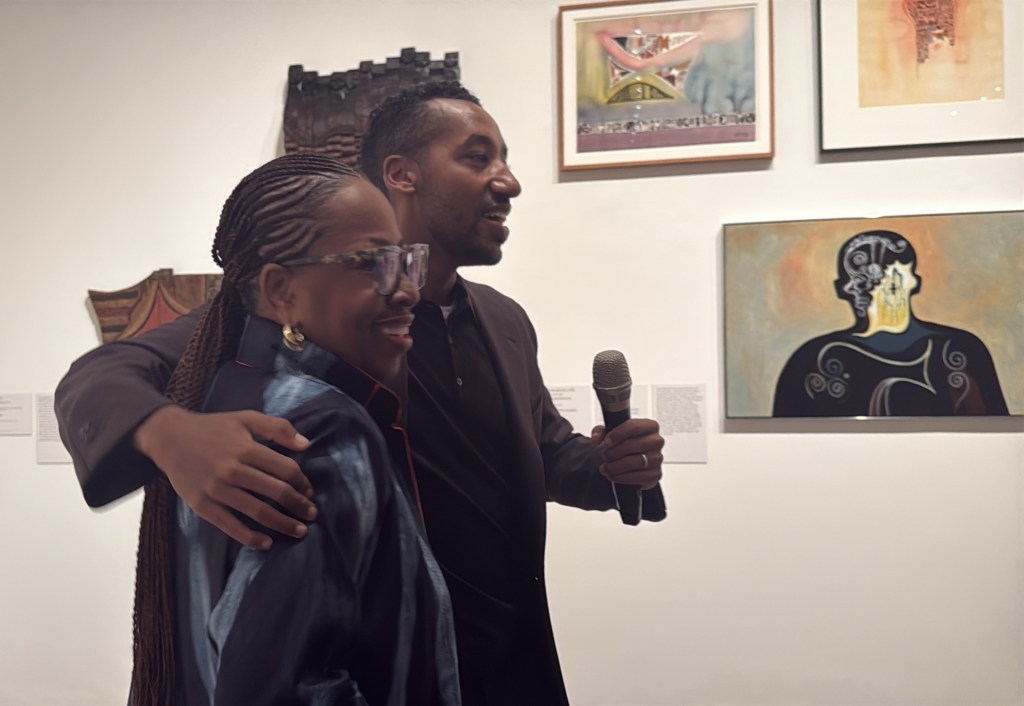
Ndidi Dike with Curator Osei Bonsu
It’s a physical, tactile form of storytelling that aligns with her broader interest in archives and collective histories. The Elegance of Uli references Uli, the ancient Igbo design language used by women to paint geometric motifs on skin and walls. Dike’s use of this motif is more than homage — it’s an act of cultural continuity, a revival of artistic agency rooted in women’s creativity.
Art, Independence, and Acknowledgement
The show’s curator, Osei Bonsu, frames Nigerian Modernism as a story of “artists synthesising different influences to generate a bold new language.”
Yet for Dike, it’s also about repair — about reclaiming a visual legacy that colonial systems fragmented, and that postcolonial narratives too often simplified.
“It’s a historic exhibition,” she says, “acknowledging Nigeria’s role in the global scheme of arts and culture.”
“Nigerians, wherever they are, always give their best. It’s about time the world saw the depth, breadth, skill and expertise of what we have to offer.”
Her words echo across generations. The Zaria Art Society of the 1960s once insisted that Nigerian art must grow with the nation. Today, artists like Dike, El Anatsui, and Peju Alatise continue that evolution — expanding what it means to create from, and for, Africa and beyond.
The Sages and The Elegance of Uli were early works in Dike’s career, made when she was navigating identity and belonging. Yet their resonance has deepened over time. “They’re about exploring who I am,” she says, “and connecting with where I came from.” Her process, blending power tools with hand carving, marries precision with intuition — modernity with memory.
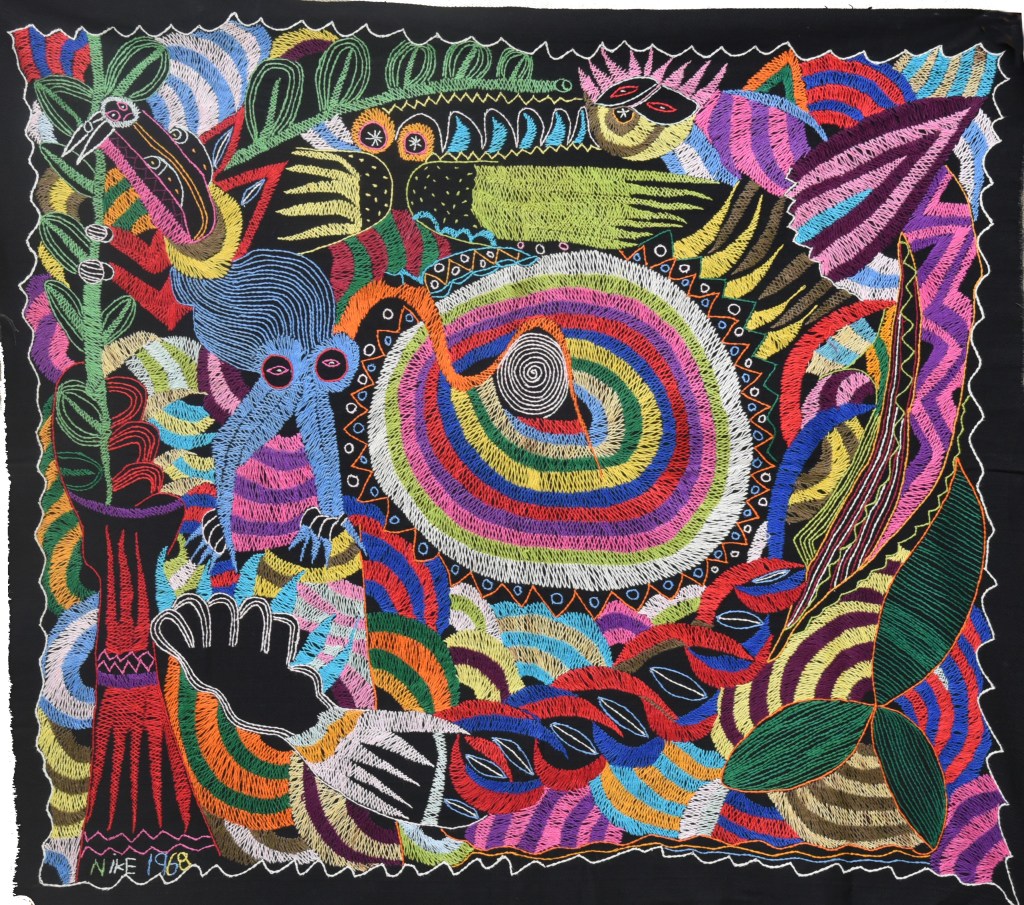
Nike Davis with Osei Bonsu
Looking around the Tate galleries, where Uche Okeke’s drawings hang near Bruce Onobrakpeya’s prints and Ladi Kwali’s ceramics, one senses not just an exhibition but a conversation. A conversation between generations of artists who have continually redefined what it means to create from Nigeria — and from Africa more broadly.
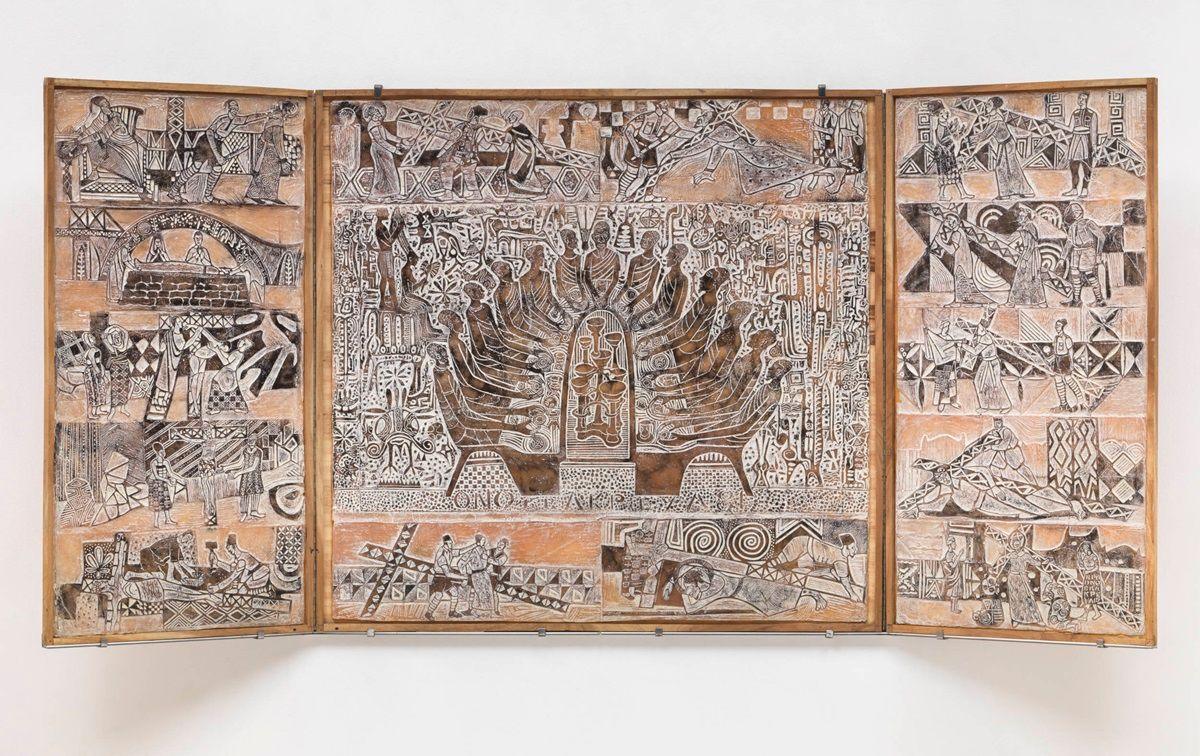
Bruce Onobrakpeya’s The Last Supper (1981)
Dike reminds us that the power of this exhibition lies in its collective spirit. “It’s definitely significant that we have a show of this magnitude,” she says. “It’s not just about the individual; it’s about a shared heritage that keeps evolving.”
A Living Archive
If Nigerian Modernism marks a historic milestone, it also points forward — to a growing recognition of African artists and their place in global art history. Dike’s presence, voice, and vision embody that continuum.
“For me, it’s always about the collective,” she repeats. “And acknowledging those who came before us.”
Nigerian Modernism runs until 10th May 2026 More information HERE