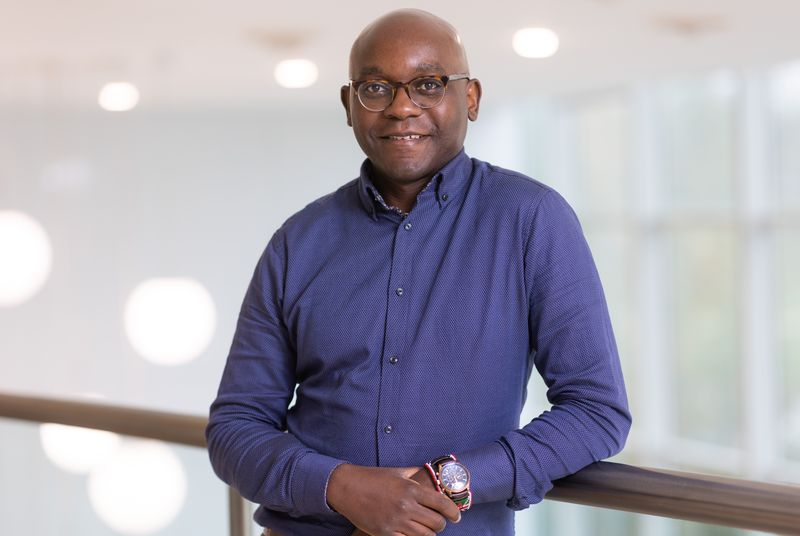
Dr. Serufusa reflects on his nomination for the Black British Business Awards, his mission to bridge healthcare disparities, and the role of leadership in overcoming resource challenges. He highlights the transformative impact of technology in democratising healthcare knowledge and stresses the need for inclusivity in global health research. From offering advice to aspiring professionals, sees the way forward as keeping the curiosity in life and portfolio careers. Beyond medicine, Serufusa shares his renewed passion for socially conscious rap music and talks on the diverse musical influences that shaped him. A global outlook, his definition of home is wherever his heart is—and reveals a simple staple of beans make top of the list as his ultimate comfort food. Serufusa Sekidde is Chief of Staff to the CEO,ViiV Healthcare/GSK and is a finalist for STEM Senior Leader Award. The BBBA ceremony takes place on October 17th in London.

ALT Congratulations on your nomination. What does it feel like to be nominated for a Black British Business Award?
Serufusa : Thank you. First of all, it was such an honour to be recognised for the Black British Business Awards. I felt two things: excitement, because this kind of recognition doesn’t happen every day, and also a sense of responsibility. Being put on such a public platform means being held to a high standard, and more is expected of me. I look forward to that challenge.
ALT: Wonderful. First, just a little bit about you. What motivated you to build such an impressive career in the healthcare industry?
Serufusa: It’s still a work in progress—I’m still building my career. My motivation comes from my background. I’m from Uganda, and I trained as a medical doctor. In Uganda, access to quality healthcare is extremely difficult. I’ve worked as a doctor in Uganda, South Sudan, China, and lived in the US. Seeing the disparities between what’s possible and what’s available has driven me to try and bridge that gap so that everyone, wherever they are, can access good quality healthcare with the latest advancements.
ALT: You touched on that, and it raised another question. What would you say is one of the biggest barriers to better healthcare in Africa?
Serufusa: There are many. People often point to the need for more funding and more products, but in my experience, the real difference comes from leadership and management. Resources are never enough—whether in the UK, US, or Uganda. What matters is how leaders prioritise and make trade-offs with the resources they do have. Leadership determines whether healthcare systems truly serve the communities they’re meant to.
ALT: We can’t talk about healthcare without talking about technology. What would you say are some of the positive game changers recently introduced into healthcare?
Serufusa: Technology, AI, and data are constantly evolving. Advances in neurosurgery, robotics, and medical records are significant, but for me the biggest change has been the democratisation of healthcare information. Through WhatsApp, AI tools, and platforms like ChatGPT, people now have access to medical knowledge that empowers them. Patients walk into hospitals better informed, ask questions, and take an active role in their care. This shift is transformative.
ALT: And when healthcare and politics intersect—particularly in debates around migration and contributions of certain groups—what’s your perspective?
Serufusa: Representation matters. Clinical trials, drug development, and healthcare systems must reflect the communities most affected by specific diseases. Whether it’s HIV, TB, or sickle cell disease, the affected groups need to be included in research and decision-making. It’s about fairness, inclusion, and opportunity for everyone.
ALT: Looking at the next generation—what advice would you give to someone who wants to enter healthcare, especially at a time when many doctors are leaving systems like the NHS?
Serufusa: Two things. First, embrace a portfolio career. Don’t define yourself by one role—like me, you can be a doctor, academic, musician, and advisor. Second, cultivate curiosity. Technology and AI are reshaping everything, but those who stay curious will always adapt. My own curiosity has taken me across countries, industries, and languages. That’s the mindset that keeps the journey rewarding.
ALT: You mentioned music—can you tell us a bit about your rap career?
Serufusa: I started rapping years ago and even had a career in China, performing in venues from bars to stadiums. I’ve now come out of retirement, focusing on socially conscious music. My latest work tackles themes like immigration, mental health, and the loss of my mother to TB and malaria. Music is another way for me to express myself and connect with people.
ALT: Who are the musicians that inspire you?
Serufusa: Many. From Ugandan musician
Philip Bongole Lutaaya who helped break the stigma of HIV/AIDS, to Kenyan artist Eric Wainaina’s politically conscious music. In rap, I’ve been influenced by Jay-Z, DMX, Busta Rhymes, Lupe Fiasco, Chance the Rapper, and more. I also listen to Latino, French, and Spanish rap. For me, it’s about the energy and emotion.
ALT: If you were to win the award, what would you say?
Serufusa: “The party never stops.” I’d celebrate, but also acknowledge that it means more work to do—both in business and socially. Awards are a platform to keep striving and making change.
ALT: Looking ahead 10 years, what would you want your legacy to be?
Serufusa: Less about specific achievements, more about changing how things are done. I’d like portfolio careers to become normal, patient and community voices to be central to healthcare, and for people to feel free to bring their whole selves to every space—corporate, creative, or social.
ALT: Where do you call home?
Serufusa: I call home wherever my heart and energy are. Uganda, China, the UK, the US—all are home at different times. But wherever it is, the weather must be good—I hate the cold!
ALT: And finally, one fun question: if you had one go-to dish after a long day in surgery, what would it be?
Serufusa: Beans—any kind, any time. Pinto beans in Mexico, coconut beans in Kenya, beans in Senegal, beans in Chinese hotpot, or baked beans in the UK. Beans always work their magic.