

Frances-Anne Solomon is an acclaimed British-Trinidadian-Canadian filmmaker, writer, producer, and founder of the CaribbeanTales Media Group. With a career spanning over four decades across the BBC, Canada’s cultural institutions, and the Caribbean, Solomon has dedicated her life to amplifying underrepresented voices, particularly those of the African and Caribbean diasporas.
For Solomon, production is never only about budgets or logistics—it is about dismantling colonial filters that have long dictated whose stories are told, funded, and remembered.
For Solomon, production is never only about budgets or logistics—it is about dismantling colonial filters that have long dictated whose stories are told, funded, and remembered.
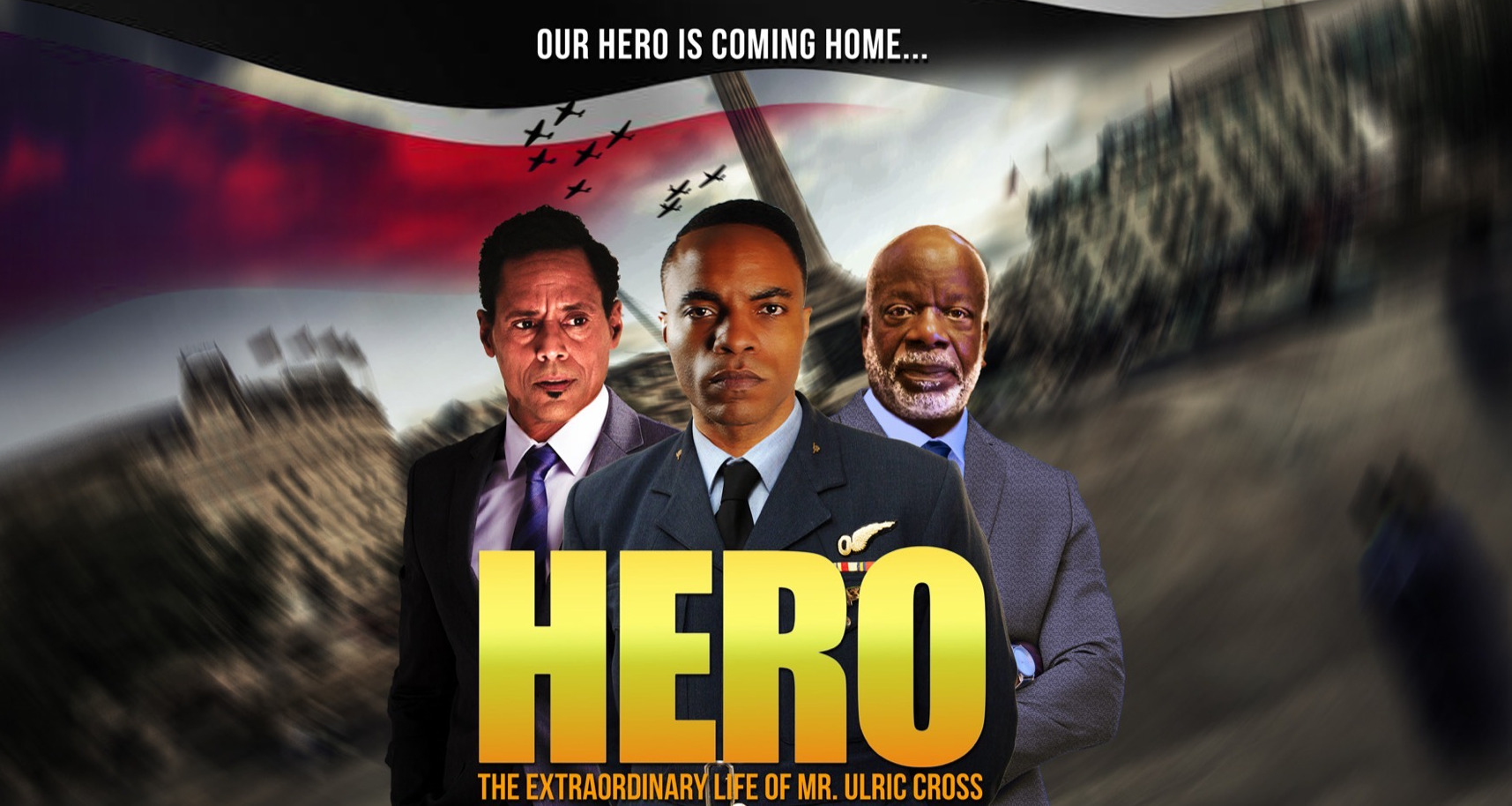
She is best known for her film Hero: Inspired by the Extraordinary Life and Times of Mr. Ulric Cross, which tells the story of a Caribbean World War II hero turned Pan-Africanist. As the visionary behind the Cross Continental Forum, Solomon continues to build a transnational network of producers, artists, and cultural innovators committed to storytelling without borders.
ALT A: Frances-Anne Solomon, thank you so much for talking to ALT A REVIEW. Let’s begin with why you decided to start the Cross Continental Forum. That feels like an important place to begin?
Frances-Anne:
Hi Joy, thanks for having me. It’s lovely to see you again. The reason was that my experience has been international as a Caribbean person.
I was born in England. I grew up in different countries and spent my high school years in Trinidad, where my parents are from. I’m a Trinidadian. Then I went to university in Canada. I also lived in America.
The major part of my early career was actually at the BBC in England before I came back and started the CaribbeanTales Group here in Canada.
Like many Caribbean people, I’m not unique. We have ties and links to many different countries, and our stories intersect. We have family in America, in Canada, in England, and we come from Africa and other parts of the colonised world.
So, our stories—my story—intersect with so many others in different parts of the world. I thought it was essential we have an opportunity to come together and help each other, especially given the institutional barriers to telling Black stories. We need to come together to tell our common stories.
Hi Joy, thanks for having me. It’s lovely to see you again. The reason was that my experience has been international as a Caribbean person.
I was born in England. I grew up in different countries and spent my high school years in Trinidad, where my parents are from. I’m a Trinidadian. Then I went to university in Canada. I also lived in America.
The major part of my early career was actually at the BBC in England before I came back and started the CaribbeanTales Group here in Canada.
Like many Caribbean people, I’m not unique. We have ties and links to many different countries, and our stories intersect. We have family in America, in Canada, in England, and we come from Africa and other parts of the colonised world.
So, our stories—my story—intersect with so many others in different parts of the world. I thought it was essential we have an opportunity to come together and help each other, especially given the institutional barriers to telling Black stories. We need to come together to tell our common stories.
ALT A: And staying at the beginning, what were some of the institutional barriers you faced? Have the types of gatekeeping changed, or do they just take new forms?
Frances-Anne:
Institutional challenges have existed throughout my career. Early on, we didn’t have the Internet. If you wanted to communicate with someone in another country, you had to write a letter that would take weeks to arrive or make a long-distance call—which was very expensive. Distance itself was a barrier.
Another was the layers upon layers of racism and colonialism designed to benefit the global North and men. There were legal, financial, and cultural barriers.
In the early 90s, just after the LA riots and the uprisings in England in the 80s, there was a moment—like with George Floyd—when doors opened. Many of us came through at that time. But eventually, those opportunities disappeared.
The difference now is that we won’t let the door shut again. Even if all we have is the Internet, it gives us resources and connectivity. We now have the ability to maintain consciousness and say, “No—you will not deny us our humanity and place in the world.”
That is the biggest positive change.
Institutional challenges have existed throughout my career. Early on, we didn’t have the Internet. If you wanted to communicate with someone in another country, you had to write a letter that would take weeks to arrive or make a long-distance call—which was very expensive. Distance itself was a barrier.
Another was the layers upon layers of racism and colonialism designed to benefit the global North and men. There were legal, financial, and cultural barriers.
In the early 90s, just after the LA riots and the uprisings in England in the 80s, there was a moment—like with George Floyd—when doors opened. Many of us came through at that time. But eventually, those opportunities disappeared.
The difference now is that we won’t let the door shut again. Even if all we have is the Internet, it gives us resources and connectivity. We now have the ability to maintain consciousness and say, “No—you will not deny us our humanity and place in the world.”
That is the biggest positive change.
ALT A: Let’s talk about production. You’ve directed and produced many projects. Let’s talk about Hero, the story of Ulric Cross. It spans continents and decades. What were the greatest challenges in shaping his journey into a cinematic narrative?
Frances-Anne:
What attracted me to the story was that Ulric Cross personified what I just talked about—being part of a diaspora that moves. He left the Caribbean, served in Britain, received a British education, and then was called to Africa to serve in the independence movements.
There was a time—the late 50s—when Caribbean countries and African nations were becoming independent, and people were coming together globally. Africa put out a call to Caribbean professionals to help with transformation.
That part moved me—he went to Ghana, Tanzania, Congo—to help us regain our independence. He was one of many, and that cross-continental journey was something I had to honour.
What attracted me to the story was that Ulric Cross personified what I just talked about—being part of a diaspora that moves. He left the Caribbean, served in Britain, received a British education, and then was called to Africa to serve in the independence movements.
There was a time—the late 50s—when Caribbean countries and African nations were becoming independent, and people were coming together globally. Africa put out a call to Caribbean professionals to help with transformation.
That part moved me—he went to Ghana, Tanzania, Congo—to help us regain our independence. He was one of many, and that cross-continental journey was something I had to honour.
ALT A: A challenge many producers from the Global South face is budget. What are some innovative ways you’ve worked with smaller budgets—perhaps using Hero as an example?
Frances-Anne:
Even just ten years ago, there was no funding for a project like Hero. There was no interest in telling stories about Black people unless it was gangs, rap, or slavery.
A story that spanned four continents and focused on heroism and transformation? That wasn’t something they wanted to fund.
We had to patch together small bits of funding. We received a bit from Trinidad and Tobago—a bank programme recognising national heroes. Canada’s Arts Council gave us a little as well.
But really, it was sweat equity and determination. We shot in Trinidad, Canada, England, and Africa. It was ambitious, but the story required that.
What really helped was inspiring people. Many crew and actors worked for little or no money because they believed in the story. I honoured every promise I made—if I said £300 for a major role, they got £300. That commitment mattered.
Even just ten years ago, there was no funding for a project like Hero. There was no interest in telling stories about Black people unless it was gangs, rap, or slavery.
A story that spanned four continents and focused on heroism and transformation? That wasn’t something they wanted to fund.
We had to patch together small bits of funding. We received a bit from Trinidad and Tobago—a bank programme recognising national heroes. Canada’s Arts Council gave us a little as well.
But really, it was sweat equity and determination. We shot in Trinidad, Canada, England, and Africa. It was ambitious, but the story required that.
What really helped was inspiring people. Many crew and actors worked for little or no money because they believed in the story. I honoured every promise I made—if I said £300 for a major role, they got £300. That commitment mattered.
ALT A: Has support changed in these markets—Trinidad, Toronto—over time?
Frances-Anne:
Not much has changed in the Caribbean. It’s nearly impossible to fund major projects there. But in Canada and the UK, there is a greater awareness of the need for authentic Black stories.
My idea with the Cross Continental Forum was this: if a person like me—Trinidadian, but with Canadian and British citizenship—can access resources from the North and partner with creatives in the Caribbean, then we can bring resources there.
As a UK citizen, you can access UK funds. Same in Canada. It’s not easy, but it’s possible.
Change in the region will require pressure from the industry—making the case for legislative and infrastructure change. It’s complex, but necessary.
Not much has changed in the Caribbean. It’s nearly impossible to fund major projects there. But in Canada and the UK, there is a greater awareness of the need for authentic Black stories.
My idea with the Cross Continental Forum was this: if a person like me—Trinidadian, but with Canadian and British citizenship—can access resources from the North and partner with creatives in the Caribbean, then we can bring resources there.
As a UK citizen, you can access UK funds. Same in Canada. It’s not easy, but it’s possible.
Change in the region will require pressure from the industry—making the case for legislative and infrastructure change. It’s complex, but necessary.
ALT A: What role do digital tools and growing networks play in driving this change? And what’s your long-term vision?
Frances-Anne:
There were many of us pushing before—Menelik, Ngozi, Nadeem, Corin, Aldric. We weren’t waiting then, and we’re not waiting now.
What I see in the younger generation is inspiring. They are determined. But they need to know what they’re up against.
At CCF, some said, “Why are you being so negative?” I’m not. I’m being honest. The barriers are real. If you don’t know the terrain, you’ll burn out.
I’ve stopped thinking I will benefit directly from the change. My focus is on laying foundations. I’m happy not chasing Hollywood.
The goal now is building for the next generation—just like the Pan-African conference of 1945. People travelled from Africa and the Caribbean by boat to Manchester. They laid a foundation. That inspires me.
There were many of us pushing before—Menelik, Ngozi, Nadeem, Corin, Aldric. We weren’t waiting then, and we’re not waiting now.
What I see in the younger generation is inspiring. They are determined. But they need to know what they’re up against.
At CCF, some said, “Why are you being so negative?” I’m not. I’m being honest. The barriers are real. If you don’t know the terrain, you’ll burn out.
I’ve stopped thinking I will benefit directly from the change. My focus is on laying foundations. I’m happy not chasing Hollywood.
The goal now is building for the next generation—just like the Pan-African conference of 1945. People travelled from Africa and the Caribbean by boat to Manchester. They laid a foundation. That inspires me.
ALT A: And finally, what’s your five-to-ten-year vision for the Cross Continental Forum?
Frances-Anne:
It’s evolving. Next year, we’re focusing on Nigeria, Europe, and India.
So far, we’ve focused on England, Canada, and the Caribbean. But we’ll keep expanding: Nigeria, South Africa—we’ve already started.
The idea is to connect experienced and emerging producers across generations and continents. It’s about sharing vision, resources, and building co-productions.
If we empower each other in our respective regions, we can reshape the global landscape—together.
It’s evolving. Next year, we’re focusing on Nigeria, Europe, and India.
So far, we’ve focused on England, Canada, and the Caribbean. But we’ll keep expanding: Nigeria, South Africa—we’ve already started.
The idea is to connect experienced and emerging producers across generations and continents. It’s about sharing vision, resources, and building co-productions.
If we empower each other in our respective regions, we can reshape the global landscape—together.
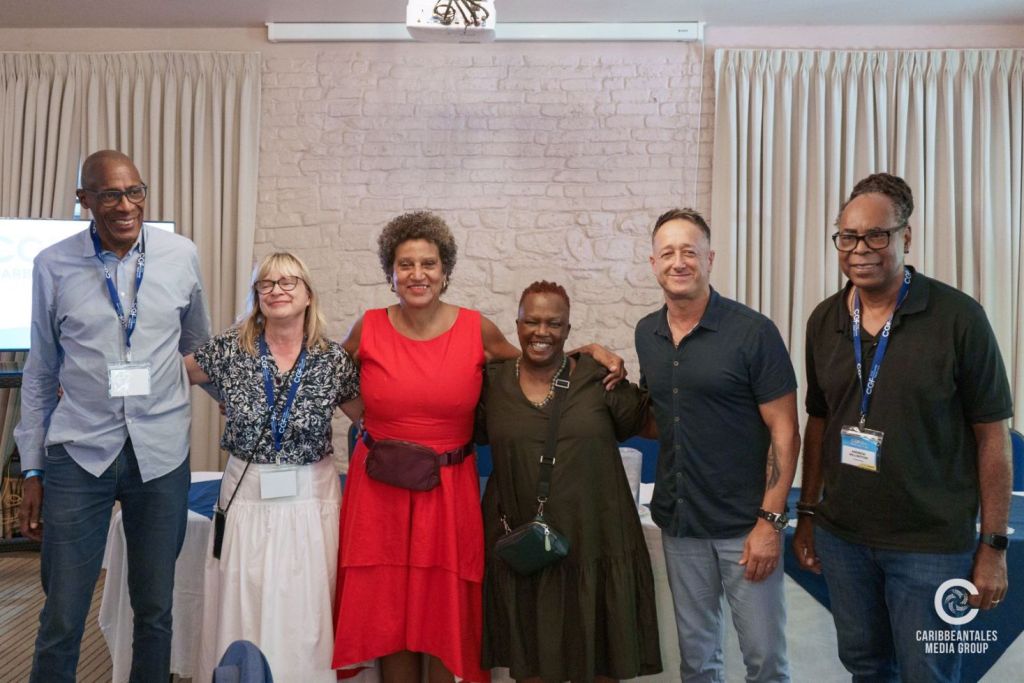
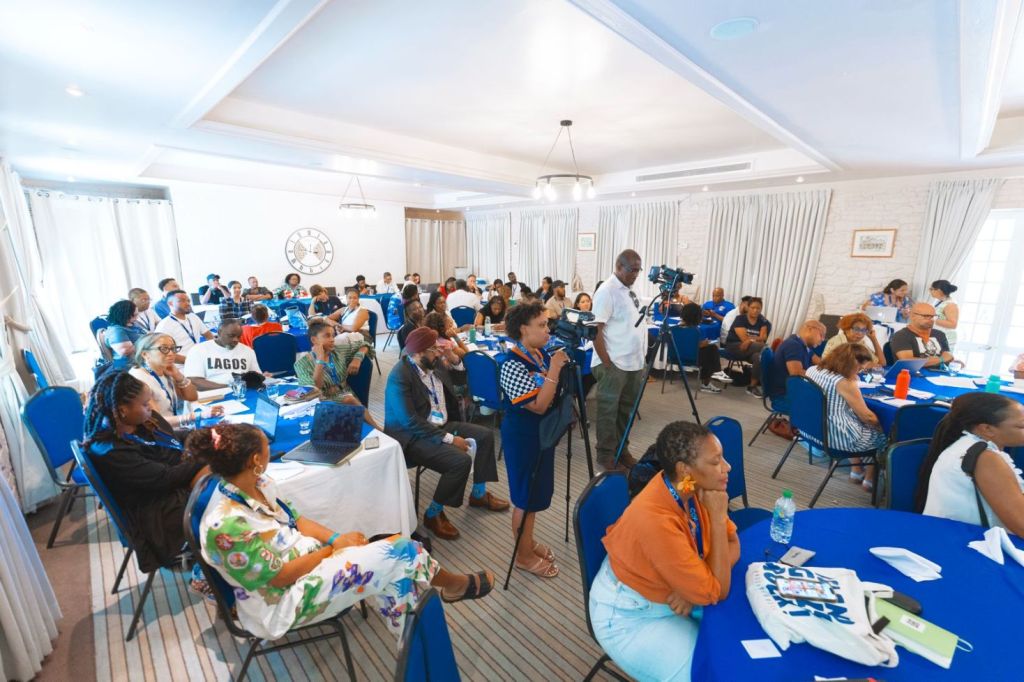
The Cross Continental Forum(CCF) most recently gathered in Barbados in June 2025—at the crossroads of the Atlantic world— and continues to serve as a dynamic hub for global film and television co-production. Specifically designed to bridge connections between the UK, Canada, Africa, and the Caribbean, this five-day forum aims to create a collaborative environment where high-level producers, experts and professionals explore synergies, share expertise, and build partnerships that will drive innovation and growth within the film industry.
Find out more about the 2026 here: https://decolonisingcoproduction.com/news/
Are you a Producer from the Global South? Do you want to be interviewed for this series of Producer interviews in Partnership with the CCF get in touch with Joy @ editor (at) alt-africa.com)