

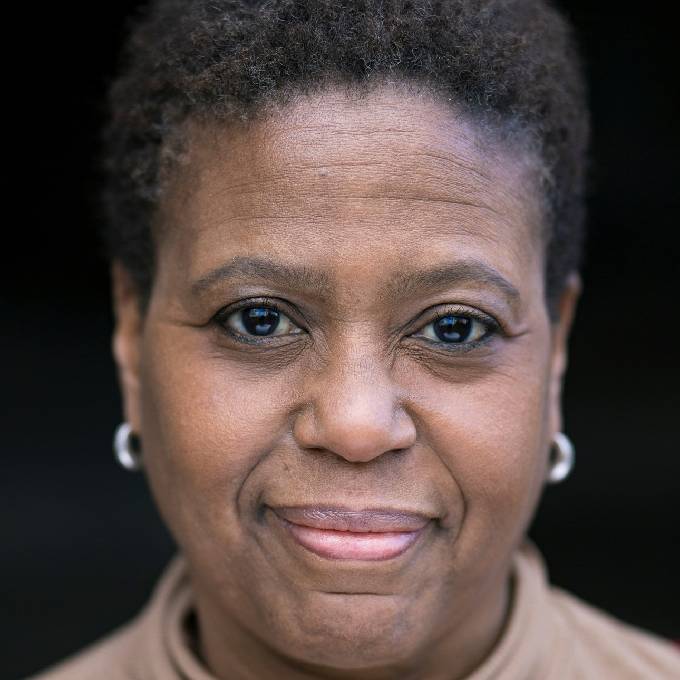
“I didn’t realise Amy Ashwood Garvey was so prolific. What a huge life! It has been a privilege learning about her and all she did to empower others — particularly Black women in the diaspora. She was a real champion for change, and I am so grateful she is coming into focus as a great historical icon in her own right, not limited to the work she did as Marcus Garvey’s wife” Pamela Nomvete
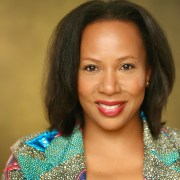
Olivier nominated actress is Nomvete is known for unforgettable performances as Khanyi in the South African drama Generations, roles in British television staples like Coronation Street, Holby City, and Black Earth Rising, Nightsleeper, to name a few. On stage, she’s tackled everything from Shakespeare to contemporary African theatre — often returning to stories that centre justice, identity, and healing.

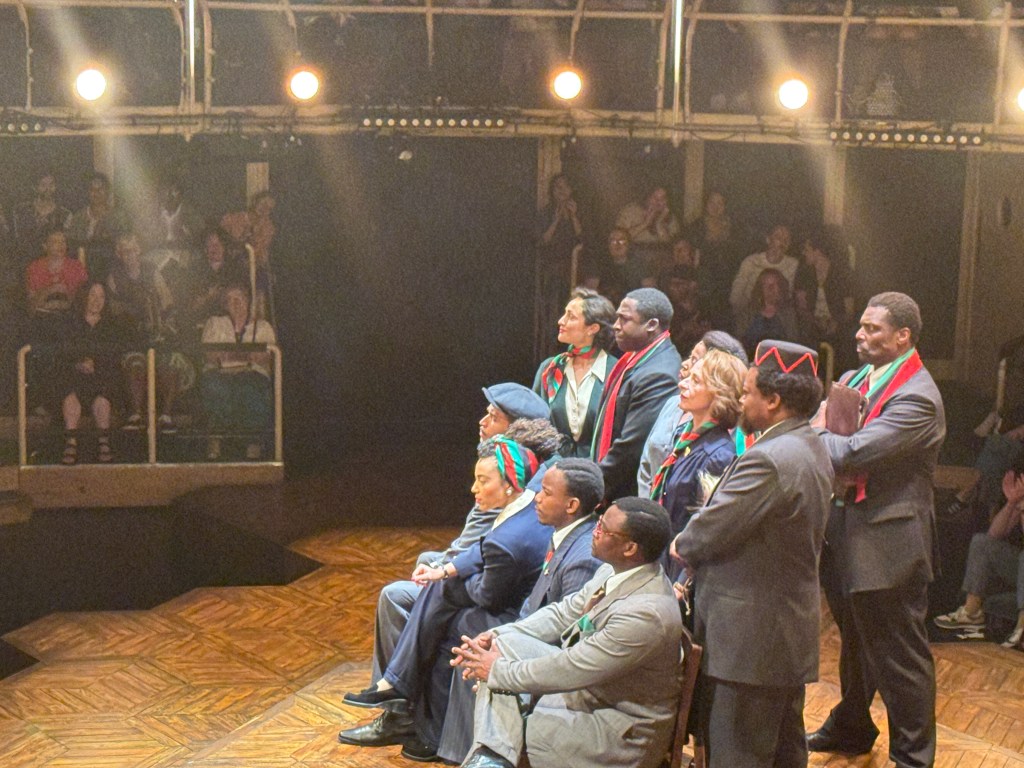
Currently on stage as Amy Ashwood Garvey in Liberation — Ntombizodwa Nyoni’s new play at the Royal Exchange Theatre as part of MIF2025. Through her portrayal of Garvey, a Pan-Africanist, feminist, and political visionary, she invites the audience to confront the erasure of Black women from history — and from the centre of power.

.
Talking to ALT’s editor, Joy, Nomvete shares how acting remains an act of spiritual channeling, how Liberation resonates with Africa’s political awakening today, and why Black women/women should never shrink themselves. She also lets us into her post-show snack rituals, the one fictional meeting she’d love to play out on stage, and her dream dinner guest list — which includes Ava DuVernay and the president of Burkina Faso.
Acting has been part of your life since childhood. Who was the 9-year-old version of you that set this path in motion — and what lit that spark?
My family have said I was always into acting, sneaking in performing even when playing with friends — forever storytelling. I don’t have a recollection of this, which probably means it was so much a part of me I didn’t recognise it as something ‘other’ or ‘special’. For me, my first awakening was in sixth form when a friend invited me to be her partner in a two-hander for a festival she had entered. Hey presto, I was hooked! We won a silver medal for our piece!
What is it about acting that continues to speak to you, or challenge you, today?
For me, acting is a way of channelling. I definitely feel I am a conduit for a character’s story to be gifted to the world through me — and I always pray it changes a life. This means the process is immersive, and I have to work hard to allow myself to disengage when the performance is over.
What did you discover about Amy Ashwood Garvey in preparing for this role that you didn’t know before — either historically or emotionally?
I didn’t realise Amy Ashwood Garvey was so prolific. What a huge life! It has been a privilege learning about her and all she did to empower others — particularly Black women in the diaspora. She was a real champion for change, and I am so grateful she is coming into focus as a great historical icon in her own right, not limited to the work she did as Marcus Garvey’s wife.

Eighty years after Amy’s speech at the Pan-African Congress, the line “very little has been said about the Black woman” still cuts deep. How much do you feel this play resonates with the world we’re living in now?
Unfortunately, this is still true — the Black female presence still has to fight to be heard and respected. The difference is, despite efforts to diminish her voice, the Black woman is stronger and even more inspiring. She continues to be a force for positive change. Because of where she has been, the Black woman is increasingly acknowledged as a champion of human resilience with limitless potential.

When you first read Ntombizodwa Nyoni’s script, what made you say yes? Was there a particular scene or line that sealed it for you?
When I first read Zodwa’s play, it was the subject of Pan-Africanism that stood out. It’s being shared on the world stage at a time when Africans and people in the diaspora are bringing this spirit to life. Africa has battled with its identity, and now it’s awakening to its powerful place in the world. This play is part of that movement — the African spirit of Ubuntu. That’s the word that resonated in my soul when I read this play. That, and bringing Mrs Ashwood Garvey to life, made it an easy yes.
You’re working with a Black woman playwright and a Black woman director — Ntombizodwa Nyoni and Monique Touko. What has it meant to be in a rehearsal room led by women who may share your cultural and creative language?
It has been an interesting and enlightening process. Hopefully, we will see more rehearsal rooms with this dynamic.
Amy was a political force, a feminist, and a visionary. Do you think history has been kind to her legacy — is Liberation helping to restore what’s been forgotten?
Liberation is a great start to educating people about Amy Ashwood Garvey’s legacy. I feel sure there will be plenty more creative endeavours to draw her out of the shadows and into her well-deserved spotlight.
What conversations do you hope this production sparks — especially for young people watching it for the first time?
I hope young people are inspired to explore their history and understand the legacy left by great Africans who have been erased from the history books. I hope they develop a sense of pride in their African heritage and respectfully study our history — the giants who brought us forward into the 21st century and beyond.
If you could play any historical or fictional character next, who would it be and why?
I’d love someone to write a fictional piece where Winnie Mandela and Amy Ashwood Garvey meet — a bit like that fantastic play where Dr Martin Luther King Jr and Malcolm X meet (The Meeting by Jeff Stetson). I would love to play either of these women in that play.
What’s next for you after Liberation? Are there any roles, projects or passions you’re currently exploring?
There are murmurings of acting projects I may be involved in. I’m also co-writing a thriller set in antiquated Africa. It’s early days — that’s all I’ll say for now!
Where do you call “home” today?
Home has always been where my family are. For now, it’s London — but my eternal ancestral home is South Africa.
What’s your favourite go-to meal after a long rehearsal or show night?
Snacking on crackers, hummus, M&S fruit salad, maybe chocolate-covered peanuts and raisins, and a cup of herbal tea with honey. That’s my go-to post-show munch!
What advice would you give to young artists stepping into their voice?
Never silence it and never give up.
Looking back at Amy Ashwood Garvey’s fight to be heard — what’s one thing you believe women in the arts need more of right now?
Belief in themselves. Pride in saying what they want and how they want to say it. Enter every space knowing they’re not alone — they walk with many.
If you could have dinner with five people, past or present, who would they be?
My late Buddhist mentor Daisaku Ikeda, both my late parents Bax and Corah Nomvete, Ibrahim Traoré (President of Burkina Faso), and the film director Ava DuVernay.
Liberation runs until 26th July at the Royal Exchange: https://www.royalexchange.co.uk/news/cast-announced-for-world-premiere-of-liberation/