



“Very much has been written and spoken of the Negro, but for some reason very little has been said about the Black woman. She has been shunted into the social background to be a child-bearer. This has been principally her lot.” — Mrs. Amy Ashwood Garvey, 5th Pan-African Congress, Manchester, 1945
Eighty years after Amy Ashwood Garvey stood and spoke those words at the Fifth Pan-African Congress, they echo with startling clarity through the Royal Exchange Theatre’s production of Liberation — a bold, thoughtful new play by Ntombizodwa Nyoni, directed by Monique Touko, and staged as part of Manchester International Festival 2025.
Rooted in a moment that helped reshape African politics and global Black identity, Liberation revisits the landmark 1945 Congress held in Manchester, where activists, organisers, and thinkers gathered to demand an end to colonial rule and the right to self-determination. Among them were Kwame Nkrumah, Jomo Kenyatta, and Hastings Banda, three men who would go on to lead Ghana, Kenya, and Malawi respectively into independence. But Liberation is not a history lesson. Nyoni’s script with every name we might recognise, resists myth and reveals each icon as human — flawed, brilliant, burdened — THE MEN AND WOMEN behind a revolution.

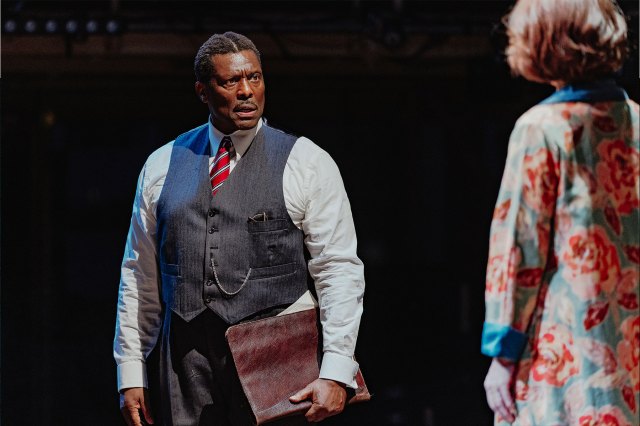
At the heart of the play is George Padmore, powerfully, portrayed by Eamonn Walker. A political organiser, theorist, and editor, Padmore is depicted here as both visionary and vulnerable, bearing a great sense of urgency, . Walker, best known for his screen roles, brings depth and world-weariness to the character — a man consumed by the scale of the work and the weight of what’s at stake. His Trinidadian accent, rooted in his real-life Caribbean heritage (Walker was born to a Trinidadian mother and Grenadian father), adds a compelling authenticity to a already rich performance.
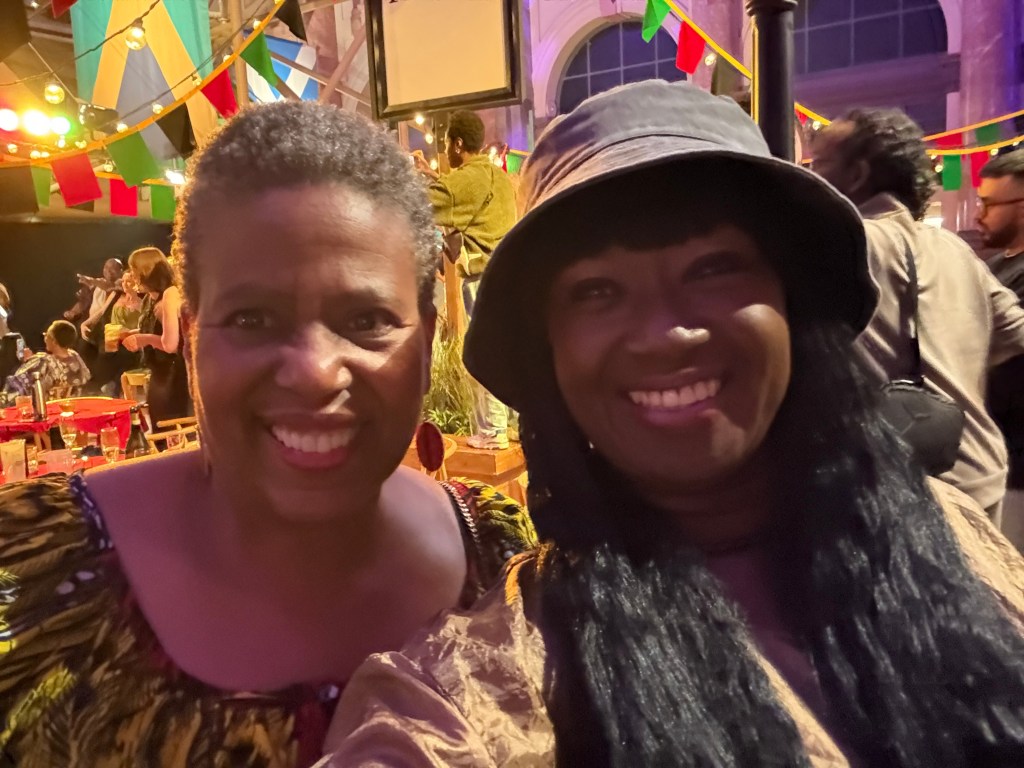
Pamela Nomvete‘s Amy Ashwood Garvey, is a formidable figure too often overlooked in mainstream narratives. Nomvete plays her not just as a historical footnote, but as a sharp, insightful woman pushing to make space for women in a room full of powerful men. Her presence commands respect, not by volume, but by conviction. The quote that opens this review is not just a line from a speech — it’s the thematic backbone of the play. Through Garvey’s role, Liberation begins to reckon with how the political contributions of Black women have been erased or sidelined — then, and now. Nicola Stephenson (Our Country’s Good; War Horse) played Padmore’s life partner Dorothy Pizer.

Nyoni’s writing resists nostalgia. The dialogue is grounded, the tension real. These were leaders in formation, not yet icons — debating strategy in pubs, clashing over ideology, juggling hope with exhaustion. We see the public figures and the private uncertainties. Kwame Nkrumah (played with fire by Eric Kofi Abrefa) is not yet the father of Ghanaian independence, but a young man testing his voice in a foreign city. Jomo Kenyatta (Tonderai Munyevu) is measured and calculating, while Joe Appiah (Joshua Roberts-Mensah) brings warmth and urgency to the ensemble.
Liberation exposes the intricate process of political transformation. Movements are not forged through unity, but through disagreement, negotiation, and deeply human interaction. There is real friction between characters — ideological, personal, generational — but Touko’s skillful direction ensures it’s never heavy-handed. She allows the actors to sit in discomfort, to pause between lines, to carry silence as part of the storytelling.

The design is pared back, focused. Scenes move fluidly between dimly lit meetings, lecture rooms, and intimate one-to-ones, underlining that revolutions begin in whispers before they reach the world as thunder. Archival sound weaves in and out — moments from the actual congress blend with the staged ones — giving the production a documentary-like resonance.
Liberation being staged in Manchester, the very city where the real congress took place, adds emotional weight. Manchester’s role in global Black history is rarely taught, and yet, in 1945, it was here that the blueprint for African liberation was drafted. Nkrumah later called the congress a turning point: “We went from Manchester knowing definitely where we were going.”

This play makes sure we understand where they came from.
Nyoni’s decision not to flatten her subjects is a quiet stroke of brilliance. These characters — and by extension, the real people they portray — are shown with all their contradictions: ego, doubt, brilliance, and bravery. It’s a refreshing alternative to the hagiographic storytelling that often defines historical drama.


In a world still grappling with the aftermath of colonialism, and where Black political voices remain under siege, Liberation resonates well beyond the stage. It’s a rare piece of work that educates without lecturing, provokes without shouting, and moves without manipulation. With a brilliant ensemble cast and the direction of Monique Touko a visionary, who brings theatre through her own instinctive unique lens, finding just the right beat to make you believe, undeniably helped by a talented company. Liberation reminds us to remember what liberation meant — and what it still must mean today, no need to elaborate on the global political landscape in 2025!!
Receiving its World Premiere as part of Manchester International Festival 2025, LIBERATION includes composition by Ife Ogunjobi from the Brit Award-winning Ezra Collective and was commissioned by the Royal Exchange Theatre.
READ INTERVIEW WITH EAMONN WALKER HERE!!
🗓️ Liberation runs at the Royal Exchange Theatre, Manchester, until 26th July 2025
🎟️ Tickets & more info: royalexchange.co.uk
#LiberationPlay #NtombizodwaNyoni #MoniqueTouko #EamonnWalker #PamelaNomvete #RoyalExchange #PanAfricanCongress #BlackBritishTheatre #KwameNkrumah #AmyAshwoodGarvey #GeorgePadmore #MIF2025 #ALTReview #ManchesterCulture #DecoloniseTheStage