



Emmanus discovers how a luxury leather brand blends African tradition and modern design to promote individuality and build creative communities.
The hubbub of a busy afternoon in Hackney dissipates like mist as you walk through the doors of the Nosakhari studio. Two members of the team cut and create from supple pieces of leather—artisans proudly contributing to the production of a beautiful array of quality bags and accessories that have served to build a tribe of loyal clients.
I am greeted by Nosakhare Osadolor, the modern trailblazer and founder of this luxury leather accessory business. Born in Nigeria, Nosa joined his parents in London at the age of 13. It was a yearning—not to assimilate, but to be different—that inspired his first foray into fashion.

“I went to a school where we all wore uniform. I wanted to stand out, and I didn’t—while others did. Accessories were an outlet for me to express myself in a subtle way, and over the years I wanted more of that. At college I grew more confident using clothes from charity shops. People would compliment me, and I assumed it was my styling—how I used accessories. It was then I created my first product, a beaded scarf.”
His colourful beaded accessories proved popular with his attention-seeking peers but did not satisfy his more philosophical approach to creativity.
“I wanted to create something that would make people stand out and thought that if the product gave birth to admiration, then new relationships could be formed. But the people wearing the beaded scarves were already flamboyant. At that stage, I was able to recognise that there are different strands to fashion. There is the vanity of fashion, the business of fashion, and the art and craft. They all serve different purposes.”
The latter proved most appealing.
Growing up in Hackney, an area often marked by crime, Nosa looked for an exit strategy. He observed that those who succeeded often turned to mastery—in sport or music. For him, mastering creativity became the way forward.
“I guess in Nigeria creativity was all around me, even if I did not acknowledge it as such. It was a means of survival, not a means to an end. You are creating to make things comfortable and survive daily life. You walk around and see shoemakers and carpenters on the street. You see people fixing cars and making tools. I too wanted my creativity to have purpose.”
Nosakhari merges contemporary design with heritage techniques, producing handcrafted leather goods that are as functional as they are artistic. Every stitch, cut, and finish reflects the brand’s dedication to quality and innovation. From statement-making backpacks and sleek cardholders to intricately designed belts and accessories, each piece tells a story—one of confidence, creativity, and cultural awareness.
The beaded scarves were inspired by his Edo State, Nigerian roots and the Djembe drum—both proudly celebrated in his work as symbols of honouring those who shaped him.
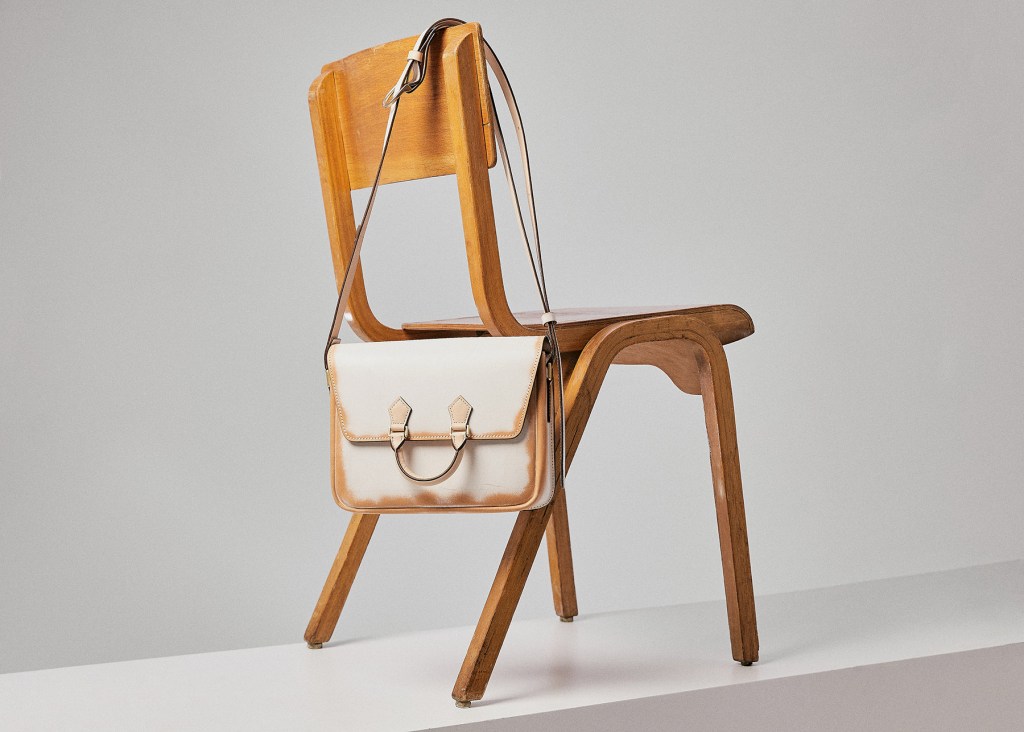
“When I create, I try to put my full self into the work and allow it to serve as a vehicle for everything that I represent. The trademark upside-down handles on our bags were inspired by the great marathon runner John Stephen Akhwari, who represented Tanzania in the 1968 Olympics. He did not win a medal, but his perseverance was exemplary. The upside-down shape is symbolic of us going against the grain and connecting back to my heritage.”

There is a self-assuredness about Nosa that is deeply impressive. It is far from arrogance—rooted instead in knowing who he is, the quality of what he creates, and his unwavering commitment to mastery. He also emphasises team building, sharing responsibility with those who form the community that sustains the brand.
It is this community-building aspect of the business that lingers with me, as much as the aspirational fashion pieces. Nosakhari is more than a brand—it’s a cultural catalyst, a bridge between craftsmanship and creativity, shaping spaces where artists, designers, and storytellers converge.
Nosakhari has extended its vision into the world of art and film, fostering communities where bold expression thrives. At the heart of this movement is “Able-graphy,” a book that encapsulates the brand’s philosophy—championing those who turn challenges into artistry. Now in its second volume, Able-graphy celebrates resilience, offering a visual and literary narrative of individuals who carve their own paths despite the odds.
Call-outs to artists and filmmakers have led to annual film festivals and art exhibitions—platforms designed to spotlight untold stories, amplify creative voices, and dismantle the barriers that often stand in the way of originality.


Through film, Nosakhari invites storytellers to bring raw, authentic narratives to life. Their art exhibitions transform spaces into immersive experiences, continually building their artistic communities alongside their bespoke-loving clients.
“You cannot survive now just as a designer. You have to be a strategist, an entrepreneur. I don’t have the support of the big fashion ecosystem or financial capital, so I trade with social, human, and intellectual capital. I serve to build communities of creatives; I give my time to developing interns and sharing skills. We had over 1,000 entrants for our film festival, which we may now run every six months, alongside our Able-graphy exhibition and book. We make the products so that people can use them, and then we broaden what they can be.”
Nosakhari is not just about fashion—it’s about impact. The brand operates with a deep sense of purpose, fostering a community of like-minded individuals who value authenticity and craftsmanship.
The second visual arts exhibition, held in the heart of Brick Lane, East London, featured an eclectic mix of creatives responding to the challenge of reinterpreting the handle of the brand’s signature “Able” handbag. Painters, photographers, and sculptors all used the upside-down handle as a launching point for original masterpieces.
Nosa is also an Ambassador for the UK Fashion and Textile Association, and his next venture speaks to that responsibility: building a team of artisans to promote craft through their CreateLab initiative.
“The idea is to make gifting, teaching, and learning a craft easier. We take our waste materials and make kits so that people can learn from home—how to make a bag, for example.”
In every initiative, Nosakhari stays true to its mission: to encourage individuality, to empower creatives, and to prove that artistry—in all its forms—has the power to inspire, connect, and redefine the world.
🌐 Website: www.nosakhari.com
📸 Instagram: @nosakhari
🐦 Twitter: @nosakhari
📍 Hackney, East London