

ALT: So Cleon Roberts, I’m going to start the interview. Firstly, I’d like to say thank you so much for talking to Alt A Review in advance. Let’s just start a little bit at the beginning. So tell us a little bit about what you do and how you came to actually produce the Patriot Project.
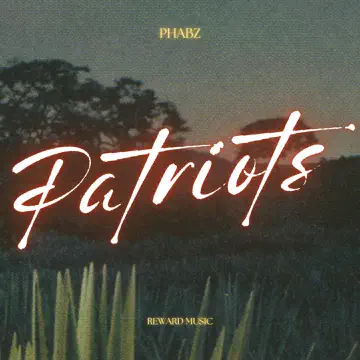
CR: Oh, thank you for having me, firstly, Alt A Review. Thank you so much, Joy. Well, how I came about the project was just the album, the original. It’s a remake of the original album that my father produced in 1972. And I’ve always wanted to remake the entire album. So I thought, why don’t we just start with the first track? And that’s how I literally came about, you know, the Patriot song. Because I’m of Jamaican descent, I don’t speak Nigerian at all. I don’t know the language. So it was just one step after another—translating the lyrics and then finding out what they meant. It’s in Igbo. And then finding out what the lyrics actually meant. And it’s a patriotic song to your African ancestors, your African heritage. So that alone got my spirit, got our spirits going. And that’s how we built on the track and wrote the song. The lyrics just flowed. It’s a tribute to our African ancestors, our African history, our heritage. It’s an anthem.
ALT: So Sonny Roberts is your father.
CR: Yes, that’s right.
ALT: I think quite a few people know the name, but maybe people won’t know how instrumental he was in terms of Afrobeat music and the work that he did. Maybe talk a bit on, you know, 1972—what was he doing? And how did the Afrobeat collaboration begin for him?
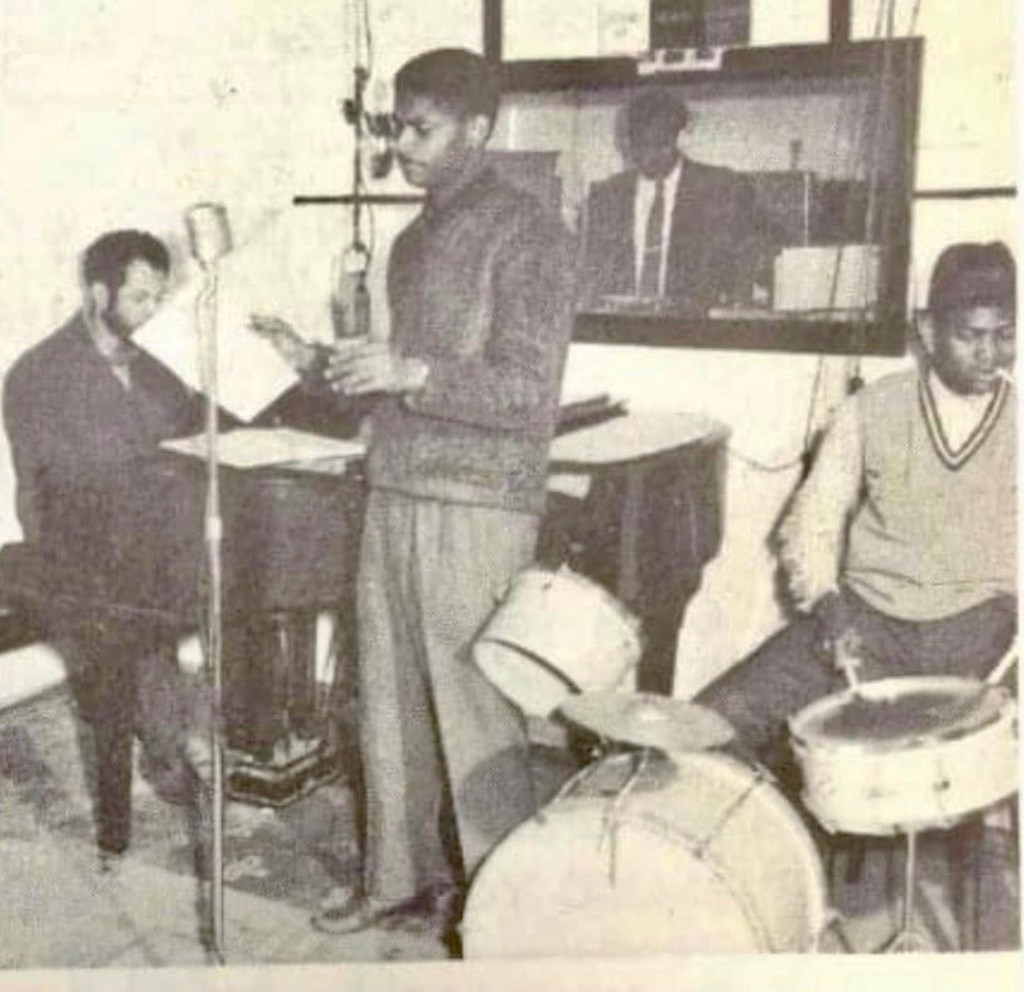
CR: It’s a fascinating story. My father established the first Black recording studio in Britain in 1961. He was making and pressing his own productions, had his own label, recording studio, and eventually opened his own record shop in 1970. He started producing Ska, which has African influences—drums, trombones. How he got into African music: my mother met a Ghanaian woman in the hospital when I was born. They became friends, and she invited my parents to African parties. She knew many diplomats and even Fela. Through one of those events, my father met William Omombala, who introduced him to African artists. That led to producing African music. His first production in that vein was Destruction by The Nkengas in 1972.
ALT: The Nkengas—who were they? And what was their musical style?
CR: They were a nine-piece band, brought to London by William Omombala. They performed, then recorded with my dad at Chalk Farm Studios. The album was released in London and sold in Nigeria. It’s now iconic—check YouTube comments, people talk about how it reminds them of their childhood. The success led to another album Nkengas in London, and a single called Jungle Funk. After that, word spread that Sonny Roberts was producing African music. African students in London—many of them musicians—came to him. He produced artists like Peter King, the Rhythm Brothers, Teddy Davis, and many others.
ALT: Fast forward to Patriot—can you talk about working with Fats and Xtreme?
CR: It was very organic. I worked with Antoinette Page, who runs Rock Africa. We wanted the right artist and producer. Fats is the nephew of a dear friend who is a Nigerian dancer and singer. It was perfect timing. The producer, Xtreme, is Nigerian and has worked with Tiwa Savage, Conscience, and others. We’re lucky to have him. We’re also planning a remix—maybe with a dancehall or another African artist. It’s about African heritage, so it could be anyone. We also approached Jamaican producer JLL, who was honoured to be involved. It’s about creating a bridge between Jamaica and Africa.
ALT: That bridge between Africa and Jamaica should be natural, but it’s often treated like something new. So how did it feel seeing your father’s plaque unveiled?
CR: That was two years ago. It was very emotional. Fifteen years ago, I was first approached about putting up a plaque. My dad was humble and retired in Jamaica. Eventually, I was contacted by Jack Bueller from Nubian Jack. When they did their research, they said, “You have to do this.” The building also housed Island Records and Trojan Records. The unveiling had a huge turnout—the biggest Jack had ever seen. The BBC covered it. My mum flew in from Jamaica. It was a proud moment for our family and community.
ALT: And the community response?
CR: Incredible. Kids came up saying, “I live in this building—I didn’t know this!” It made them proud. It’s about planting seeds. I’m flying back to London this July and planning to turn the location into a yearly celebration site. My dad’s sound system was called Lavender—we’re planning to plant lavender along the whole stretch of the building.
ALT: What’s next for Patriot? Where can people hear it?
CR: It’s been distributed by Believe Digital. They were excited because they didn’t have much African music in their catalogue. It’s on all streaming platforms now. We’re working on campaigns, visuals, performances. My dream is to have a group of major artists—Shaggy, Drake, Nas, Wretch 32—come together on a remix. It’s a historical collaboration between Jamaica and Africa. Afrobeat is in its golden era—Burna Boy, Tiwa Savage—it’s time for this story to be told.

ALT: What would your father say seeing all this?
CR: He’d be so proud. He’d give me his full support. He always believed in getting stories like this out there. With the global success of Afrobeats, now is the perfect time to highlight its roots and celebrate it.
ALT: In a time when history is being erased—especially Black history—how important is it for you to keep telling these stories?
CR: Vital. It’s deep-rooted in me. The fire won’t go out. We need plaques, exhibitions, monuments, and to honour our ancestors. We must keep pushing, keep our voices strong. The more of us speaking out, the better.
ALT: A director once told me—her protest isn’t marching, it’s her work. I feel that about your work too—telling these stories, educating people. Some don’t even know Island Records, which is shocking. But like oral storytelling, if I tell you, and you tell someone else, the memory and history can’t be erased.
CR: Exactly.
ALT: Final question: why should people listen to Patriot? What are the highlights?
CR: I’d say—with a smile and a laugh—because DJ Agee, who’s huge in the UK, endorsed it live in Jamaica! He took his decks out in public, and I had the chance to go perform. He loved the song. You can see the footage on my social media. It’s got the vibe, the message, and the roots. That’s why people should listen.