

Nyong’o has been named the newest ambassador for Chanel, a role she embraces with both pride and responsibility. Reflecting on the appointment, Nyong’o shared her excitement: “It’s a great honor. Chanel is a legacy brand with a long history, and to be the newest face of it feels monumental. I’m proud and thrilled to begin this new journey with a brand that I see as dynamic, feminine, and regal.”

Nyong’o’s new role is particularly significant in an industry that has long faced criticism for its lack of diversity and reluctance to change. Few Black designers hold leadership positions in major fashion houses — a gap still glaring in Paris, where only Balmain’s Olivier Rousteing and Louis Vuitton men’s designer Pharrell Williams represent Black voices in heritage brands.
For Nyong’o, becoming a Chanel ambassador is not just about wearing high fashion; it’s about pushing for meaningful change. “The message I bring to this role, both naturally and deliberately, is that things have changed, and we must ensure they don’t return to what they once were,” she said.
Her inspiration comes from legendary model and activist Bethann Hardison, whose work in the 1960s and 1970s helped diversify the fashion industry. Nyong’o was moved after watching a documentary on Hardison’s career, which highlighted the progress made in promoting diversity, only to see the industry backslide into a monoculture.

“That documentary was a wake-up call,” Nyong’o said. “It showed how much effort had been made to diversify the industry, and how easily it can revert. It reminded me that change requires a daily, conscious effort.”
Nyong’o’s appointment as a Chanel ambassador carries forward the legacy of Hardison, who fought tirelessly for inclusivity in fashion. For Nyong’o, the role is about sustaining that progress. “It’s not enough to make a change once and hope it lasts. It takes continuous, active effort,” she said. Nyong’o believes her ambassadorship is a deliberate step by Chanel to reflect a more inclusive world. “I’m proud to be one of the faces sending that message,” she added.
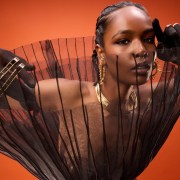
Nyong’o’s personal connection to representation in fashion runs deep. She recalled how growing up, she rarely saw faces like hers in major brand campaigns. “It led to an identity crisis,” she admitted, describing how she would search magazines for someone who looked like her, but always came up empty.
Now, she imagines young girls who will see her in a Chanel campaign and feel represented. “I hope that message reaches little girls,” Nyong’o said. “My work as an actor, author, podcast creator, and now as a brand ambassador is about occupying spaces where we were once invisible.”
Nyong’o’s ambassadorship challenges the fashion industry’s history of tokenism, where efforts at diversity have often been seen as superficial. With her new role, Nyong’o is committed to ensuring that representation comes with influence and purpose. She aims to be a lasting symbol of progress, shaping a more inclusive future in fashion.