

Film Talk with Paul Bucknor on Romeo n Juliet 4EVA
“I started working with a company in Italy because the thing is that the film industry is quite discriminatory. I mean, you could call it racist, but it’s more than that. I mean, it’s discriminatory in the sense that it’s very middle class, and so it’s discriminatory against anybody that is not white middle class” Paul Bucknor
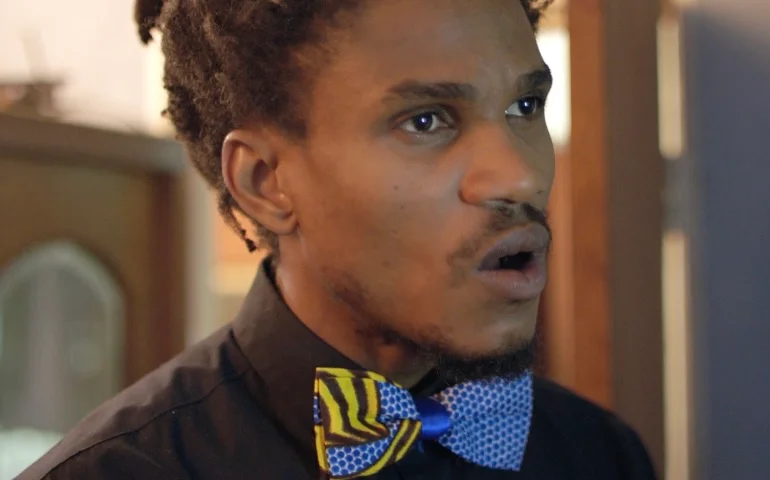
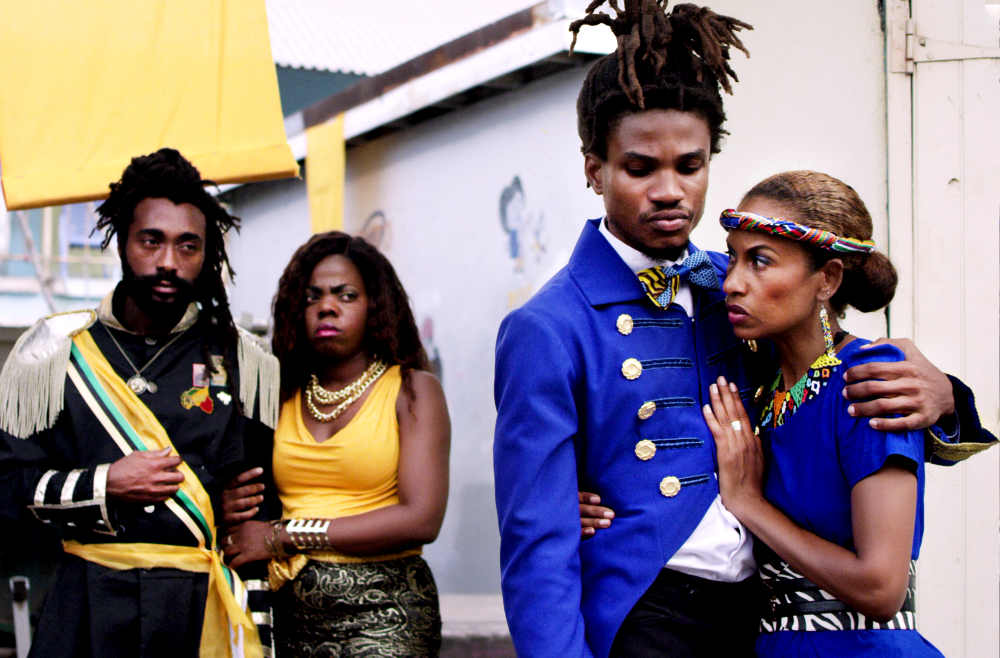
Romeo n Juliet 4EVA breathes new life into the #Shakespeare classic love story, with it’s Jamaican flavouring, Director Paul Bucknor shares how he got into the film industry, how The Full Monty came to be and working on film Romeo N Juliet with inner-city youth in Jamaica. The film is a romantic drama set in Jamaica in which a student reimagines Shakespeare’s tragedy with himself and the girl-next-door playing the star crossed lovers.
ALT A: What made you decide to become a filmmaker?
Paul: To tell our own stories and because of the poor representation of black people. I studied acting and I got my first acting job at the Royal Court and I was the token black guy and I did not want to be the token Black guy. So I left there and studied cinematography with CEDDO, if you are familiar with Menelik Shabazz they used to run workshops for films so I did a course there. And then I wanted to learn about actual filmmaking and I started working with a company in Italy, the industry is quite discriminatory, you could call it racist but it is more than that.

“So I did a cinematography course”
So I did a cinematography course there, and then I wanted to learn about filmmaking. So I started working with a company in Italy because the thing is that the film industry is quite discriminatory. I mean, you could call it racist, but it’s more than that. I mean, it’s discriminatory in the sense that it’s very middle class, and so it’s discriminatory against anybody that is not white middle class, basically.
And so I was fortunate enough to make some Italian connections, and I started working for a company called Cecchi Gori Group which is the biggest film company in Italy. And it was a great experience working with them because they were discriminated against as well in the UK in those days, Italians.
ALT A: What did you take from that?
Paul:
I learned a lot about the industry. And I worked in international pre-sales, which is one way to finance films is to pre-sell different territories. So Italy was a much more important territory at the time. It still is important, but at the time there weren’t that many screens in the UK. In Italy. There were lots of screens. So Italy was actually the number two market at the time in the world after America. And then it was soon overtaken by Japan and then Germany.
But then now UK has got so many screens with a build out of the multiplexes and so on that the UK is actually the number two market now for American films. But anyway, I learned a lot about the elements that go into making a film, and then I got together with some friends of mine because of all of the negative association with the black community.
Anything we saw in the mainstream media was always negative about black people. So I got together with some producers out of the BBC, black producers at different levels of authority. And funnily enough, most of ‘them had come through The Voice Newspaper. The Voice was like a training ground, a launchpad, in fact, for black people to enter the mainstream media.
Every time we’d see the Evening Standard or whatever it was, it would piss us off. So we’d complain. And so instead of complaining, the idea was to let’s try and do something. Let’s just try and do some positive representation. So we started this thing called Black Triangle, and the first project was to put on a film festival. And this is when, we got together, we put on the film festival, and we did the festival at the Electric cinema. Everyone else had a full-time job.
So I was the only one that was on it full-time. And so I programmed all of these films, and we were fortunate, one of us had done this documentary for the BBC called Homeboys in Hollywood, which was about John Singleton and that whole new American black cinema. And so when we did the festival, we were fortunate that we actually did the UK premiere of Boys in the Hood.
And the funny thing is that at first we went to Columbia Pictures and I asked them if we could do the premiere, and they said, sorry. So because of the connection with John Singleton, we asked John Singleton and he spoke to Columbia in America. And then Columbia in the UK said, oh, well, okay then.
And the festival was a big success. It was a great success. There were massive lines outside and so on. It was a new thing, it was called Nubian Tales.
As with success there was some defragment within the group when people are not used to success it inflates their head, One of the group secretly registered Nubian Tales and run off with it, but that still left Black Triangle. Later I started working with the studios as a consultant, in those days the black american films were released straight to DVD, even though the filmmakers had in their contract a theatrical release for at least two weeks.
They thought that was the market, and it was to a great extent. So the studios used to give me a small budget to advertise with black media outlets. So I’d do ads on Choice FM, take ads out in The Voice. If there were any black magazines, I would take out an ad in the magazines and so on. And through that process, I built up a really good relationship with Choice FM and The Voice, because they said that for years they’d been trying to get the studios to advertise, but they refused because they felt they didn’t need to.
But anyway, we built up a great relationship. So then what happened was somebody spent 3 million pounds renovating the Electric cinema, and then they went bankrupt.
So the electric cinema was all of a sudden on the market. I put together consortium with Choice FM and The Voice and a banker friend of mine at Deutsche Bank, and we made a bid for the Electric, and there were 22 different consortia going for it, including Terence Conran had this consortium, and we were fortunate enough that we won.
So I started running the Electric cinema, and then at the same time, I’d been developing films because that’s really what I wanted to do all the time. I wanted to do films from the time I did the course with Menelik I wanted to direct. But these other things, like my pathway towards making films was like, it wasn’t a straight path.

ALT A: Where did The Full Monty come into the picture?
The opportunities arose working with the Italians in pre-sales that taught me about the business of film. So then I figured that, well, because I was just like, most creative people believe that they can create something of interest and I wanted to make sure that I wasn’t one of those guys that had created it and then got ripped off.
So working with Italians and then working with the Japanese, I had started working with the Japanese as well, doing the same kind of thing, finding material for Japanese production companies, a company called Toho, which was one of the biggest companies in Japan. And I learned from a Japanese that if you get ripped off in business, you deserve to be ripped off. So , when I got the idea for The Full Monty at first, I was going to make it an all black film.
I mean, it seems a bit kind of passe now, this idea of male stripping, but no one had seen it before. I had heard of a Chippendales. They were coming to the UK, this new thing, and I saw the poster, these hunky guys, and I just thought that that was a bit, it is a bit cheesy. So that’s really what inspired me to generate the idea of The Full Monty.
Yeah. So what happened was that then when I actually wrote the story that I was going to propose, it to Columbia Pictures at first, because what happened was that when I was working with Italians, one of the Italians who lived next door actually came to borrow the typewriter to type out his application form to get the job as David Putnam’s assistant. And he got the job as David Putnam’s assistant on a film called The Mission with Robert De Niro and Jeremy Irons. Then not long after that, Putnam got the job running as head of Columbia Pictures.
So the guy that brought the typewriter all of a sudden was elevated to this kind of vaulted position as the assistant to the head of Columbia Pictures. So I went to Cannes. The Italians actually sent me to Cannes one time to meet Spike Lee because they were interested in picking up his films. But what happened was that was all riding on Do the Right Thing, because he’d just done a film called School Days that had flopped at the box office. So it was all riding on Do The Right Thing. If it was a success, then Universal Pictures would renew his, extend his deal.
If it wasn’t a success, then he would have to finance the films independently. And that’s where my company were very interested. So I went to meet him at Cannes and Do The Right Thing was a hit. So there was no deal for me to make with Spike. But the thing is that I ran into the Italian that I knew in Cannes, and then we agreed to meet back in London, and he was working out of Columbia Pictures in London. By that time, Putnam had been kind of boosted from Columbia Pictures.
NEED A professional WEBSITE DESIGN GET IN TOUCH
I made the deal with him at Columbia thinking that he was really well placed. So I thought because he had been number effectively number two at Columbia, that he was a great person to make the deal with at Columbia, not knowing that really, it’s a bit like a lame duck president. Fortunately, I actually made the deal for £1 that’s kind of like, this is insight for people that aren’t familiar with the industry.
I actually made the deal for £1 because I understood how the business worked, so I retained the underlying copyright. And then what happened was we made the deal. Then we actually won, after 18 months of working on the Electric project, we actually got the Electric. So I started running the Electric, having made this deal with 20th Century Fox.
Then we went into production on The Full Monty, and it was as, it was a big success. In fact, it’s the most profitable British film in history. They just did 25 years later on Netflix with much of the original cast and I am very happy with that.

And so because of the success of The Full Monty, I actually became a tax exile . And it turns out that Jamaica is a tax haven, which a lot of people don’t know. But the thing is that, yeah, it is. So I was moving between London, Jamaica, and Los Angeles, and the more I did that, the more I realized how much I love Jamaica. And so eventually I sold my place in Los Angeles and decided that I would try and kind of stimulate a local film industry in Jamaica.
So I linked up with a small group of people. There were four of us, including Chris Blackwell, and started the Flashpoint Festival at one of his hotels, his hotel in Negril called The Caves. It was called Flashpoint Film Festival, new Black Cinema. So it’s still on the internet archives as Flashpoint Film Festival, Jamaica.
ALT A: So how did Romeo n Juliet come about?
So I produced some short films with some young filmmakers for the festival and then produced a film called Better Mus Come that was the highlight of that period.
So from the time I wanted to make films to making The Full Monty, it took about 12 years. So after that, I figured that I wouldn’t be as desperate to make films. I wanted to enjoy life a bit. So I went to Jamaica and I started a family. I got married, and just continued to work with younger people mostly.
Eventually I started working in schools on a Shakespeare School competition, where the school would pick a play and we produce a 30 minute version of the play in a Jamaican context and the winners get to go to the UK.

I filmed 30 minutes on my phone and took it to a TV company in Jamaica and asked them if they were interested in doing a reality show. So we did a reality show, 16 part reality show called Conquering Shakespeare.

Now the Haile Selassie High School they’re from downtown Kingston from a really extremely rough neighborhood called Payne Land. And they did a version of Romeo and Juliet. Now, the idea was that after the reality show, the idea was that the three schools, three top schools, we would make three short films, interpret their productions into films. But I could not write the film until I knew who had won.

ALT A :
In terms of the film industry in Jamaica, what support does the government give you?
Paul:
Well, this year, after decades, there was announced the Jamaica Screen Development Initiative. So submissions opened in April at the end of April this year, and the first awardees will be announced in August next month. And the idea is that there’s a 6 million US dollar revolving fund for development, production, marketing festivals, and all aspects of the industry basically. And there are some tax incentives now. So even though they could be better, it’s a start. And so it is really a tipping point for the industry. It depends on, let’s see, which projects emerge from it this year, next year. And for all intents and purposes, it should be a milestone event. And so the industry should be growing exponentially.
We’ll wait and see. But yeah, I wanted to say as well that the children in Romeo and Juliet, the school children, even though the main characters from Heidi Sessi, the other characters, they’re played by students from other schools that featured in the reality show TV series. Yeah. So when I was developing the project, I got a clear sense of which actors to cast as I was writing a script, because I’d worked with them all during the reality series or professionally with the parents, the actors that played the parents, I’d worked with them on previous productions. So I knew everyone that’s in the film. I knew them before.
ALT A :
Wearing your producer and director hat, what would you say are two or the biggest learning curves for you in this industry over the last two decades if you were given advice to somebody?
Paul:
Well, to produce producing in many ways is about putting out fires. That’s part of the job is the skill is how to fix. Because things always go off the rails. So how do you keep things on, get them back on the rail? So producing is about perseverance as well. But I think that the best way to learn is to actually volunteer and not to, you see, this is why it’s traditionally been a middle class industry, because to volunteer means that you have to have resources to survive.
And so it’s generally being the more well off people or well off families, that their children can have that space to learn before they start getting an income. So if you’re able to volunteer, that’s highly recommended. I worked for the Italian company for 18 months without getting paid a penny.
There’s always a price. If you want to get the salary, then you are going to be restricted in what you are able to do and how long it’s going to take you to move forward. Whereas if you work voluntarily, you have much more freedom. And as well, the sky, it’s beyond the sky. There’s no limit basically. But you have to be able to persevere. You have to be, as they call it in football terms now you have to be ready to suffer. If you want to score a goal, there’s going to be a period of suffering as well.
So that’s for producing. For directing, I would say that the best way into directing is to write. That’s the best way into directing. I mean, even if you end up directing something someone else has written, I think the best way to directing in the industry is to write. And the best way to start doing directing is to also make short films. Now it’s much easier because you could even make a film on your phone nowadays, using your phone.
You can make short films using your phone. So I would say that as well, it is best to volunteer, best to work on a production as a volunteer and get some insight into how things work. I mean, it’s trial and error a lot of the time. Directing of course, as well. Don’t only watch good films or films that you think are good.
Watch the spectrum of films and work out why you think some films don’t work and why you think some films do. And that will inform you as a filmmaker also, especially if you are going to be a producer, but also a director, is to learn the different departments to work volunteering in the different departments. So try and work with camera, try and work with production design, try and work with wardrobe and just try and work as many departments as you can and get a broader spectrum of experience as you can, because that will only inform you, that will only help you become a better filmmaker.
ALT A :
Wonderful.
Cool. And what are you working on next?
Paul:
Well, I’m working on a project with George. that’s a limited documentary series. I’m working on another, I mean, there are other people on that project, but I don’t want to mention any names at this point because it hasn’t been announced yet. But there’s some, well-known names involved with that project. I’m working on a project in Jamaica called Black Shots, which is set in 1830, and it’s about maroons. And for those that don’t know the maroons, were kind of the rebels in the slave colonies. And I’m working on a project about the maroons in Jamaica.
Cast: Kadeem Wilson, Sheldon Shepherd, Everaldo Creary
Genre: Romance
Author(s): Paul Bucknor
Director: Paul Bucknor
Release Date: 07/06/2024 (selected cinemas)
Country: Jam
Year: 2024
The film had a limited release in the UK. Check for more info HERE
You might also like: Art Exchange: Moving Image 2024