

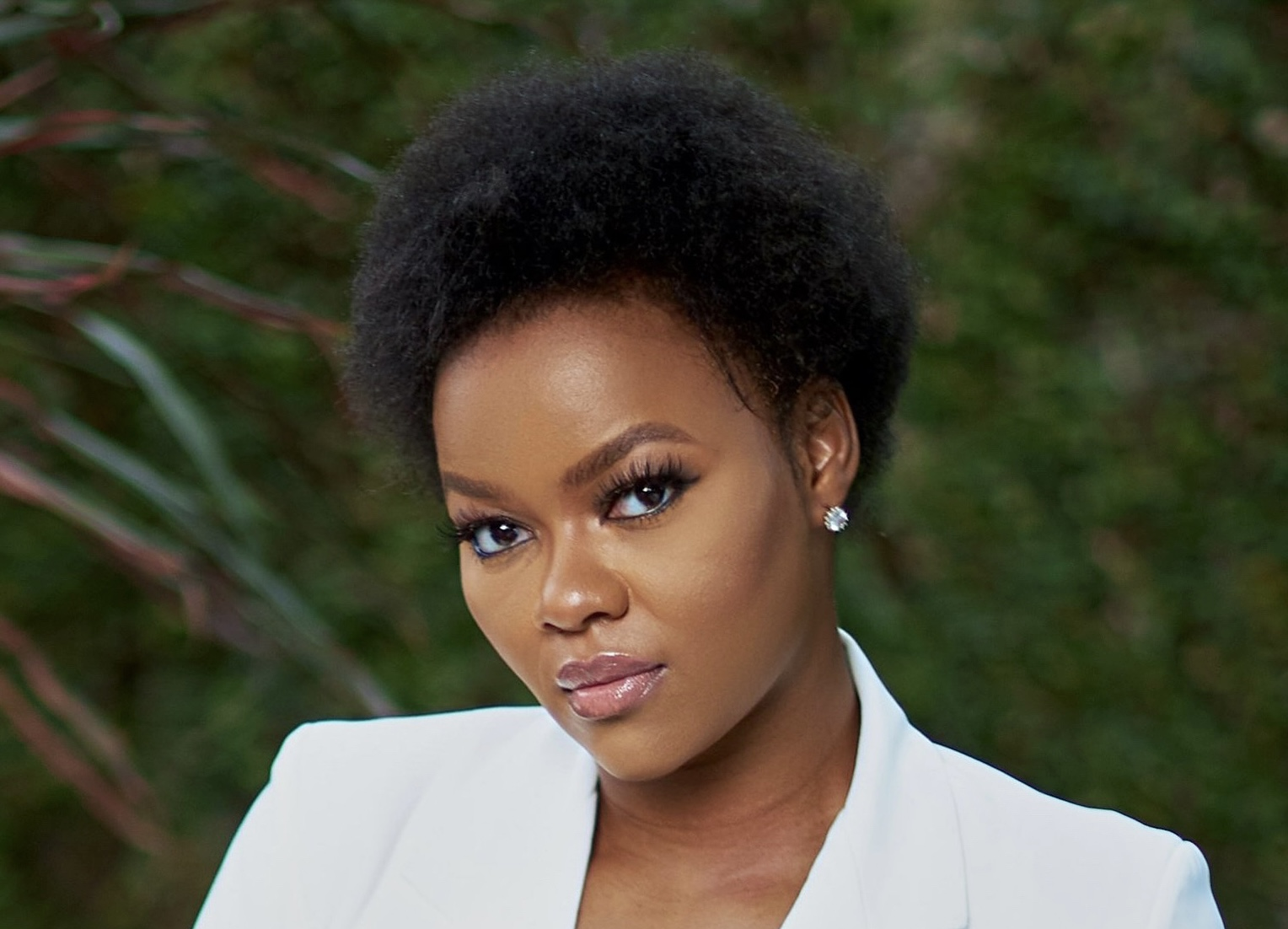
“I like to be involved in whatever teaches children the future of Africa, whatever exposes them to so much more than what we know and what children are now experiencing on their iPads”. Kehinde Bankole

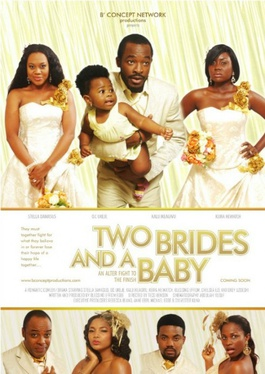
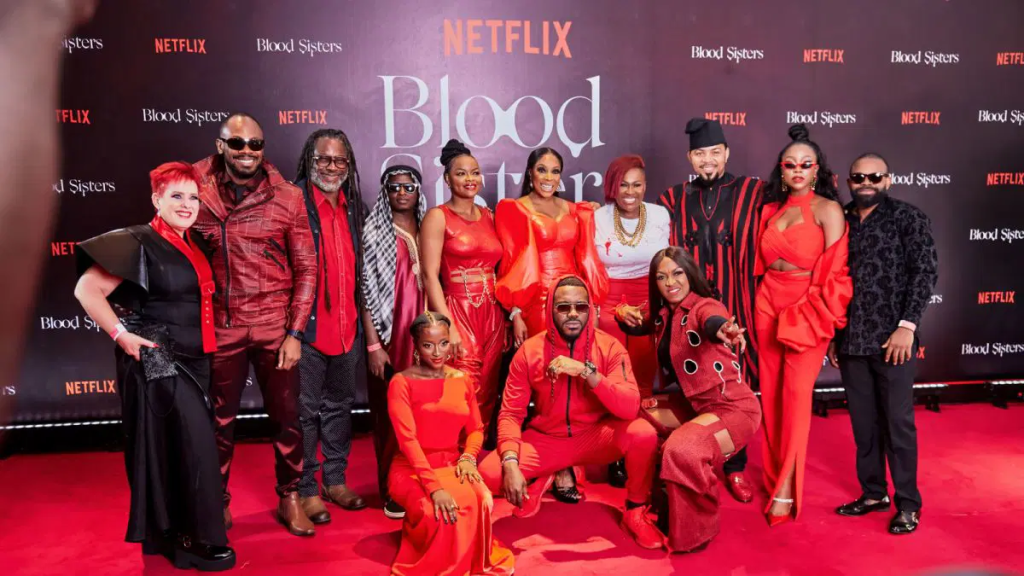
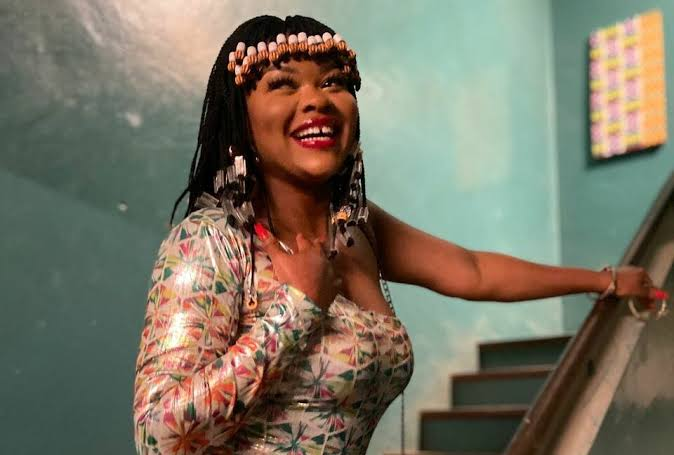
Kehinde Bankole is an actress, model, and television host. She made her entertainment debut in Miss Commonwealth Nigeria 2003, then proceeded with MBGN 2004. She was named Revelation of the Year at the 2009 Best of Nollywood Awards, two years after her first screen feature in Wale Adenuga’s Super Story.
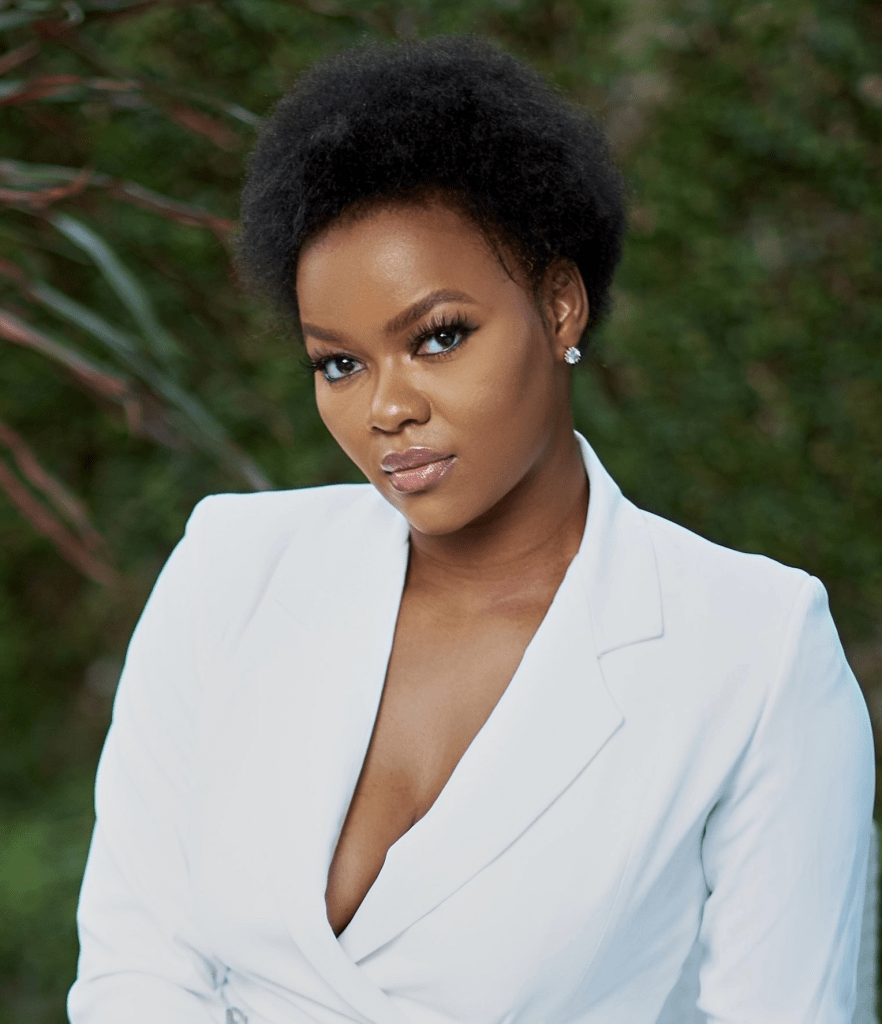
The 2007 new face of Lux model has many acting credits under her belt making her acting debut during her reign as Lux ambassador in the family drama Super Story: Everything it Takes, playing the character Caro.
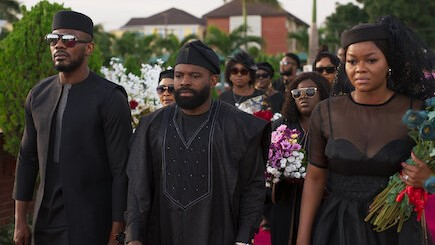
She has also starred in other Wale Adenuga’s productions like Papa Ajasco and This Life.] On television, her most notable role is as housewife Kiki Obi in Desperate Housewives Africa, the Nigerian remake of the American hit series. She also featured in the movie Prophetess also starring Toyin Abraham.
Ahead of Anna Hibiscus’ Song ALT A’s editor Joy spoke to Bankole.


ALT A:
Thank you so much for talking to ALT Review in advance. Let’s talk about you and acting. What was it that made you think this is where I have to be?
Kehinde:
So, the first thing I think was as a kid, I was maybe writing a poem, you know, putting little dramas together. I was always doing something in that line, making sketches, drawing.
Our parents encouraged it by allowing us to join the church groups, the drama group, the choir groups. I was singing, if I could beat the drums, I would. They allowed us to experiment and spend a lot of time in that kind of environment because it was safe. I hope it’s still the same now. I hope so.
When we were growing up, it was the safest place. Parents would not even think twice before saying, OK, you can go up there and you know, get busy with your time. So that quite helped. I just noticed because of how much time I spent doing all those things, the interest was there.
It was then I realized that I was not doing it for the money. Initially it was, I wanted to be able to make some money by the side for myself. So, I started with beauty pageants. The first one was the Miss Nigeria beauty competition then it was Miss Commonwealth Nigeria. I was not winning but I just kept doing things around modelling. So, I realised that it was not the money. Initially it was just wanting to be able to buy things myself, do things myself and then later I was like, I like this. So, I wasn’t competing to win. It just was the most natural environment for me to be in. I just found that very exciting and I continued and then yes, the money will be there coming by the side. I was like, OK, this is good.

ALT A:
Wonderful. You talked about just doing it naturally. Did you get any professional training?
Kehinde:
Okay. Yes. So, I started with Mass Communication as my first degree (Mass Communication, Olabisi Onabanjo University). And obviously we know, that Mass Communication is definitely an arm of the arts, a very strong arm of the arts. So,you get to a point in your study, the third year I think before we get to the fourth year where you’d specialize. And then those who want to go into broadcasting would go into broadcasting and those who wanted public relations, would branch into public relations. That was the point. where I knew that there was nothing more for me to branch into in Mass Communication. So, I realized I am in the wrong department, but if you want to go to the theatre, you must start again from year one. But we had a lot of courses in common, we had a lot of things similar, but all the while I was doing that was concurrently running the training provided by the church.
It was the redeemed Christian Church of God. The theatre group was called the Acts of Apostles. So yes, I was doing that by the side and then I needed to do a little more after school. So I went to France, a short course in acting. After that very short course, I kept doing short courses. Obviously, I was not going to go back to year one again. And the way the education was or well the exposure that I had and the knowledge I had, then we did not have too much of all the way they have the Juilliard and all these big music schools and big drama schools abroad. We did not have that in Nigeria, especially when I was growing up. So, you just had to keep looking for ways to get yourself educated.

I found out later over time that there were some acting schools in Nigeria. There were two, but then there was no mobile phone. There was no way for you to even find out except somebody tells you. There was nothing even to attend auditions, I’d have to get to that venue first. Look out for a paper that will be pasted on the wall to say we are having an acting audition on certain dates. So, if you get there and there is nothing pasted on the wall, you just have talk to amongst ourselves about where else there is the possibility of an audition. Then you find your way there. As a young girl who had to take permission from school, I was 14, 15, 14 thereabout. So, it was not that easy. So, after that I would continue with for example if I heard of a film festival, whether it was Berlin wherever it was, I would say, is there a workshop? Is there an acting workshop in that? How many weeks is that? How many days is it? I am going to be part of it. So, I kept doing that, pockets of that here and there. So that’s about the professional add-ons that I did for my first degree.
I ended up not doing any formal first-degree education again. I just kept on doing training and workshops wherever I found it. Acting is regardless of, I tell people sometimes when we are having conversations and there’s many, there’s some intellectuals in arts that will be telling you about, they have this language, those who have studied, which is a wonderful thing. Of course they have languages that are used for the art. They will tell you about methods of acting.
ALT A:
Like, Juilliard and RADA?
Kehinde:
Yes.
I did not have any polished details, but I knew I wanted this, and I was going to get it. So, I would just listen in and then I may not have all the big grammar to explain whatever it is I want to say, but just give me an opportunity to show you. I just needed to show you. And then I knew that okay, even if I did not have all, I did not know about all the methods of acting that they did. I did not know the grammar to it, but I did I know the art? Did I like the art? Did I love it? I knew that I loved it, and I knew this was it for me. This is a place whether I get the formal education or not, I was going to continue. I did.
ALT A:
In terms of the industry in Nigeria, how much support does the government give actors or the creative industries?
Kehinde:
As with everything in Africa, nothing is bad. Many things just lacks structure. There is just no structure. Is the Nigerian government supporting arts and entertainment? Yes, particularly the Lagos state. The state I am in whenever I am in Nigeria where I live, are they supporting that? Yes. Is there a structure to it? No. In the beginning when they present it, there’s some kind of transparency to it. You can hear that, oh there’s information about something. So put it where it is easy for everybody to assess it. Definitely there will be some criteria or some yardstick for us to be able to partake in that thing. How transparent, how easy, how open is the process of all that? Those are where the questions as with everything in Africa begins. So, are they supporting creatives? Yes,
But is it going in the direction that it is easy to track the success of it? To judge if it’s clear enough. It’s always just modeled up. But are they supporting? I think they are, not that I’ve benefited directly, just as I explained, we hear of millions and billions going here, going there. You hear of individuals; you hear names of those who have been those who benefited from it. But have I benefited personally? No.
ALT A:
I’ll say congratulations because you won the Africa Magic Viewers’ Choice Awards how does it feel to win?

Kehinde:
Winning is validation. It’s confirmation that you are doing the right thing. Especially when you’re a woman. You wonder sometimes if you’re doing the right thing. I don’t worry, I just sometimes wonder, I do love structure very much, but the way the trajectory of my work has gone, I’ve not had the opportunity of everything being formal and so when you’re doing things, you’re wondering if it’s the right thing and you’re wondering is it excellent? Is it just good? Is it very good or is it excellent? You want to know. So that is like, oh, telling you that you are doing well, we’re seeing you. You are nominated for all these films. And then the nominations, first, for everyone, I always say congratulations to all actors because a nomination is a win. It means that they are seeing what you are doing and then obviously there will only be one winner.
So even if you end up not being announced the winner, you are still a winner. That encourages you to also know the direction to plan for the future. If you’re making choices as an actor, as a producer, what are the things people like? What are the kinds of stories we should be telling in Africa now? Why are these stories important? All these questions. So, sometimes I know it is bigger than the plaque you receive. It is information, it is a whole bouquet of information to tell you what people need now, why they need it, how well what you are doing is doing. So, it is an amazing examination. It is like an exam, and for you to be told you have a pass mark, it directs you and helps you focus on what is important.
ALT A:
Talking about stories, we are here because of Anna Hibiscus’ Song. Can you tell us firstly about who your character is and how do you resonate with her?
Kehinde:
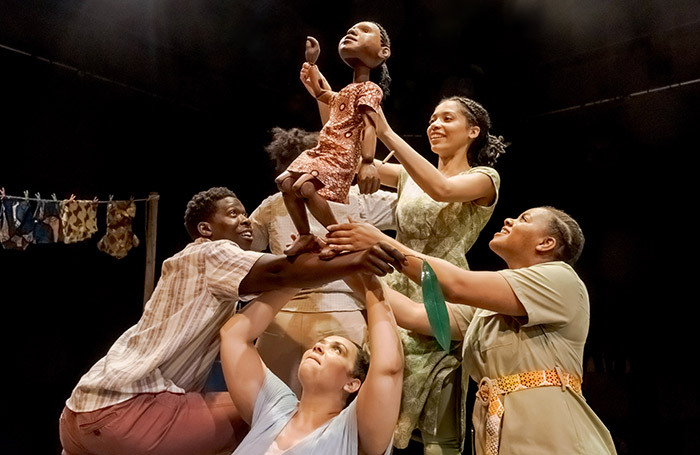
I am the Aunty Jolie and the Narrator. Those are the two that I’m playing. First thing I’ll say is I haven’t done anything related to puppetry at all. So, I’m as curious as you are. And the exciting thing is that I love adventures in the arts. This is me carrying everyone. I’ve told my followers on social media. I’ve told family, I still tell friends. This is another journey for me that I’d love to carry along on. So, I haven’t done anything in puppetry before. But with the reviews from the last show, the reviews were amazing. It is a family show, which means that children get the opportunity to watch that alone. I like to sort of be involved in whatever teaches children the future of Africa, whatever exposes them to so much more than what we know and what the children are experiencing on their iPads.
And I bet there are so many children that have never had to draw a line on the ground. We drew lines on the ground when we were playing, we would clap our hands for 10, 10. Our playground was like an exercise ground. It was a learning ground; it was a disciplinarian ground. That is where your mom would come and pull your ears off that ground. Things happened, but now children just have the iPad and that is what they are glued to, even grownups. But it is sad for children not to have some experience. Some children were born at a time that they would never know what it means to not be on the internet. They were never born without Instagram and TikTok. They never knew how to just be with their friend and just play. And it is something that I really am interested in seeing how it will turn out because it feels like this will connect with children a lot. Three years and above are eligible to be part of the show.
African storytelling to children. I mean that it is amazing. The parents will be there, but there will be music, songs, puppetry, dance. I mean those were the things we had. Then you play till late till your parents get you out of there. You would make genuine friends. They are missing so much. And to be part of a show that can bring that, some will be their first time playing. I’m looking forward to it. It will be my first time. So, I’m just going to be experiencing this too.
ALT A:
You have half answered, what are you looking forward to being on the London stage or what do you like most about being on stage instead of being on the screen?
Kehinde:
What I love most is the stage. There is not second chance for a first take, to quickly do that again. So, teamwork is amazing where we forget our differences. We just want to all learn about our strengths. We need one another at that time. I want to know what you can do. Can you pass this on to me quickly? Can I grab it quickly? You get to know people and that way you celebrate other people’s talents. Me, I am a lover of raw things. I have never been formal. I also mentioned my education in the arts. Me, let us cook it up now, let us get it going now. What have you got? Let us see it. That energy and then that is the best place for you to learn anything. Remember I did not go to a film school formally, so that is my ground there.
And I remember the passion of everyone is raw. The director is there, she is tapping from everything she has seen. The sauce is right there. If the cast is an ensemble, the cast is about six or seven or eight. It is right there that the director is making real-time decisions based on what she sees. She is seeing you; you are seeing her, you guys are, it is like a live wire. It is amazing. But for film, for film is good as well. And I have had years in film theatre also. I started as a kid, like I said, but I am never on stage as much as I am on TV or film materials. So, for me the stage is like I am there, and everything is cooked right there. There is nothing more beautiful than that. And then you are meeting somebody for the first time. You just shook that person’s hand. You do not know what they are capable of until the rehearsal starts, and you are like, oh my god, oh my god. And you are getting to know one another, and you are learning, and you are tapping. You must make decisions right down on that spot. How do I want to relate to the audience? What do I want to do? The kind of exercise it does to your brain and not be described. You must be present.

It is wonderful. It is wonderful. And then you experience the people in the audience. That is another angle rather than staring at a screen for tv, there is nobody in front of you. But for theatre, the feedback is right there.
ALT A:
Why do you think theatre companies like Utopia Theatre are important?
Kehinde:
Especially for Africans in diaspora, identity is so important to your success. How you challenge yourself, the opportunities you think you are allowed to go for the one you have to fight for. The one that an organization such as Utopia Theatre can put down for you as a structure, as an opportunity for you to latch on. I see Utopia Theatre as a ground for opportunities. Opportunities that grow. Some of them are starting small, growing, and doing a lot for young people. They have workshops and you can tell clearly that they are doing the right thing because they have received grants at some time to do more. They are doing the right thing. So, what they are doing apart from giving an identity and a strong unified front to Africans in diaspora is that they are creating a community. It is beyond just coming together to act or dance. They are creating a community that you can fall back on later when you need things, resources, information.
You need people to work together. It is like a direction, like a very big book that connects everyone together. So that is what the importance is for the community. It is also for the future of Africa that as much as we are spread all over the world, we should not just be everywhere. What are relevant in those places? Are we just there contributing to the workforce or are we there taking up some space? And an organization such as Utopia Theatre is making sure that the structure is there. Some of the things I said we lack here, which is not like the money is not there in Africa yet, but there is just no structure, and they are doing that. That is, it. Very Important role.
ALT A:
What is the theme without giving the story away?
Kehinde:
There is not even much I can give away because it is also my first experience. But I know it is about the adventure of a little girl, an African girl who is out there, she is having an adventure and, there is so much to learn from it. I believe that grownups will see themselves as having been an African abroad for the first time they see themselves in her. Or children currently who are born abroad who never really had any roots or background abroad will learn what their roots are. That is about as much as I can say. But I know that it is about the adventure of a little girl. And I believe that because the show is open to older people as well. Remember the cast consists of a girl and then much older people. It is going to resonate. It is a family show. There is always going to be something for every age to pick on.
Jamine: What next after Anna Hibiscus’ Song wraps up? What are your plans?
Kehinde:
Right. I would say after it wraps. I am coming back home to film my own movie and I am starting something new aside from my production. The two targets I have are to focus on my production and then my business, and both are happening at the same time. Once I finish in October, hopefully I will be back here in November to film my own first production. I will be back in the UK by the new year for theatre, my own theatre. It will be a co-production. I have done one co-production before, now it is called NW Musical. We had that not long ago in London. And I will do a second one, hopefully sometime, do my own thing alone. But it is not about doing things alone, it is about continuing to go strong and go strong abroad. Having the opportunity to just continue to tell African stories by ourselves in our terms, in our own way. That opportunity, whether it is teamwork or solo work, is what the new year is about. But from November, I will return to start doing my own thing.
ALT A:
Wonderful. And just a final question. We have a Creative Careers section. So, if you were to give yourself 19-year-old self some advice about the industry based on what you know now, what would you say? And that could also be reaching out to that young actor or even just any actor it does not matter if they are young, just someone just starting out, what would you say to them?
Kehinde:
I would use the example of Utopia Theatre and Sheffield Theatre doing this together now. I will tell my younger self, do not be afraid to create. You will find people, you will find organizations, you will find structures to come and lift that thing within you. Somebody is going to believe in what you are doing. It is quite easy to be a follower sometimes. It is not everyone that is built to be a leader, but everyone can be a team player. You grow faster that way. So, I would tell my younger self, if I knew some of the things I know now that I should not be afraid to create, I should not think too much about how I am going to run, what I am going to create. You will always find like-minded, like visioned people who will come along with your vision. So, if I knew I would have started creating, a lot earlier.
ALT A:
Thank you so much for talking to Alt A Review.
The production what you need to know:
This is the story of a young girl named Anna Hibiscus. Anna lives in amazing Africa. Ibadan, Nigeria to be exact.
Anna Hibiscus is so filled with happiness that she feels like she might float away. And the more she talks to her family about it, the more her happiness grows! There’s only one thing to do…Sing!
Told through music, dance, puppetry and traditional African storytelling, this theatrical adaptation of Atinuke’s much loved children’s book will have you beaming from ear to ear.
For children aged 3+ and their grown-ups.
“Bursting with happiness” – THE STAGE ★★★★
Tour Dates
Wed 28 – Sat 31 August: BRISTOL OLD VIC
Thu 5 – Sat 7 September: YORK THEATRE ROYAL
Wed 11 & Thu 12 September: THE MALTINGS, BERWICK
Sat 14 & Sun 15 September: THE QUARRY THEATRE, BEDFORD
Fri 20 & Sat 21 September: CAST, DONCASTER
Sat 28 September: TINY IDEAS FESTIVAL at THE NORTH WALL ARTS CENTRE, OXFORD
Thu 3 – Sat 5 October: CAPITAL THEATRES, EDINBURGH
Wed 9 – Sun 13 October: UNICORN THEATRE, LONDON
Tue 3 September: HULL TRUCK THEATRE
14 – 20 October: STREAMING ONLINE