

Talking shop with Solange Urdang OBE
In the New Year 2024 Honours List, Solange Urdang was appointed an Officer of the Order of the British Empire (OBE) for her exceptional contributions to Dance and Musical Theatre.
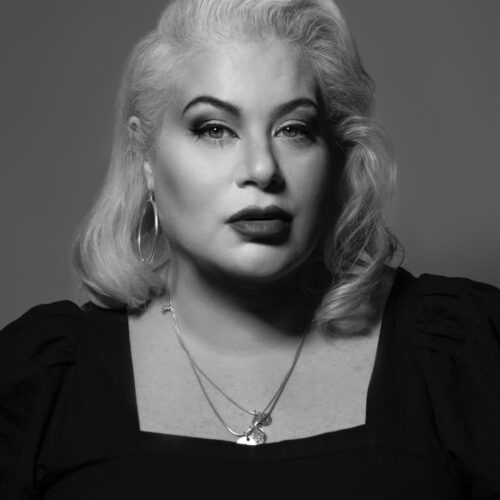
As the Chief Executive Officer and Founder of The Dang Studios in London, and the Co-Founder and Director of the Black British Theatre Awards, Solange continues her significant impact on the UK’s performing arts landscape.
Until recently, she served as the Chief Executive Officer of Urdang Academy, where she continued to advance her late mother’s vision of diversifying British performing arts.

Urdang’s OBE was to celebrate her pioneering efforts in providing diverse training opportunities in the performing arts. Her work with the Black British Theatre Awards highlights and supports black British performers, further amplifying their presence and achievements within the industry. Her dedication to education and inclusivity earned her this prestigious honour.
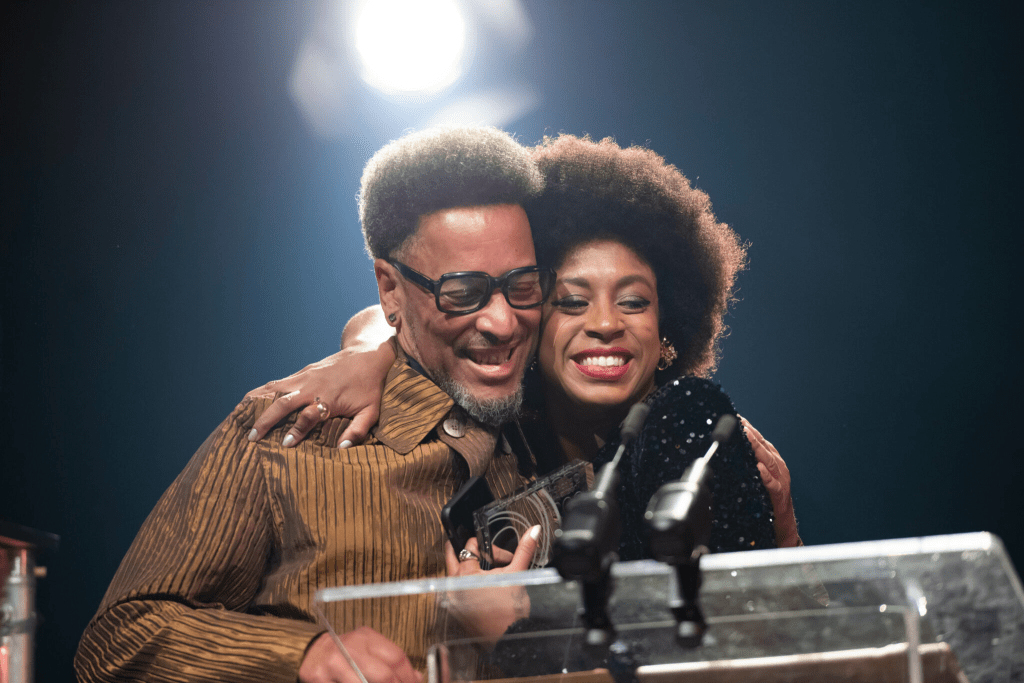
Presenter and founding Patron Kenneth Olumuyiwa Tharp CBE
In early 2024, Solange attended an Investiture to receive her award, marking a significant milestone in her distinguished career. Born into a legacy of theatre and activism, she remains a leading figure in both theatre and film productions worldwide, renowned for her support of grassroots projects and commitment to nurturing outstanding talent.

ALT A:
How did you get into the entertainment industry?
Solange:
I was born into it. My late mother founded the Urdang Academy and from the age of eight or nine, I went into full-time training with her. And then after training, I went to the School of Performing Arts in New York. Very briefly. I worked in commercial dance for a while and as a singer and I just didn’t enjoy it.
So, then I went on to art college but still worked at Urdang under my late mother for years and years and years. And then when she passed, it was an obvious transition for me to take over, I ran the college rather with the same ethos and the same vision and I just sort of modernized it as it was no longer a ballet school.
SUPPORT INDEPENDENT MEDIA: SIGN UP TO NEWSLETTER
ALT A:
Tell us a bit more about this, because obviously this is a key part of what you do. So, what is if someone wants to join or what’s the age group?
Solange:
Now, I run a Foundation course along with X Seven in Leytonstone, and we especially focus on kids from 16 to 18. Then the degree course, depending on the type of student at Mountview at GSA, depending on what type of student we get a foundation, we will then get them ready to audition for their degree basically.

ALT A:
Fast forward to now you co-founded the Black British Theatre Awards with, Omar, your co-founder. Tell us a little bit about that vision. Firstly, tell us a bit about that vision and the importance of such an award in this space?
Solange:
Well, I’ve known Omar for a long, long time. I met him when he was doing Five Guys Named Mo, and I was taking students backstage for my late mother, and I got to know him over that time, and we just stayed in touch. He’s come into Urdang and talked many, many times. So, what happened was, Facebook had this long feed about actor’s musos and creatives, and someone had put ‘Why Not Choose a White Actor’, which there was a whole outrage in 2018 and Omar on Facebook had a whole chain reacting to it, and quite important industry people were reacting to that. So, I just asked if there were some awards for black musicals / actors and I just presumed there was in whatever form it took, and the reaction was, no, no, there’s not.
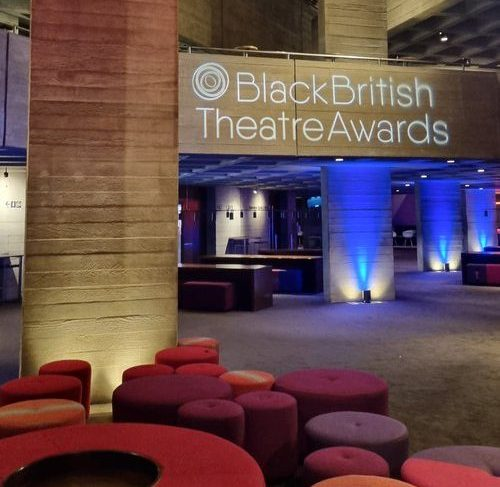
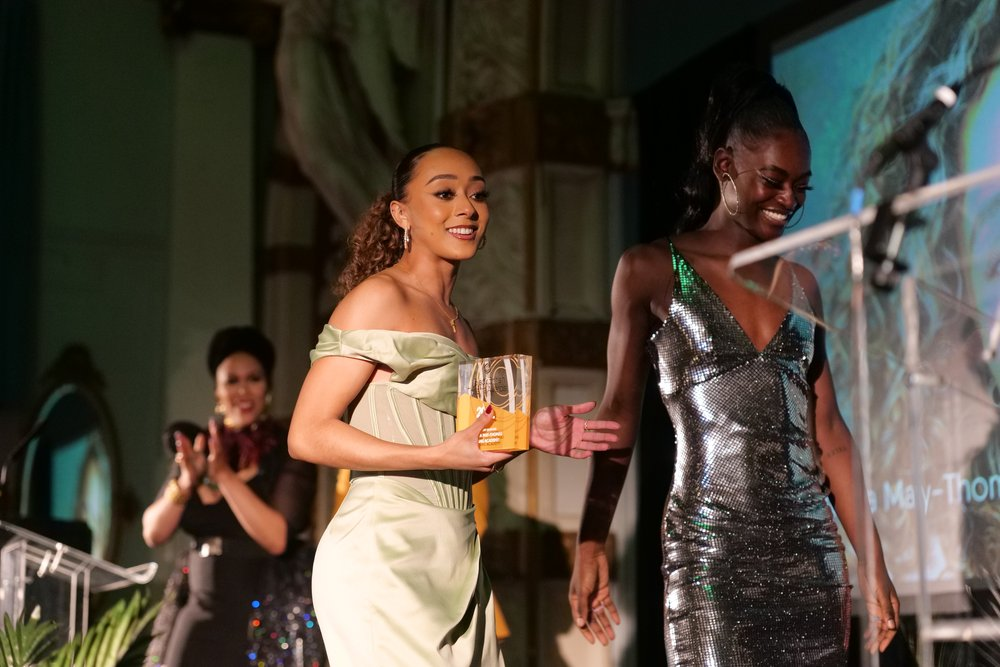
BBTA’s previous home at the National Theatre
So, I did a bit of research and basically said to Omar, let’s do it. It’s so important.
I mean, as an educator, for kids to see themselves on stage and off-stage is so important to diversify the industry. When my late mother, she, fled South Africa in around 1964, her vision at the time was to have diversified ballet.
And I think it’s a great way to make a community of awareness to do that.

ALT A:
Now is the 6th year of the Black British Theatre Awards. What has been some of the biggest challenges and biggest joys getting to this point?
Solange:
Oh, there’s been so many. Well, the challenges obviously are to make it work and still make a great evening, literally on a shoestring. That’s how it all started. Then when we were at the National Theatre, it became something, it took a step up and this year we’re at the Lyceum for their 25th anniversary of the Lion King. And again, that’s another step up as far as size.
There’s a huge audience this year. So, I mean that’s challenging to expand at that rate every year because it’s our sixth event in November and it’s gone from, well during Covid we only had a hundred people there, right to 2000. So, it’s a great challenge to organize and make it run smoothly and make sure everyone enjoys themselves on the evening.
ALT A:
What would you say for you are some of the biggest joys you’ve got out of this award?
Solange:
I think its people thanking us for doing it. I think Omar and I knew what impact it could have if it worked, and I do believe it has had an impact and that it’s appreciated. It’s a joyous occasion, but it does have an underlying message, which is so important for the UK theatre industry.
ALT A:
Congratulations. Recently you’ve been recognized for your hard work how it makes you feel to receive this recognition?
Solange:
Yes, when I was at Urdang Academy my work was relentless and I never really got the chance to look at what I was doing. I was too busy doing it and obviously I had an ingrained belief system and we all just got on with it. I believe that, and the Black British Theatre Awards was why I received an OBE.
Also, my work on the syllabus, the Dang, but they all come from the same place, which is a representation in the industry, and I still believe colleges are very responsible for making sure that kids are made aware that there’s options for them in theatre, which sadly still the message is not out there.
And I think the kids that come into theatre from marginalized backgrounds normally stumble into it. There’s no plan in place to ensure. So, for that recognition meant so much that I could go, oh yeah, I’ve done stuff, and I’ve made changes, and I’ve changed lives. And to again be appreciated and to be able to reflect on that work has been really, nice.
ALT A:
Talking about representation, and diversity, obviously we had a pivotal moment in 2020 when suddenly we could talk about it across the creative industries. So, what are some of the positive changes that you have seen specifically to theatre?
Solange:
I think on stage has changed, but unfortunately, I don’t think off stage has changed that much. We are putting out a report and a survey called Act for Change right now where we are trying to get solid information to be able to have a voice, a factual voice, to be able to use that information to underpin the statements. My gut feeling is that on stage is changing, but off stage, not as much as it should. And again, I think that’s kids are not seeing themselves as much, it’ll be our sixth event. Sixth event in November.
ALT A:
What would you say you want your next five years to look like, the vision?

Solange:
I would like to develop the youth engagement program that we run now. It’s very small and it could be expanded and make a lot of change with all the people that are nominated, all the people that win the network gets bigger and bigger every year. And to support a youth engagement on and off stage to me would be the evidence of the impact of the awards. It’s not just an Award ceremony, it’s there to make change eventually.
ALT A:
What do you like best about what you do?
Solange:
It is weird. I have reflected on that as well. And I don’t know how to do anything else apart from train kids. And I come from a family of activists, and I enjoy it. So, in a way it’s a choice that I really, really enjoy. I like making a point to the right people. I certainly do believe in fighting for the little corner of the industry that we’re in and ensuring that students that are coming through the system have a good opportunity to work and make a living from what they love doing.
ALT A:
Of course, The Black British Theatre awards is a business. All the glamour and all the association with the industry, it’s a business. So, what has been one of your learning curves in terms of the business?
Solange:
Well, it is a community interest company and that was decided a couple of years ago. During Covid, we couldn’t really do much outreach. We did a bit online. It was very, very hard to manage. And it is Omar and me, we both volunteer and the aim is to break even every year. So, for us, it is not run as a business, it’s run as an event, but we are reliant on ticket sales and sponsorship to close the circle. And it’s an absolute joy to do that. So, we will carry on as we are really, and hopefully the theatres will get behind us year by year.
ALT A:
What would be maybe two bits of advice, especially if we’re talking about representation of people who look like us, or people from diverse backgrounds or working-class people for example. Because again, that access is not there. Because it is a lonely space when you’re not really being represented, you’re not going to wake up in the morning and think, that’s for me, I can do it. Do you know what I mean?
Solange:
I mean this has been an ongoing issue for ever since I can remember. If it’s a young child, I would say start gymnastics, start dancing, just do what you love doing and then when you’re a bit older, you can maybe make a career choice at secondary school, just keep doing it as much as possible. Off stage, slightly different. But if you love music then there’s no reason why you can’t train to run the soundboard in a theatre. So, there is many options and just do it where you can. And at the BBTA you can find paths and certainly contact us for advice.
I mean, we can find you your local dance school in your area. I mean that’s one of my expertise’s, and Omar more so in the creative field. But yeah, just do it, do it, do it. Do as much research as you can. And when it comes to applying, just be as ready as you possibly can be. Most colleges on stage will look at talent and most will understand that maybe you haven’t gone to drama school since three and off stage. There are courses out there and it’s just finding the one for you.
ALT A:
Finally, what can we expect from the 2024 Black British Theatre Awards?
Solange:
It’s big. There’s a huge stage. We’ve been at the National where we’ve only been able to put singing in and a bit of dancing. We’ve always been on someone else’s set. So, this time we have this beautiful big clear stage and we’re just going to make the most of it and put great performances on.
I can’t say who yet that we’re talking to. Well clearly the Lion King will be there. But yeah, so it’s exciting to have this big stage where we can do what we want and have who we want on it. And we are just talking to different productions to make it a lovely balanced evening. And we’re now getting availability from presenters. So, it’s exciting. This is the fun bit. It’s putting it all together.
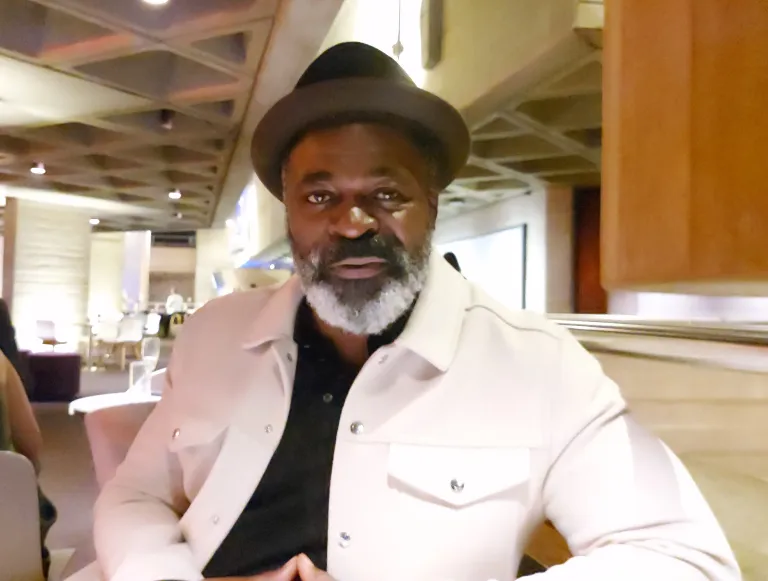
ALT A:
Solange, thank you so much for speaking to ALT A REVIEW. I really appreciate it.
The 6th annual Black British Theatre Awards ceremony, celebrates excellence and influence.
WHEN?
Monday 4th November 2024
The Lyceum Theatre
21 Wellington St, London WC2E 7RQ
More theatre news: http://www.alt-africa.com go to #THEATRE section
@solangeurdang
You might also like:National Portrait Gallery stages its first major exhibition