


Esther Anderson
Through Lens of Esther Anderson: Bob Marley: The Early Years Exhibition will open on Thursday May 30th – Wednesday June 19th, 2024, at the Muswell Hill Gallery in London, showing both rare and well-known photographs taken by the pioneering Jamaican filmmaker, photographer and activist, Esther Anderson who photographed “Bob” at the start of Bob Marley’s music career in the 1970’s. (Main Image: Esther with the famous camera courtesy of the Artist Esther Anderson)
“The Power of an image to inform, to effect change, to distort is endless. It is that power that this image projects out into the world, onto the viewer. Most of these pictures are unseen works that make up the collection which was used to launch the first two Albums on Island Records, “CATCH A FIRE” and “BURNIN”. That photograph of Bob smoking was the first time anyone had been portrayed in that way, as he said he was “partaking of the sacred sacrament for his meditation”.
The image became for Island Records a powerful marketing tool, but for the people an emblem of amnesty and freedom… Long live the Power of the image… that’s what the photographs have for me”. Esther Anderson

The Wailers on the steps of the Albert Bridge in Chelsea. © 1973 Esther Anderson
“I was never just there”! Anderson said when asked how she ended up photographing one of the world’s most iconic figures. “There was not any dating or hanging out, Chris (Blackwell) asked me for help and Bob asked me for help, but I had to wait for a year as I had just started filming with Sidney Poitier (A WARM DECEMBER). Esther goes on to state that “all the pictures I took of Bob was in 1973”. It is well documented that as Esther puts it the then young actress “went to acting school, got her big break in Hollywood and gave it all up to help Bob and the Wailers fulfil their destiny.” As shareholder/co-founder of Island Records photographing “Bob” was part of what today we might call a press campaign. In 1973 Marley was not yet a household name, just a newly signed artist to Island Records.
“My work is not pandering to those who know Bob Marley as a music icon. My photographs reveal Marley beyond the bounds of a musician, as the messenger who could reach out to a global audience, a poet of past and future.”
“I wanted to photograph him in the light of Jamaica, showing the colour of our skin the way it should be shown”.
Esther Anderson
Buyers and collectors would be excited to know that taking place at the Muswell Hill Gallery “Through The Lens of Esther Anderson: Bob Marley: The Early Years” brings together 20 rare and iconic photographs of Bob Marley taken by the pioneering Jamaican filmmaker, photographer and activist, Esther Anderson at the start of Bob Marley’s journey into the music stratosphere in the early 1970’s. Her contribution as a photographer places her amongst some of the greats with this rare and intimate archive that adds to the story of the legend. Esther Anderson first heard Bob Marley and The Wailers at Compass Studios in Nassau, Bahamas, in 1972, which was unlike anything she had heard before. As visionary artist, Esther immediately knew that she had found kindred spirits in Bob and the Wailers: someone who shared her love of Rastafarianism and she sought to shine a light on Bob Marley and The Wailers and the rise of Reggae music.
LOOKING FOR A JOB IN THE ARTS., MEDIA, TV? CLICK HERE
This ignited a six-year musical and artistic collaboration which Esther directed the Wailers worked on their seminal first albums for Island Records. Esther organised all the early activities of Bob Marley & The Wailers and was a driving force behind everything they did at that time. It was Esther who was tasked with getting Bob Marley message to the masses and with her Nikon Photomic FTN camera (1959) she started to document them in the studio, on the road and in their everyday lives.

Some of the photographs are staged or up set up like the photo of Marley running on the beach with his shoes on. Esther talks about the processes. “There was no social media at the time, there was no make-up. It was just me, Bob, and the camera”.
Discovering the importance of using light in her photographs to manipulate images and how to make the most of light at time when she had little equipment so natural light was the used a lot of the time.
The exhibition “Through The Lens of Esther Anderson: Bob Marley: The Early Years” is a rare chance to view and own photographs from this collection. Only 20 prints will be exhibited some in Black and White and some in colour.

Esther’s photographs have been given its due recognition. The Wailers “Burnin” double album shot by Esther Anderson was chosen to be included among other memorabilia from the last century, and placed in a Capsule which is housed in the Metropolitan Museum in New York City, to be opened on the night on 2099-3000. In the year 2000, Time magazine and the BBC named Bob Marley “Artist of the Century”.
On talking about that image, the one that launched “Bob’s” career Esther says it went around the world”. The image showed Marley in a cloud of smoke with a big cigar and was in fact used for the cover of Catch A Fire.
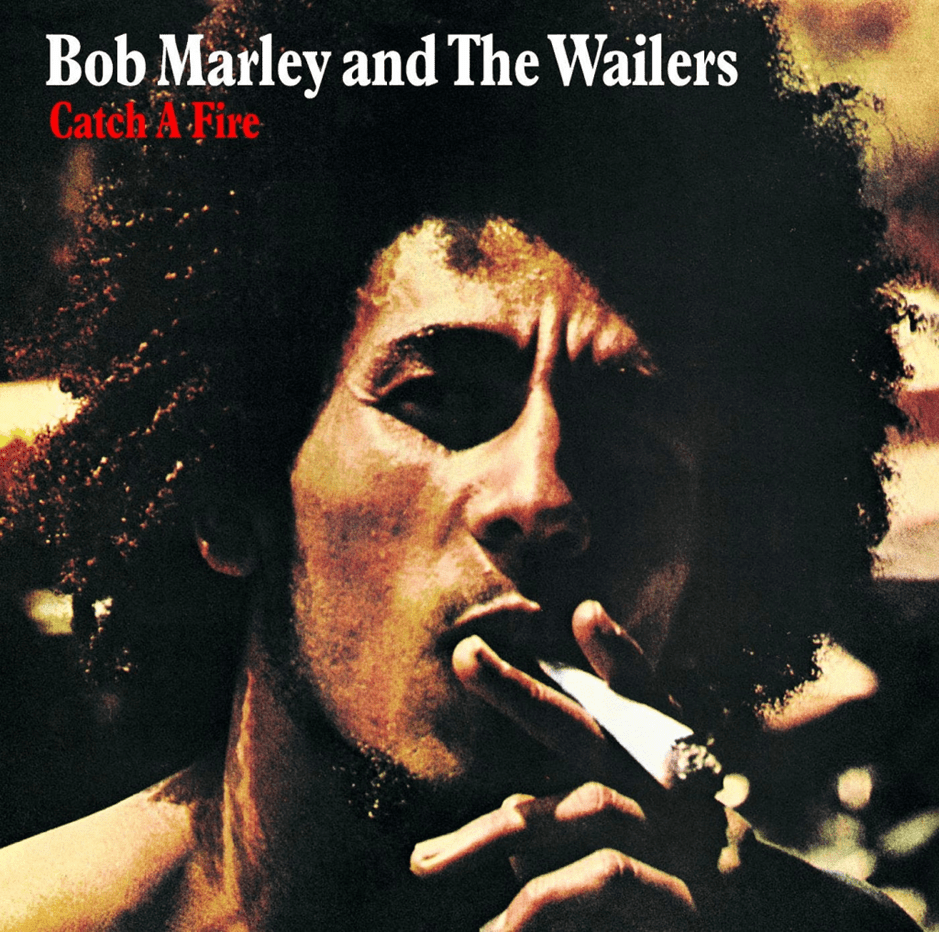
Esther recalls when screening her documentary “Bob Marley: The Making of a Legend” at the BFI, the BBC World Service released a news item with her exclusive story, including some of her iconic images, and how the BBC website got a million hits from around the world.
Through The Lens of Esther Anderson: Bob Marley: The Early Years Exhibition will be the second retrospective of Esther’s photographs of Marley in London, many of these black-and-white photographs are intimate and unassuming, taken in 1973, six years before Marley became reggae music’s first superstar. There is a vulnerability and ordinariness to him in the photographs where he is captured as a young rebel, pursuing self-discovery and self-liberation, but unsure of his footing. Buyers and viewer will get a chance to see rare moments of that capture a young Marley.
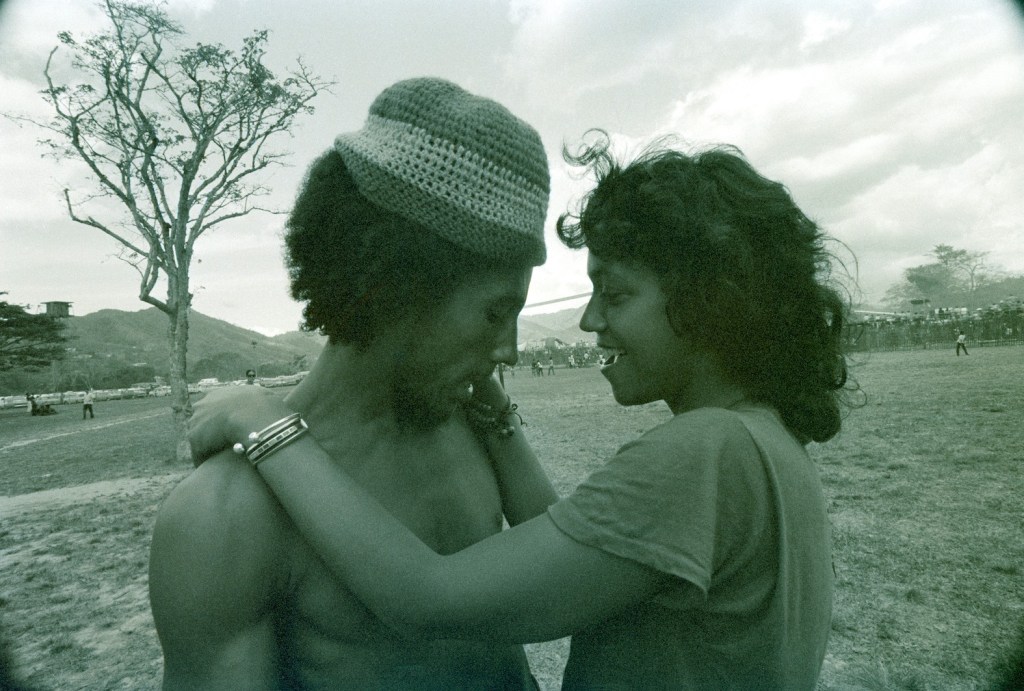
Esther Anderson is a Jamaican filmmaker, photographer, and activist, transplanted to London in the 60’s, whose remarkable photographs reflect her heritage and artistic aspirations. Both powerful and unique this collection of photographs and subsequent documentary film “Bob Marley: The Making Of A Legend” are a testament to Esther’s early vision ahead of Bob Marley & The Wailers’ road to global superstardom as Reggae music’s most explosive pioneers. During the Sixties and Seventies, Esther Anderson documented her own Jamaican culture through music, dance, and photography, whilst exploring her own representation as an actress in Hollywood and London with artists like Sidney Poitier, Marlon Brando, and Sammy Davis Jr.

Clocking up movie credits in “The Sandpiper”, “The Touchables” and “A Warm December”. Esther then went behind the camera as a cinema pioneer, launching her unique kaleidoscopic visions. Esther is a young rebel soul into the totality of Art, music, photography, cinema, architecture, Ethiopianism and political resistance, and with Bob Marley she reflects these early ideals.
Radical and uncompromising, these photographs display an unwavering commitment to helping spread Reggae music and the Rastafarian message of peace and love to a global audience. The series of photographs represent a creative journey in which she as the narrator and director takes the viewer to the Caribbean islands, to Jamaica and into 56 Hope Road. On being the narrator Esther says what is means to her today is that her voice has finally got out.
Ms. Anderson’s stripped-back approach sees her capture several shots of Marley in quick succession, like film storyboards breaking down one scene into several shots with only a gesture or gaze changes from one photo to the next.
A world away from the endlessly reproducible iconic images, these works offer a sense of how his fellow Jamaicans and collaborators would have seen Marley as they created, debated, and travelled together. Yet among these personal photographs are some immediately recognisable images including Marley in his crocheted Rasta cap of yellow, red, and green; smoking a splif and in another, he stands on the shore of a beach lost in deep thought.

Esther Anderson at the Cannes Pan African Film Festival © 2012 Gian Godoy
Reflectively Esther said talks on how comfortable Bob was to be photographed, “he liked being in front of the camera, and I was not the first person to photograph him, it was way before he was famous, nobody knew Bob at that point only the poor people”
Esther Anderson co-founded Island Records promoting and managing all the Jamaican artists that went through Island Records, including Millie Small, Jimmy Cliff, and Bob Marley and the Wailers. She helped to launch the film industry in Jamaica, acting as co-producer of the film The Harder They Come (1972), urging director Perry Henzell to give the lead to local Jimmy Cliff rather than to American Johnny Nash.

Her musical documentary “Bob Marley: The Making of a Legend” was launched as an Official Selection at the Edinburgh International Film Festival in 2011; following by the US Premiere at the Rhode Island International Film Festival, DocMiami International Film Festival; Festival de Cine Documental de la Cuidad de México and Jamaica’s Reggae Film Festival, and more than 40 festivals around the world. Its London premiere was held at the British Film Institute on December 17, 2011, and Esther went on to win a UNESCO Honor Award for the film. The film was chosen to commemorate the 50th anniversary of Jamaican Independence in 2012. Amazon Prime and other leading film streaming platforms launched the HD version of the film in the US in February.

Esther has racked up several awards including in 1976, the Trendsetter Award at the Billboard magazine awards on behalf of Denny Cordell of Mango Records and Chris Blackwell of Island Records in New York for introducing Reggae to America.
In 1981, the mayor of Memphis, Tennessee, made Anderson an honorary citizen for her contribution to films and music. In 2015, she received the Voice of a Woman Distinction Award for outstanding contributions to film in a career that has spanned over 50 years.
In 2016, Council woman Barbara Kramer presented Anderson with an official city proclamation declaring February 26th as “Esther Anderson Community Arts Day” on behalf of the City of North Miami Beach Cultural Committee for encouraging cultural events that celebrate music, film, and photography and for her dedication to the arts over the past 40 years.
You are invited to a photography exhibition ‘Through the Lens of Esther Anderson’
The early Years of Bob Marley
Thursday May 30th
Private View V 5:30pm -8pm Ends June 20th
Muswell Hill Gallery
21 High Street N8 7QB
Interested in buying a print: Muswellhillgallery77@gmail.com
Instagram @muswellhillgallery
You might also like: Stratford East: Lanre Malaolu presents “Now I See” powerful fusion of Movement, Song and Text….